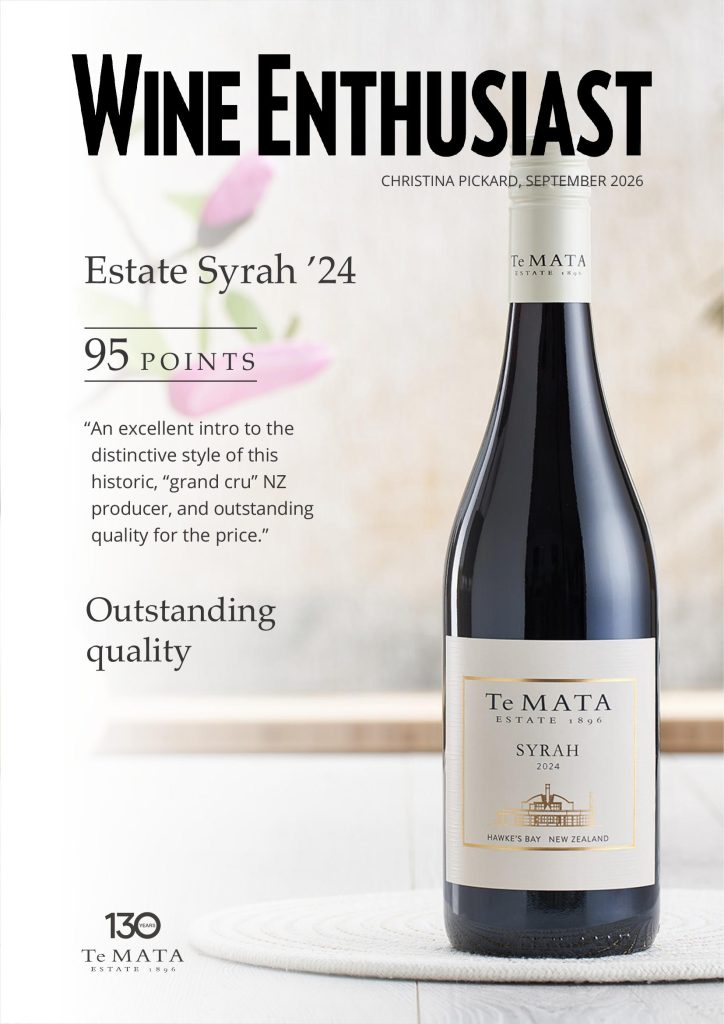
• Bullnose: Iconic Syrah

    Bullnose Syrah

    Te Mata’s Signature Expression of Hawke’s Bay


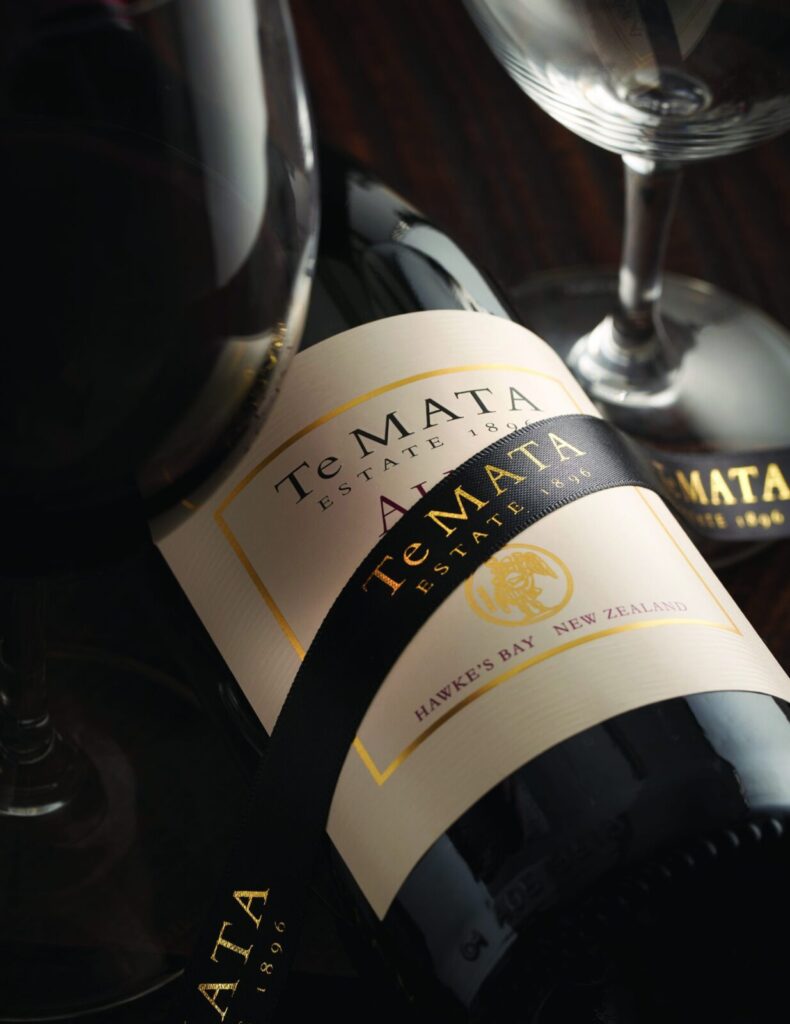
    Bullnose is Te Mata Estate’s flagship Syrah and one of New Zealand’s most distinctive expressions of the variety.

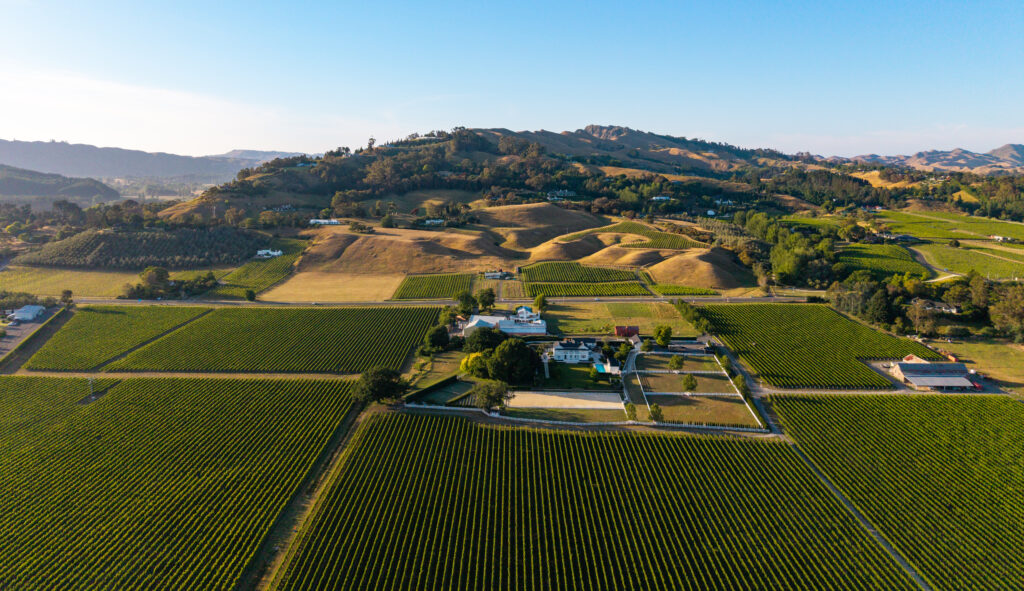
    First planted in 1990, Bullnose represents more than three decades of Te Mata Estate’s work with Syrah in Hawke’s Bay. The wine draws on mature vineyards in Bridge Pā, the Gimblett Gravels and Dartmoor, combining the extraordinary perfume and precision of Hawke’s Bay Syrah with the depth, structure and longevity for which Bullnose has become internationally recognised.

    Bullnose is also a remarkably pure expression of the variety. It is 100% Syrah, with no co-fermented Viognier and no blending with Grenache or Mourvèdre. This makes it particularly useful as an expression of Hawke’s Bay Syrah itself: the wine’s character comes from the variety, the vineyards, the climate and the winemaking rather than from the addition of other Rhône varieties.

    The style is immediately distinctive. Bullnose is intensely coloured, highly perfumed and finely structured, with aromas of violet, rose petal, raspberry, black cherry, black olive and pepper, often accompanied by exotic notes of aniseed, cardamom and toasted fennel. With age, these floral and spicy characters develop into liquorice, cured meat, salami, game, tapenade and darker savoury complexity.

    The wine is concentrated without being heavy, powerful without being ponderous, and aromatic without sacrificing freshness. That combination has made Bullnose a pedigree example of cool-climate Syrah and one of the signature wines of Hawke’s Bay.
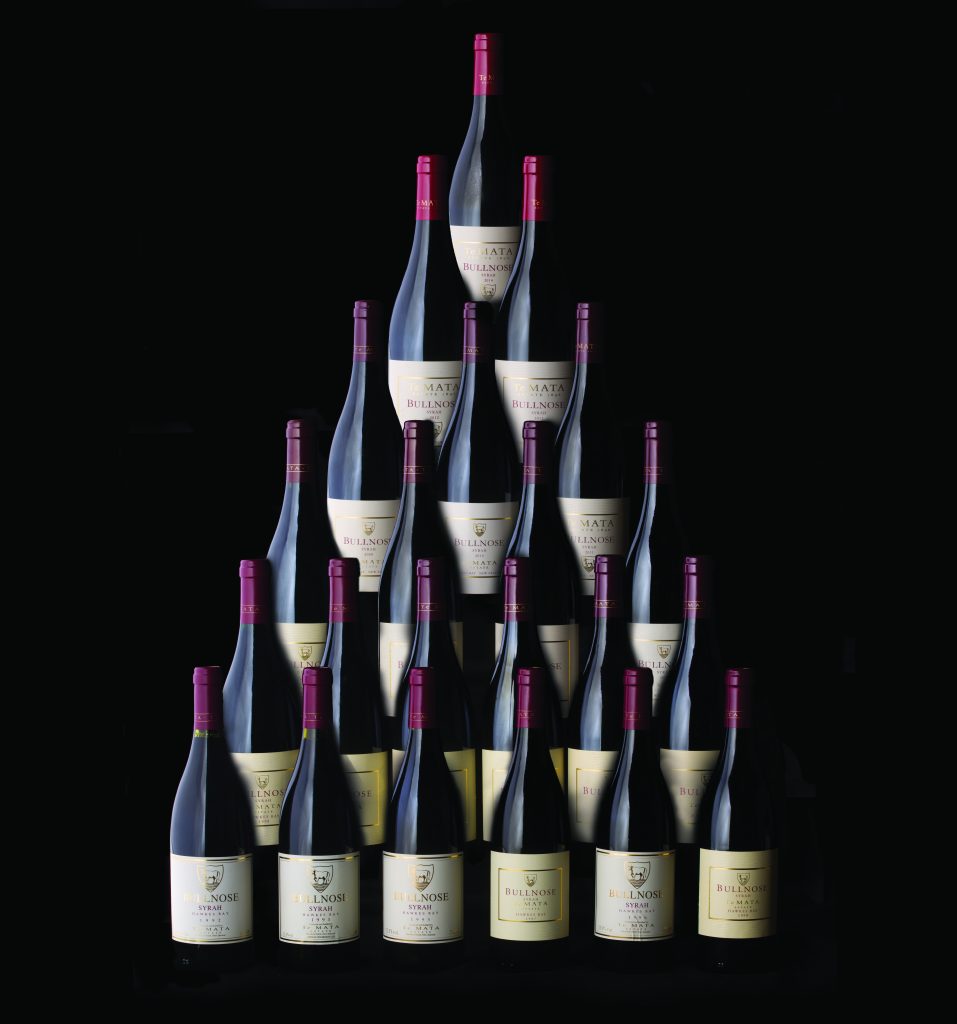
     

    A Hawke’s Bay Syrah Pioneer

    The modern story of Syrah in Hawke’s Bay is closely connected with Dr Alan Limmer of Stonecroft.

    Alan Limmer was a researcher, scientist, viticulturalist and winemaker whose work was fundamental to the development of modern Syrah in New Zealand. In the 1980s, he identified and planted Syrah material at Stonecroft in the Gimblett Gravels, establishing one of the country’s earliest modern Syrah vineyards.

    The material Limmer worked with became an important source for the development of Syrah in Hawke’s Bay. Te Mata subsequently planted Syrah from this early lineage while also introducing additional material associated with the Northern Rhône tradition.

    Te Mata was among the earliest New Zealand wineries to establish plantings of Northern Rhône-style Syrah. The estate’s Syrah programme consequently developed from several generations of vine material rather than from a single clone or vineyard.

    That distinction is important to understanding Bullnose.

    Over the decades, Te Mata has experimented with different Syrah selections, vineyard sites, vine spacing, row spacing, canopy management, irrigation, cropping levels and harvest timing. The estate has effectively used Hawke’s Bay as a long-term laboratory for understanding how Syrah can express itself in different soils and microclimates.

    The result is a remarkably consistent regional style, but one with considerable detail beneath the surface.


    The Central West, the Gravels and Beyond

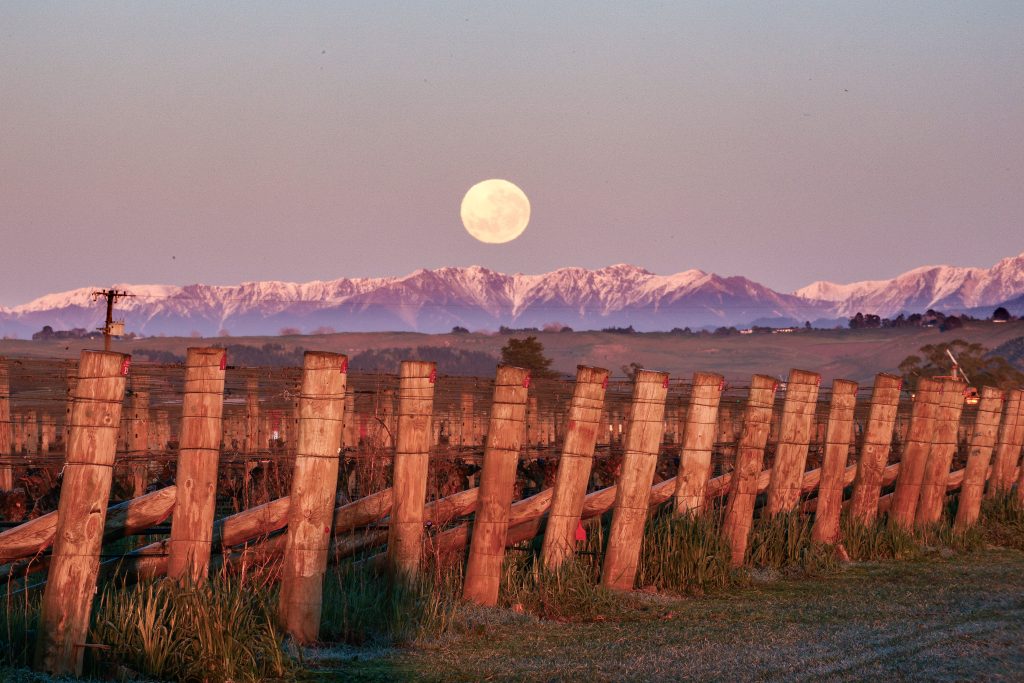
    The story of Hawke’s Bay Syrah is also connected with the early recognition of the Gimblett Gravels as a site of exceptional winegrowing potential.

    John Buck of Te Mata Estate and Dr Alan Limmer of Stonecroft were among the early Hawke’s Bay winegrowers to recognise that the stony land west of Hastings had qualities that could make it unusually well suited to fine wine. They were subsequently joined in this work by C.J. Pask, as these pioneering growers began demonstrating what was possible on land that had previously been regarded as having little agricultural value.

    The gravels had been deposited by the old Ngaruroro River, particularly after the river changed course following a major flood in the 1860s. Over time, the area had been used for a range of non-viticultural purposes, including gravel extraction and a drag-racing strip, and there were proposals for further development.

    The early winegrowers recognised something different: the combination of exceptionally free-draining stony soils, heat retention and Hawke’s Bay’s climate offered the potential for serious fine wine.

    Their advocacy helped establish the case for protecting the area and recognising its potential as a winegrowing district. This work preceded the creation of the Gimblett Gravels Winegrowers Association and the subsequent development of the Gimblett Gravels name as one of New Zealand’s most recognised wine sub-regions.

    Te Mata Estate is not a member of the current Gimblett Gravels Winegrowers Association, but its historical involvement in recognising and advocating for the area’s winegrowing potential predates the later organisation and branding.

    Today, the Gimblett Gravels has an international reputation for the complexity, depth and detail of its red wines, particularly Syrah and the Bordeaux varieties, as well as the quality and delicacy of its white wines.

    For Te Mata, the significance is particularly strong because the estate continues to work with Syrah in both the Gimblett Gravels and the neighbouring Bridge Pā district.


    The Early Character of Hawke’s Bay Syrah

    Some of the earliest Hawke’s Bay Syrahs were strikingly different from the powerful, ripe Shiraz styles with which many international drinkers were familiar.

    They could be distinctly floral, savoury and even slightly Pinot-like in their texture and aromatic character. Notes of rose petal, violet, wild herbs and garrigue could sit alongside pepper, red fruit and earthy savouriness.

    This character reflected both the vine material and Hawke’s Bay’s growing conditions.

    The region’s long, sunny summers allow Syrah to achieve full physiological ripeness, while cool nights help retain acidity and aromatic freshness. High levels of ultraviolet light contribute to anthocyanin development in the grape skins, helping produce the remarkable colour intensity seen in Hawke’s Bay Syrah.

    Young examples can appear almost neon crimson in the glass, with a vivid brightness that is echoed by flavours of fresh raspberry, red cherry and black cherry.

    As the vines mature, these primary fruit and floral characters develop into increasingly complex layers of spice, savoury meatiness and game while retaining the underlying freshness.


    Bridge Pā: Perfume, Brightness and Precision

    Approximately 90% of Te Mata’s Syrah plantings are located in Bridge Pā.

    The geology here is very different from the exposed stone of the Gimblett Gravels.

    At Bridge Pā, ancient river gravels sit beneath the surface, approximately 1.5 metres underground in the areas where Te Mata’s Syrah is planted. Above them is a fine, red, dusty metal soil.

    This produces a particularly distinctive style of Syrah.

    Bridge Pā is associated with remarkable perfume, floral character, brightness and aromatic precision. Raspberry and black cherry fruit can be particularly vivid, while violet, rose petal, black and white pepper and exotic spice contribute layers of complexity.

    The resulting wines tend to be elegant rather than weighty.

    For Bullnose, this aromatic precision is fundamental to the wine’s identity.


    Gimblett Gravels: Warmth, Depth and Generosity

    Te Mata also has two Syrah vineyard sites within the Gimblett Gravels, each divided into nine sub-parcels.

    The exposed gravels here create a very different vineyard environment.

    Unlike Bridge Pā, where the gravels lie beneath a red surface soil, the stones of the Gimblett Gravels are close to or exposed at the surface. They absorb and reflect Hawke’s Bay’s intense sunlight during the day and retain warmth through the cooler nights.

    The result can be greater ripeness, generosity, power and mid-palate weight.

    For Te Mata, these vineyards provide another dimension to the estate’s understanding of Syrah. The fruit can contribute depth and generosity while retaining the freshness that is fundamental to Hawke’s Bay.

    The Gimblett Gravels therefore complements rather than replaces the character of Bridge Pā.

    Where Bridge Pā can bring perfume, precision and brightness, the Gimblett Gravels can contribute breadth, warmth and mid-palate generosity.

    The combination gives Te Mata the ability to construct Bullnose from multiple expressions of the region.


    Dartmoor: Another Dimension of Syrah

    The 2024 Bullnose vintage also includes hand-harvested Syrah from Te Mata’s Dartmoor vineyard.

    Dartmoor provides another site perspective within the estate’s broader Syrah programme and contributes to the detailed parcel selection that underpins Bullnose.

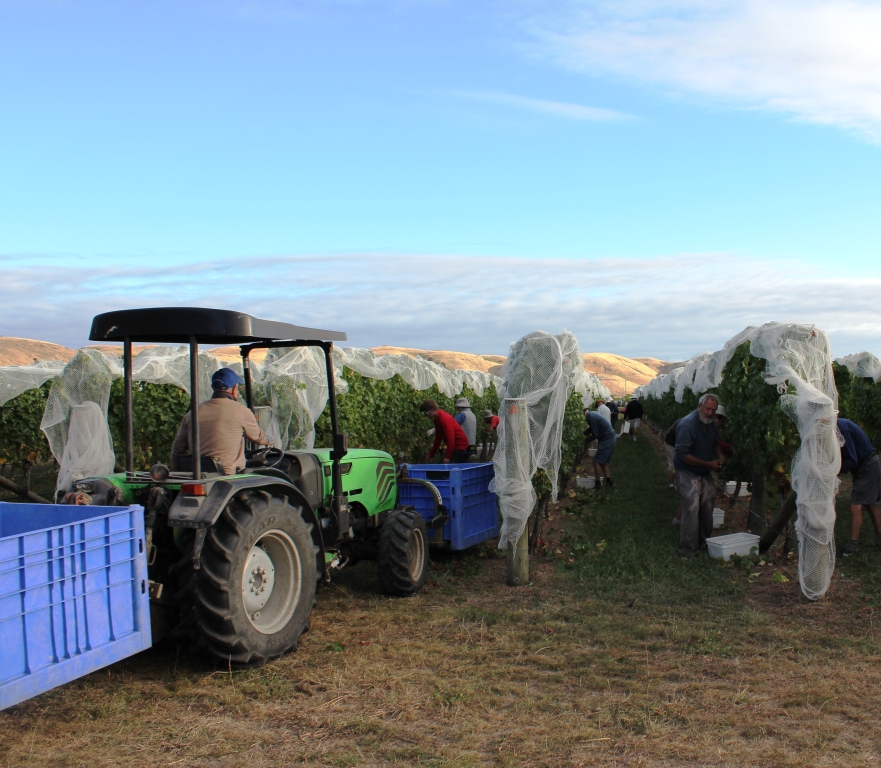
    The fruit for the 2024 Bullnose was hand harvested from separate fully ripened Syrah parcels in Bridge Pā, the Gimblett Gravels and Dartmoor on 25 March and 9 April 2024.


    A Pure Expression of Syrah

    Bullnose is 100% Syrah.

    There is no co-fermented Viognier and no addition of Grenache or Mourvèdre.

    That makes Bullnose particularly useful in understanding Hawke’s Bay’s relationship with Syrah.

    Co-fermentation with Viognier is a celebrated Northern Rhône tradition, particularly associated with Côte-Rôtie, while Grenache and Mourvèdre are central components of many southern Rhône blends.

    Te Mata has instead chosen to allow Syrah itself to express the region.

    The floral perfume, pepper, spice, fruit, savoury character, colour, acidity and tannin of Bullnose are therefore all part of the interaction between Syrah and Hawke’s Bay.

    This purity is one reason Bullnose has become such a useful reference point for understanding New Zealand Syrah.


    The Bullnose Signature

    Bullnose has developed an unusually recognisable aromatic signature.

    The first impression can be intensely floral and exotic, with violet, rose petal and dark perfume.

    Then come the classic Syrah characters of black and white pepper, followed by an almost Moroccan or Oriental spice profile of aniseed, cardamom and toasted fennel.

    Black olive can add a savoury, slightly salty dimension, while liquorice provides another recurring characteristic.

    The fruit remains bright and vivid: raspberry, plum and black cherry rather than simply dark, heavy black fruit.

    With bottle age, the wine develops an increasingly savoury and meaty character. Salami, cured meat, game, tapenade, dried herbs and dark spice can emerge beneath the floral and fruit layers.

    This combination of perfume and savouriness is part of what makes Bullnose so distinctive.

    It is voluptuous in aroma but not weighty in structure.

    It is powerful but not alcoholic.

    It is intensely coloured but fresh.

    It is exotic but precise.
     

    The “Bullnose” Nose

    There is an amusing coincidence in the name.

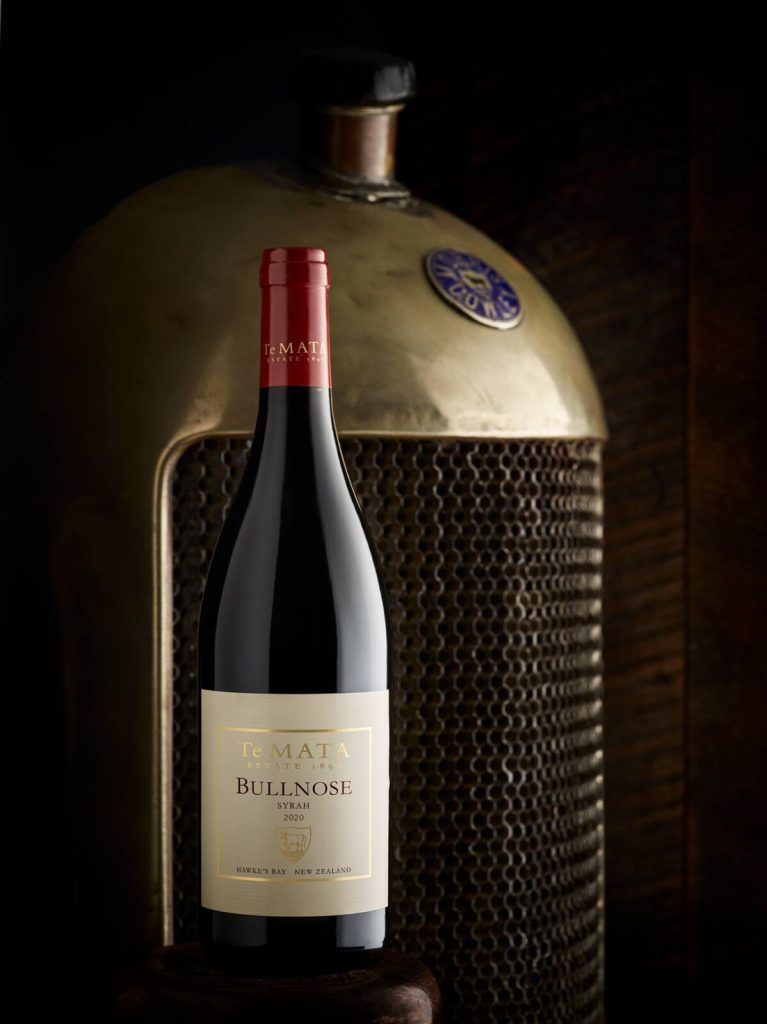
    The name Bullnose has nothing to do with the wine’s aromatic character. It comes from the distinctive radiator of the Morris Cowley motor car.

    Yet Bullnose Syrah can have such an expressive and exotic perfume that the name sometimes seems almost descriptive.

    The wine’s aromatic “nose” can be intensely floral, spicy and animal, developing from violet and rose petal through aniseed, pepper and exotic spice into liquorice, cured meat and game.

    It is one of those wine names where the historical explanation is true, but the accidental double meaning also feels strangely appropriate.


    The Bullnose Name and the Cowley Family

    The wine is named after an early Morris Cowley motor car, which became known as the “Bullnose” because of its distinctive rounded radiator. The bull emblem on the Bullnose label is derived from the car’s radiator crest.

    The name has a particular resonance at Te Mata.

    Michael Morris and Peter Cowley were both passionate classic-car enthusiasts and were closely involved with Te Mata Estate. Peter’s family, the Cowleys, also have historical roots in Sheffield, a city strongly associated with the history of the Morris name and the Morris manufacturing story.

    Classic engineering, craftsmanship and beautifully made machines have long been part of the culture surrounding Te Mata.

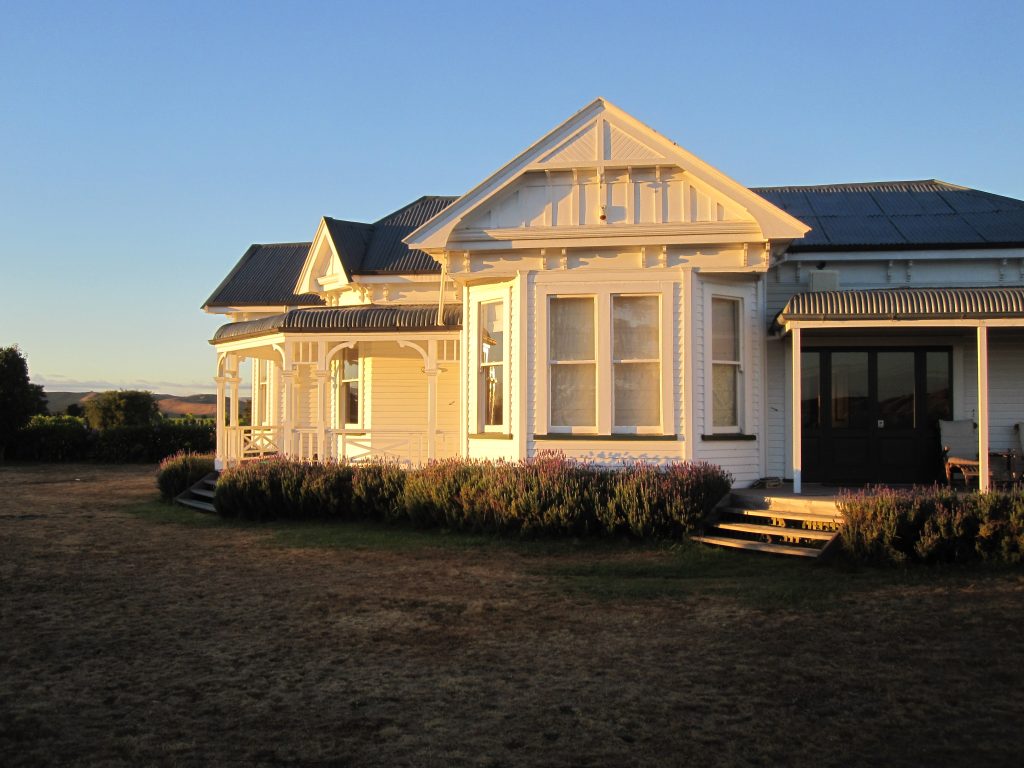
    There is also a more literal Bullnose connection at the Cowley family property, where the house has a distinctive bullnose verandah with its characteristic rounded roof form.

    The name therefore connects the wine with the people, history and passions that surround Te Mata Estate.


    Cool-Climate Syrah at 13% Alcohol

    One of the defining characteristics of Te Mata Syrah is its freshness.

    Hawke’s Bay is warm and sunny, but New Zealand remains a cool, maritime winegrowing country relative to many of the world’s major Syrah regions.

    This allows Syrah to achieve full ripeness without requiring high alcohol levels.

    Recent Te Mata Syrahs commonly sit around 12.5% to 13.5% alcohol, depending on vintage and wine. Bullnose 2024 is 13.0%.

    This relatively moderate alcohol contributes to the wine’s elegance and energy. The wines can have enormous flavour and colour without becoming hot or heavy.

    That balance is one of the defining characteristics of Hawke’s Bay Syrah.


    A Rare Variety in New Zealand

    Syrah remains a tiny part of New Zealand winegrowing.

    It represents less than one percent of the country’s grape plantings, making it a niche variety even within an industry internationally famous for Sauvignon Blanc and increasingly recognised for Pinot Noir and Chardonnay.

    This rarity adds to the fascination of Hawke’s Bay Syrah.

    The wines are sufficiently distinctive to constitute a recognisable regional style, yet unfamiliar enough to surprise experienced international tasters.

    Bullnose has consequently become something of a wine-education benchmark.


    Master of Wine Blind Tasting

    Bullnose and Te Mata Estate Syrah have both appeared as wines in Master of Wine blind-tasting examination contexts in recent years.

    Their value in this setting is not simply that they are excellent wines.

    They are also excellent questions.

    A taster encountering a wine with violet, pepper, garrigue, raspberry, black cherry, savoury meatiness and moderate alcohol might readily identify it as a classic cool-climate Syrah.

    The more difficult question is where it comes from.

    New Zealand is not always the first answer that comes to mind.

    That makes Hawke’s Bay Syrah an unusually effective blind-tasting wine: it possesses the characteristics of a recognised international style while remaining sufficiently distinctive and unfamiliar to challenge expectations.

    Once tasters discover Hawke’s Bay Syrah, it tends to become a memorable category.


    International Recognition

    Bullnose has developed a significant international critical pedigree over more than three decades.

    The wine has been selected three times by James Suckling for his Top 50 Wines of the World, an exceptional recognition for a wine from such a small Syrah-producing region.

    Bullnose is also recognised by Michael Cooper as a New Zealand Super Classic, placing it among the wines considered particularly important to the country’s vinous heritage and quality.

    The wine has accumulated strong scores from international critics across multiple vintages and has become one of the most recognised examples of New Zealand Syrah.

    Its reputation extends beyond criticism. Bullnose is served at leading restaurants and fine-wine tables internationally, where its distinctive combination of aromatic complexity, freshness and pedigree makes it particularly compelling for sommeliers.


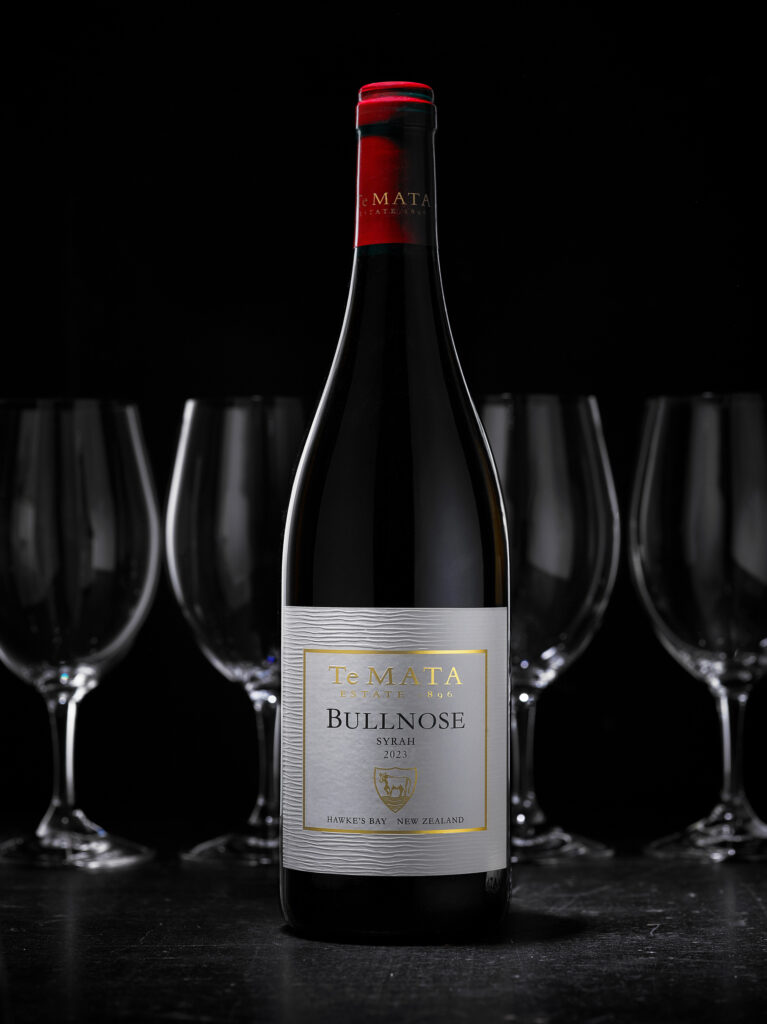
    Bullnose 2024

    The 2024 Bullnose is a particularly expressive vintage.

    It shows a bright crimson rim around a deep purple-black core.

    The nose unfolds in layers of violet, fresh raspberry, ripe plum and dark cherry, with black olive, spice and pepper adding savoury depth.

    The palate amplifies the concentration and textural intensity of the fruit. A vibrant, precise line of acidity gives the wine energy and a bracingly youthful character, while fine, persistent tannins carry the wine through a long, beautifully driven finish.

    It is a wine with both power and elegance.

    The 2024 Bullnose has:

    • 100% Syrah
    • 13.0% alcohol
    • 3.66 pH
    • 5.1 g/L total acidity, as tartaric
    • Dry residual sugar
    • 16 months’ maturation in French oak barriques
    • 34% new French oak

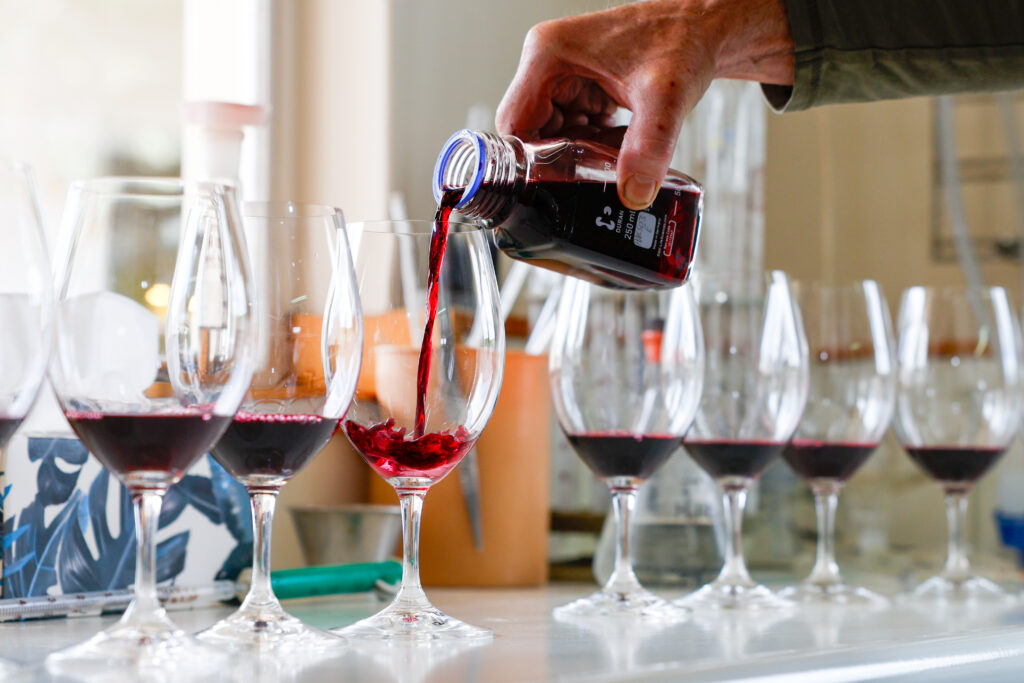
    The individual vineyard lots were each destemmed and given a traditional warm-plunged fermentation, followed by extended maceration on skins. After pressing, the wines underwent secondary malolactic fermentation.

    The individual wines were then matured separately in a mixture of new and seasoned French oak barriques for 16 months. During maturation they were regularly topped and racked before final blending and bottling in November 2025.

    The Syrah was hand harvested from separate fully ripened parcels in Te Mata Estate’s Bridge Pā, Gimblett Gravels and Dartmoor vineyards on 25 March and 9 April 2024.

    The result is a Bullnose with remarkable concentration, fragrance and structure while retaining the freshness that defines the style.


    Tasting Notes

    Appearance

    Bright crimson at the edge with a deep purple-black core.

    Aroma

    Intensely expressive and fragrant, with violet, fresh raspberry, ripe plum and dark cherry. Black olive, pepper and subtle spice add savoury complexity.

    Palate

    Concentrated and richly textured, with vibrant acidity providing precision, energy and freshness. Fine, persistent tannins carry the wine through a long, beautifully driven finish.

    Character

    Powerful yet elegant, youthful yet already compelling. The 2024 vintage combines the exotic perfume and vivid fruit of Bullnose with the structural detail required for extended bottle development.

    Cellaring

    Bullnose is designed for long-term development. The 2024 has the concentration, acidity and tannin to evolve over many years, developing increasingly complex layers of liquorice, savoury spice, cured meat, game and dark earthy character while retaining its underlying floral and fruit profile.


    Food Pairings

    Bullnose’s combination of fruit, acidity, pepper, spice and savoury character makes it particularly versatile with food.

    Classic pairings include:

    • Roast or grilled lamb
    • Beef and venison
    • Duck and game birds
    • Slow-roasted and barbecued meats
    • Moroccan and Middle Eastern dishes
    • Aromatic spice dishes
    • Mushroom and umami-rich dishes
    • Roast eggplant and vegetables
    • Hard and washed-rind cheeses

    The wine’s freshness means it works particularly well with dishes that combine richness with aromatic herbs and spice.



    Frequently Asked Questions

    What is Bullnose Syrah?

    Bullnose is Te Mata Estate’s flagship Syrah from Hawke’s Bay, New Zealand. First planted in 1990, it is made from carefully selected Syrah grown in Te Mata’s mature vineyards.

    Is Bullnose 100% Syrah?

    Yes. Bullnose is a pure varietal expression of Syrah. It contains no co-fermented Viognier and no Grenache or Mourvèdre.

    Where is Bullnose Syrah grown?

    Te Mata’s Syrah is predominantly planted in Bridge Pā, with additional vineyards in the Gimblett Gravels and Dartmoor. Bullnose combines selected fruit from these sites.

    What is the difference between Bridge Pā and the Gimblett Gravels?

    Bridge Pā has ancient gravels lying beneath a fine red metal topsoil. The resulting Syrah is particularly aromatic, floral, bright and precise.

    In the Gimblett Gravels, stones sit much closer to the surface and absorb, reflect and retain heat. These vineyards can produce Syrah with greater ripeness, generosity, power and mid-palate weight.

    Is Bullnose a cool-climate Syrah?

    Yes. Bullnose is a pedigree example of cool-climate Syrah, although it comes from a sunny New World region. Hawke’s Bay’s maritime climate allows full ripening while cool nights preserve freshness and acidity.

    What does Bullnose Syrah taste like?

    Bullnose is known for violet, rose petal, raspberry, black cherry, plum, black olive, black and white pepper, aniseed, cardamom and toasted fennel. With age it develops liquorice, cured meat, salami, game, tapenade and dried herbs.

    Why is Bullnose so floral?

    The combination of Syrah vine material, Hawke’s Bay’s climate, mature vines and Te Mata’s vineyard sites produces unusually expressive floral aromatics. Bridge Pā is particularly associated with perfume and aromatic precision.

    Why is Bullnose so intensely coloured?

    Hawke’s Bay receives very high levels of ultraviolet light. This contributes to anthocyanin development in the grape skins and helps produce the vivid crimson and purple colour characteristic of the wines.

    Is Bullnose high in alcohol?

    No. Bullnose is generally moderate in alcohol compared with many Syrahs from warmer climates. The 2024 vintage is 13.0% alcohol.

    Has Bullnose appeared in the Master of Wine examination?

    Bullnose and Te Mata Estate Syrah have both appeared in Master of Wine blind-tasting examination contexts. Their distinctive cool-climate Syrah characteristics combined with their unexpected New Zealand origin make them particularly effective blind-tasting wines.

    How important is Syrah in New Zealand?

    Syrah represents less than one percent of New Zealand’s grape plantings. It is therefore a very small category within New Zealand winegrowing, despite the international recognition achieved by leading Hawke’s Bay producers.

    How many times has Bullnose been in James Suckling’s Top 50 Wines of the World?

    Bullnose has been selected three times for James Suckling’s Top 50 Wines of the World.

    Is Bullnose recognised as a New Zealand classic?

    Yes. Bullnose is recognised by Michael Cooper as a New Zealand Super Classic, reflecting its established importance within the country’s fine-wine history.

    Why is the wine called Bullnose?

    The wine is named after the early Morris Cowley motor car, which became known as the Bullnose because of its distinctive rounded radiator. The bull emblem on the Bullnose label comes from the car’s radiator crest.

    Why is Bullnose important to Hawke’s Bay Syrah?

    Bullnose has more than thirty years of consistent production, a distinctive vineyard and winemaking pedigree, international critical recognition and a particularly pure expression of Syrah. It has become one of the reference wines through which Hawke’s Bay Syrah is understood internationally.


    The Bullnose Signature

    Bullnose is ultimately a wine of contrasts.

    It is intensely coloured but bright rather than heavy.

    It is exotic and voluptuous on the nose but fresh and precise on the palate.

    It has the floral perfume, pepper and savoury character of classic cool-climate Syrah, yet the vivid raspberry and black-cherry fruit of Hawke’s Bay.

    It is 100% Syrah, allowing the variety itself to express the region without the influence of co-fermented Viognier or other Rhône varieties.

    It can be enjoyed young for its floral energy, vivid fruit and spice, but develops increasingly complex layers of liquorice, cured meat, game and savoury spice with age.

    It comes from a country where Syrah represents less than one percent of the vineyard.

    And it comes from a region whose Syrah was championed by pioneers such as Alan Limmer, John Buck and C.J. Pask long before Hawke’s Bay’s modern international reputation was established.

    After more than three decades of planting, experimentation and careful winemaking, Bullnose has become more than a successful New Zealand Syrah.

    It is a benchmark for what Hawke’s Bay Syrah can be: fragrant, vivid, savoury, elegant, age-worthy and unmistakably of its place.



  • On the World Wine Stage

    Hawke’s Bay Takes an Elite Place Within Global Wine Regions


    There is something rather special about seeing Hawke’s Bay recognised on the world stage.

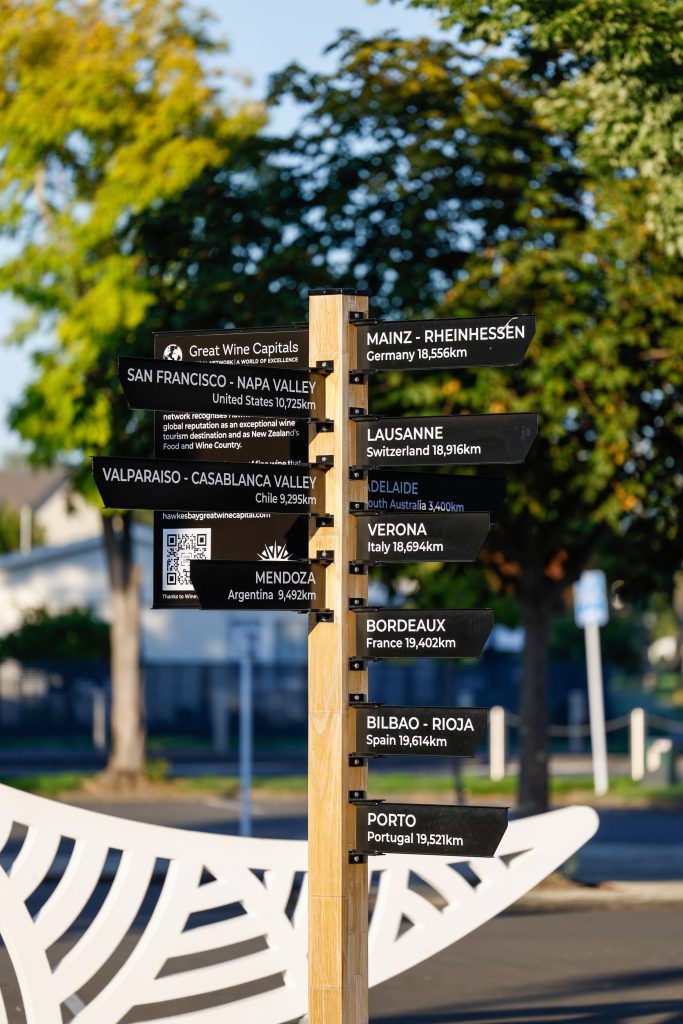
    In October 2026, our region will welcome the 26th Great Wine Capitals International Annual Conference, bringing together leading wine and tourism regions from around the world. Bordeaux, Verona, Napa Valley, Mendoza and Adelaide are among the places that make up this international network, and now the world’s attention will turn to Hawke’s Bay. It is a wonderful moment for a region that has quietly built an international reputation for fine wine, food, hospitality and a strong sense of place. Hawke’s Bay joined the Great Wine Capitals Global Network in 2023, and hosting the annual conference is a significant step in sharing our story with the wider wine world.
    For Te Mata Estate, there is an added sense of history to being part of it. Established in 1896, Te Mata is New Zealand’s oldest continuously operating winery, with wine still being made on the same site and from the same original vineyards. The original winery buildings, first converted for winemaking in the 1890s, remain at the heart of the estate today. For more than 130 years, this has been a place where wine, people and landscape have remained closely connected. To welcome an international gathering of wine regions to Hawke’s Bay, and to be part of that story from a winery with such a long and continuous connection to the region, feels particularly meaningful.


    There is also a nice personal connection to the Great Wine Capitals network for Te Mata Estate’s Toby Buck. Toby has attended Great Wine Capitals events in Verona, Italy, and Bordeaux, France, representing New Zealand wine and Hawke’s Bay in his role as a technical advisor. These gatherings offer a rare opportunity to meet people working at the forefront of wine regions around the world, to exchange ideas and experiences, and to see how different places approach the relationship between wine, tourism, landscape and culture. It is also an opportunity to share something of the distinctive character of Hawke’s Bay with people who may know the great wine regions of Europe and the Americas intimately, but have yet to experience ours.

    This time, the journey comes full circle. Rather than travelling overseas to join the conversation, Toby will be taking part in the Great Wine Capitals conference here in Hawke’s Bay, as the region welcomes its fellow wine capitals to New Zealand. The programme will showcase the vineyards, landscapes, food, people and stories that make Hawke’s Bay such a distinctive wine region. For Te Mata, it is an opportunity to contribute to that wider conversation while representing a small but significant part of Hawke’s Bay’s wine history.

    For a region that has been making wine for generations, there is something fitting about having the world come to us. Hawke’s Bay has always had a strong sense of place, from the soils and long growing season to the vineyards that sit beneath Te Mata Peak and the people who have shaped the region’s wine story over generations. Now, for a few days in October, some of the world’s great wine regions will be here to experience it for themselves. At Te Mata Estate, we are proud to be part of that welcome, and proud that Hawke’s Bay will have its moment in the international wine spotlight.


    Great Wine Capitals Conference 2026

    ‘Under the theme ‘A World of New’, the five-day programme has been designed to deliver new cultures, new wines, new experiences, and new business opportunities. Delegates can expect keynote presentations, roundtable discussions, travel trade meetings, structured networking, hosted dinners, winery visits, and curated regional experiences.

    President of the Great Wine Capitals Global Network, Jo Collins, said the timing could not be more relevant: “At a time when the global wine sector is navigating both challenges and transformation, our conference in Hawke’s Bay offers a vital opportunity to come together, share knowledge, and strengthen one another. This is more than a conference; it’s a chance to shape the future of wine tourism collectively.”

    For international delegates, Hawke’s Bay offers a compelling destination in its own right. Kim Thorp, GWC Hawke’s Bay Ambassador, said: ”Hawke’s Bay is New Zealand’s Food & Wine Country and one of the most extraordinary regions, and we couldn’t be prouder to welcome the world here. Ancient soils from the Gimblett Gravels to limestone ridges and clay hillsides produce exceptional diversity, from world-class Syrah and Cabernet blends to elegant Chardonnay. But wine is only part of the story. Delegates will discover Hawke’s Bay’s iconic Art Deco architecture, stunning mountain and coastal landscapes, and cycle trails winding through vineyards. This is a place that will inspire every delegate long after they leave.”


    Registrations

    Registrations are open for the Great Wine Capitals International Annual Conference in Hawke’s Bay, New Zealand, 18-22 October 2026. We look forward to welcoming you to our extraordinary corner of the world defined by its breathtaking landscapes, warm people, and world-class wine experiences. 

    You are just one step away from being part of this exceptional global event. View the programme by delegate type here then select your delegate status from the options below to view the delegate fees and fill out the associated registration form. Or you can purchase individual tickets to three of the highlight events in the programme.

    Conference accommodation can be found here. We have negotiated special rates at these hotels, so please email the hotel via the link and use the code provided.

  • Awatea Cabernets Merlot

    Te Mata Estate, Hawke’s Bay, New Zealand

    Classical Hawke’s Bay with a Modern Twist.

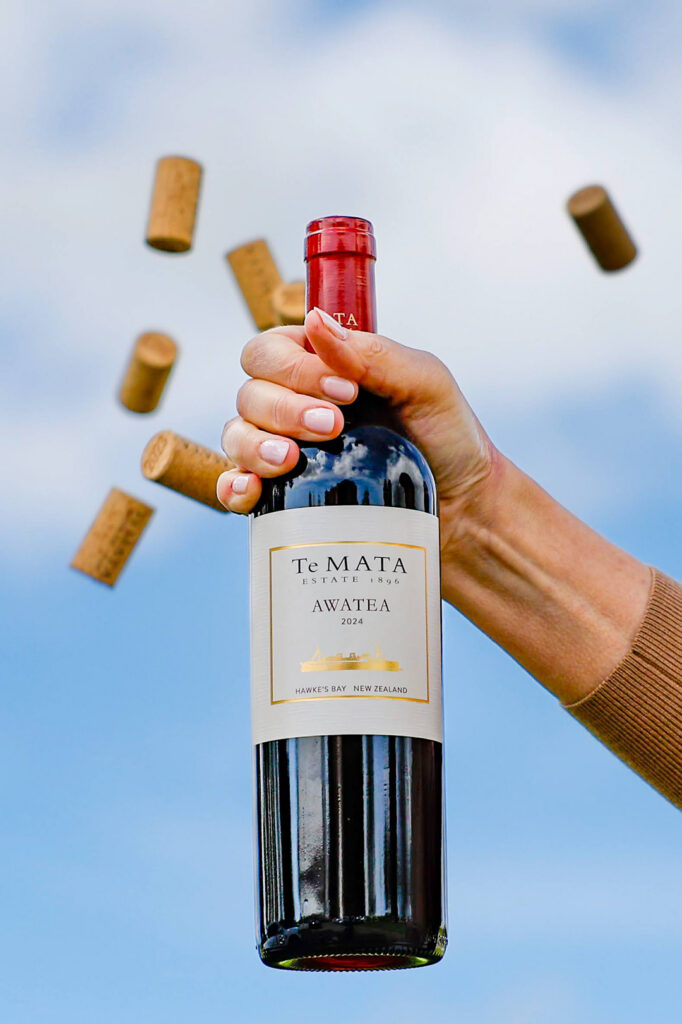
    Awatea is Te Mata Estate’s Cabernet Merlot blend from Hawke’s Bay, New Zealand, first made in 1982 as the sibling wine to Coleraine, New Zealand’s most celebrated red. Grown almost entirely on the same Havelock Hills sites as Coleraine, Awatea offers much of its depth, structure and ageing potential at roughly a third of the price, making it one of the best-value fine wines the estate produces. The current release is the 2024 vintage.


    Overview

    Among people who know Te Mata Estate well, Awatea is one of the most loved wines in the range, in part because it can fly under the radar. It sits in the middle of the specialty winemaking Te Mata is best known for, effectively supported by Coleraine’s headline price, which lets Awatea offer serious quality without a serious price tag.

    Critics have called it “modern claret at its finest,” pairing the architecture of a fine Bordeaux with the brightness and generosity of Hawke’s Bay fruit. It is more approachable young than Coleraine, more perfumed and more immediately seductive, while still rewarding a decade or more in the cellar.

    In short: a Bordeaux-style Cabernet Merlot blend with the soul of claret, the warmth of Hawke’s Bay, and the pedigree of one of the Southern Hemisphere’s most established wine estates.

    Story & Heritage

    Awatea was first released in 1982 alongside Coleraine. The two wines were conceived as siblings: Coleraine built as a Cabernet-dominant, Left Bank-style wine, Awatea developed as its Merlot-dominant, Right Bank counterpart. That founding character has held: in every vintage, Awatea carries a significantly higher proportion of Merlot and Cabernet Franc than Coleraine, and Cabernet Franc is typically picked fairly ripe, giving Awatea a distinctive, perfumed lift that is one of its signatures.

    Over more than four decades, the quality of Merlot and Cabernet Franc grown at Te Mata’s Hawke’s Bay vineyards has advanced enormously, and Awatea has evolved with it, gradually gaining finer tannins, more restrained oak, and a greater emphasis on vineyard expression. For many longtime fans, it is considered a “baby Coleraine”: sharing much of its bigger sibling’s depth and age-worthiness, at around a third of the price.

    Awatea takes its name from the SS Awatea, a famously over-engineered New Zealand-built ocean liner that ran between New Zealand and Australia in the 1930s (the name is Māori for “the eye of the dawn”). The ship was requisitioned as a troop transport during the Second World War and was sunk off Algeria in 1942. In much the same spirit, Awatea the wine is an over-engineered Kiwi take on a small Bordeaux, one that has, over the decades since its first release, come to own a regional signature entirely its own: a wine that could not be made anywhere else in the world.

    Alongside Coleraine, Awatea helped prove in the 1980s and 1990s that New Zealand could produce serious Cabernet-based wines, not only Sauvignon Blanc and Pinot Noir, and it remains one of the country’s longest-running modern red wine labels.


    Vineyards & Terroir

    Awatea’s fruit comes almost entirely from Te Mata Estate’s best sites in the Havelock Hills: at least 85% of the blend is drawn from these elevated, north-facing, free-draining hillside vineyards on the slopes of Te Mata Peak, including the estate’s Buck Vineyard, the 1892 Vineyard, and the Coleraine Vineyard itself. Small parcels of Cabernet Sauvignon and Cabernet Franc, come from estate vineyards just inland of Hastings.

    Te Mata Peak itself is formed from Jurassic seabed clay, with red iron, quartz and volcanic silica in the soil. The sloped vineyards sit just three kilometres in a straight line from the Pacific Ocean, giving them cool ocean breezes, afternoon thermal winds, and a dramatic diurnal swing between warm days and cool nights. That combination produces a freshness, precision and detail in Te Mata’s Cabernet-Merlot blends that has become a genuine regional signature.

    The region has drawn comparisons to parts of Bordeaux, particularly the Médoc and Saint-Julien, and to Mendocino and other cooler, Pacific-influenced parts of California, where dry air, coastal light and rocky, pine and vine-covered hills produce a similar interplay of ripeness and freshness. High UV exposure, high-vigour soils, over fifty years of dedicated viticultural research, and New Zealand’s oldest vines of these varieties (Te Mata holds the country’s oldest Cabernet Sauvignon, Cabernet Franc and Merlot plantings) all contribute to the concentration and aromatic intensity in the glass, at only moderate alcohol, typically around 13.5%.

    Winemaking Style

    Awatea is made using the same winemaking and barrel programme as Coleraine. Grapes are hand-harvested, destemmed, and undergo a traditional warm-plunge fermentation with extended maceration on skins. The wine is matured in new and seasoned French oak barriques for around 12 to 16 months, with roughly a quarter to a third new oak, and is regularly topped and racked before blending and a second winter in barrel.

    Compared to Coleraine, Awatea is made in a slightly more fruit-forward style, with plum, blackberry and rosewater notes to the fore, but carries the same tannic backbone from French oak, meaning it continues to evolve well after it leaves the estate. Its aromatic profile, blackcurrant, blackberry, violet, tobacco, cedar and graphite, sits closer to Pauillac or Margaux in character than to the more muscular Cabernets of the Napa Valley: a wine built for detail and evolution rather than sheer power.

    Tasting Notes

    General character

    Across vintages, Awatea shows floral aromas with intense blackberry, currant and dark plum flavours, leading to a rich, supple palate with a sustained finish. Expect blackcurrant and cassis, blackberry and dark plum, violet and floral perfume, tobacco leaf, cedar and pencil shavings, cocoa and spice, with fresh herbs and a graphite-like minerality underneath. On the palate it is medium-to-full bodied rather than heavy, with silky, polished tannins and bright acidity that keeps the wine energetic through a long, refined finish.

    2024 Vintage

    Bright crimson with a royal purple edge, Awatea ’24 glows in the glass with youthful poise and vitality. The aroma is refined and perfumed, offering blackberry, dark plum, cassis, redcurrant and dark cherry, with layers of thyme, cedar, tapenade and a gentle floral lift. The palate is generous and seamless, with black plum and blackberry carried by silky, ripe tannins and a savoury, umami thread of black truffle, spice and plum sauce. The finish is long, polished and mouth-watering, showing clarity, balance and a classical Awatea structure with graceful evolution ahead.


    2024 Vintage Specifications

    Specification Detail
    Blend 62% Merlot, 27% Cabernet Sauvignon, 11% Cabernet Franc
    Harvest Hand-picked, 21 March to 9 April 2024
    Fermentation Destemmed, traditional warm-plunge fermentation, extended maceration on skins
    Oak 17 months in new and seasoned French oak (28% new), regularly topped and racked
    Blending November 2024, returned to barrel for a second winter
    Bottled November 2025
    pH 3.60
    TA 5.5 g/L
    Alcohol 13.5%

    Cellaring Guide

    Awatea is approachable from around two years after harvest, and then gains finesse, fragrance and complexity for ten to fifteen years, with its sweet spot generally between five and ten years from harvest. It’s a wine that ages slowly and gracefully: Te Mata has poured verticals of older Awatea vintages at twenty to thirty-plus years of age that still show remarkable vibrancy.

    If you prefer the darker, more savoury notes of coffee, chocolate and firm tannin, Awatea can be enjoyed on release. For the wine at its most complex and complete, five to fifteen years in the cellar is ideal.

    For general storage guidance across the Te Mata range, see the Te Mata Estate Cellaring Guide.

    Food Pairings

    Awatea is built for the classic Bordeaux table: grilled lamb, grilled steak, grilled aubergine, and roasted vegetables all work beautifully. But its New World acidity, slightly higher than a comparable claret, also opens it up to a wider, more global table.

    • Middle Eastern: handles mild spice like paprika, fruit notes like pomegranate, and even a little fresh chilli. Think couscous with mint, pomegranate and lamb, or a shawarma-style spiced lamb dish.
    • Chinese cuisine: its fruit brightness is a natural match for richer Chinese dishes.
    • Indian cuisine: pairs well with gravy-based dishes and spiced, herbal preparations.
    • Classic pairings: hard cheese and good company remain hard to beat.

    Critical Acclaim

    Used with permission.

    2024 Vintage

    • James Suckling: praised its texture and layered tannin, “hard not to drink now,” noting it will also reward holding.
    • Sam Kim, Wine Orbit: compared it to a high-ranked classified Bordeaux at a fraction of the price.
    • Gary Walsh: called it one of the most structured and serious Awateas to date.
    • Stephen Wong, The Real Review: praised its precision, elegance and polished tannin, “delicious now” with room to unfold further.

    2023 Vintage

    • 96 points, Erin Larkin, Robert Parker Wine Advocate. Noted dusty cassis, bramble, raspberry, tobacco, cocoa and violet perfume; will evolve beautifully in bottle.
    • 5 Stars, Michael Cooper. Praised deep blackcurrant, plum, spice and herbal complexity with a supple, savoury style.

    2022 Vintage

    • 95 points, Erin Larkin, Wine Advocate. “Modern claret at its finest,” with cassis, raspberry, chalk, tobacco, paprika and floral complexity.
    • 94 points, Gary Walsh, Winefront. Praised mineral freshness, powdery tannins, raspberry and plum fruit and a long finish.

    2021 Vintage

    • 95+ points, Gary Walsh. Blackcurrant, raspberry, tobacco, cedar, precision and definition.
    • 95 points, Huon Hooke, The Real Review. Praised its refinement, focus and ability to reward cellaring.
    • 97 points, Sam Kim, Wine Orbit. Rich fruit, silky tannins and excellent value.

    2020 Vintage

    • 97 points, 5 Stars, Sam Kim. Called it “the best Awatea ever made” at the time, with blackcurrant, plum, tobacco, cedar and cocoa tannins.
    • 95 points, 5 Stars, Bob Campbell MW. Praised its elegance, blackcurrant, rose petals, herbs, cedar and spicy oak.


    Frequently Asked Questions

    What is Awatea?

    Awatea is Te Mata Estate’s Cabernet Merlot blend from Hawke’s Bay, New Zealand, first made in 1982 as the sibling wine to the estate’s flagship, Coleraine.

    What grapes are in Awatea?

    Awatea is a blend of Merlot, Cabernet Sauvignon and Cabernet Franc, sourced almost entirely from Te Mata’s Havelock Hills vineyards. The exact ratio shifts each vintage, but Merlot and Cabernet Franc are always present in significantly higher proportion than in Coleraine.

    How is Awatea different from Coleraine?

    Both wines come from the same estate, the same Havelock Hills vineyards, and the same winemaking and barrel programme. Awatea is more Merlot and Cabernet Franc-driven, more fruit-forward and more approachable young, while Coleraine is more Cabernet Sauvignon-dominant and more structured. Awatea typically costs around a third of Coleraine’s price.

    How long can I cellar Awatea?

    Awatea is approachable from around two years after harvest and reaches its best between five and ten years, continuing to gain complexity for up to fifteen years. Older vintages have been enjoyed at twenty to thirty-plus years of age and remain vibrant.

    What food pairs well with Awatea?

    Classic pairings include grilled lamb, grilled steak, grilled aubergine and roasted vegetables. Its bright New World acidity also makes it a strong match for Middle Eastern dishes with mild spice and pomegranate, as well as Chinese cuisine and Indian gravy-based dishes.

    Where does the name Awatea come from?

    Awatea is named after the SS Awatea, a New Zealand-built ocean liner of the 1930s. The name is Māori for “the eye of the dawn.”

    What is the alcohol level of Awatea?

    Typically around 13.5%, moderate for a wine of its concentration and intensity.

    Current Release

    The 2024 Awatea Cabernet Merlot is available now.


  • ‘Precision, Power and Patience’

    2026 Vintage Report


    2026 was defined by precision. The 2026 growing season in Hawke’s Bay opened with a dry, hot spring, setting the tone for a vintage where timing and patience mattered more than anything else. Two early summer rain events provided just enough relief to lift the canopy at the right moment, before the season returned to long dry days and cooler nights through late summer and early autumn.

    These conditions created an ideal balance between ripening power and natural freshness. At Te Mata Estate, we worked day by day in the vineyards, allowing full physiological ripeness to develop through extended hang time. With pristine fruit condition across all sites, harvest decisions were made deliberately and selectively, guided by experience and an intimate understanding of each vineyard block.


    The result is a vintage of clarity, depth and expression.

    Sauvignon Blanc and Chardonnay show outstanding purity and drive, combining concentration and texture with a vibrant line of acidity that gives real tension and energy.

    Pinot Noir is especially promising, with each parcel showing its own personality and detail, building layers of perfume, structure, and what we often call true “pinosity.”

    Our 2026 Syrah is rich in colour and presence this year, delivering dark fruit depth wrapped in fine, silky tannins.

    The Bordeaux varieties, and Cabernet Sauvignon in particular, are shaping up with real distinction: expressive, structured, and generous, yet held in balance by a natural restraint that speaks clearly of place.
    Overall, 2026 is a vintage of patience rewarded, where careful timing and Hawke’s Bay’s natural rhythm have aligned to produce wines of detail, energy, and richness.


    Senior Winemaker, Phil Brodie, June 2026


    Technical Report to follow.


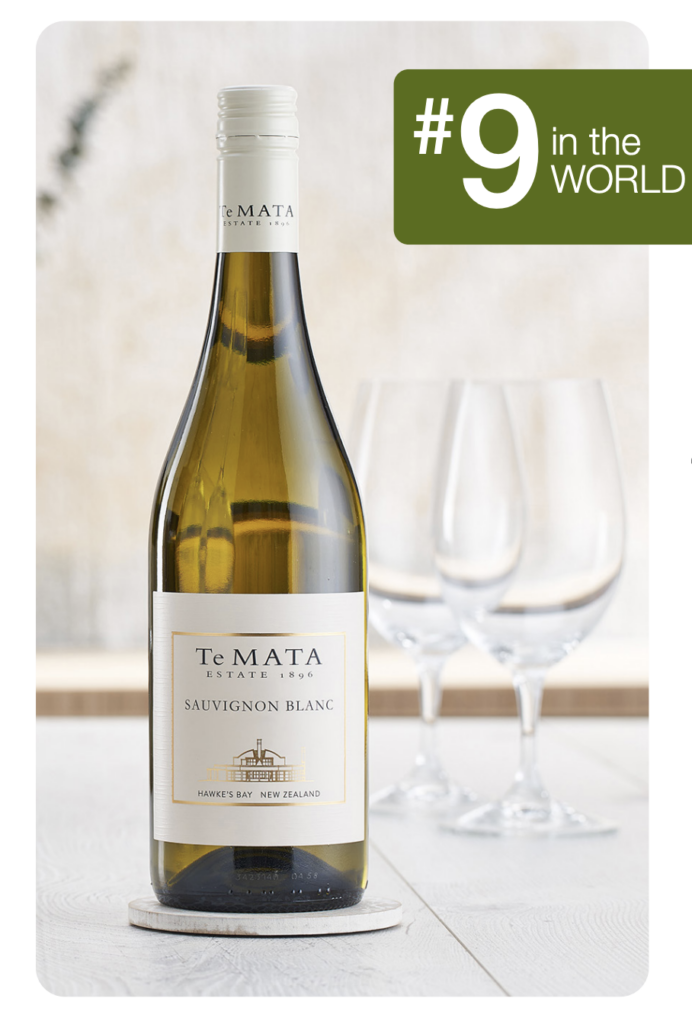
  • Sauvignon #9 in the World

    The Best Value Sauvignon Blancs of 2026 – WineSearcher


    Although Chile may be providing some fresh alternatives, New Zealand still holds the crown for best value Sav.The sun does indeed shine on Sauvignon Blanc as they offer some of the market’s best value wines.When it comes to great value, and by that we mean great taste at great prices, few can rival the green aromatic offerings of Sauvignon Blanc.

    This year’s list is particularly illuminating as it sheds light on two key parts of the world that currently offer stunning iterations of the grape that are both affordable and widely available.Those regions are Chile and New Zealand, with eight of the 10 wines coming from these two skinny countries.So what makes these countries ideal homes for a grape whose origins lie deep in France’s Loire Valley?Well, both Chile and New Zealand are long, thin stretches of landmass that hug a coastline.

    They both tend towards the cooler climes with alpine mountains and valleys. Which, for Sauvignon Blanc, help bring out the grape’s natural acidity while preserving its crystalline fruit.In New Zealand’s Marlborough, that can mean grassy notes of asparagus and crisp apple, while in Chile’s Limarí Valley, it can lead to exotic notes of citrus and jalapeño.So, all that aside, what are 2026’s best value Sauvignon Blancs?

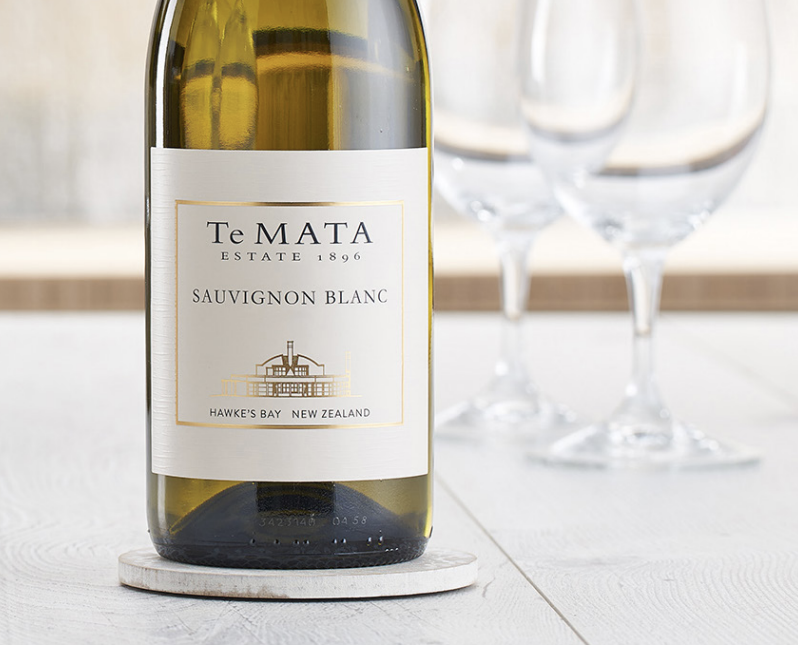
    In this global listing from Wine Searcher, New Zealand still ‘holds the crown’ for best value Sauvignon Blanc. “Te Mata Estate is one of the Hawke’s Bay’s most recognisable… esteemed wineries. With a price point of USD$23 and a score of 89 points, Te Mata Sauvignon Blanc offers a refreshing break from Marlborough’s offerings.”

    WINE-SEARCHER-26ESB

    Nat Sellers, Wine Searcher, 23 May 2026


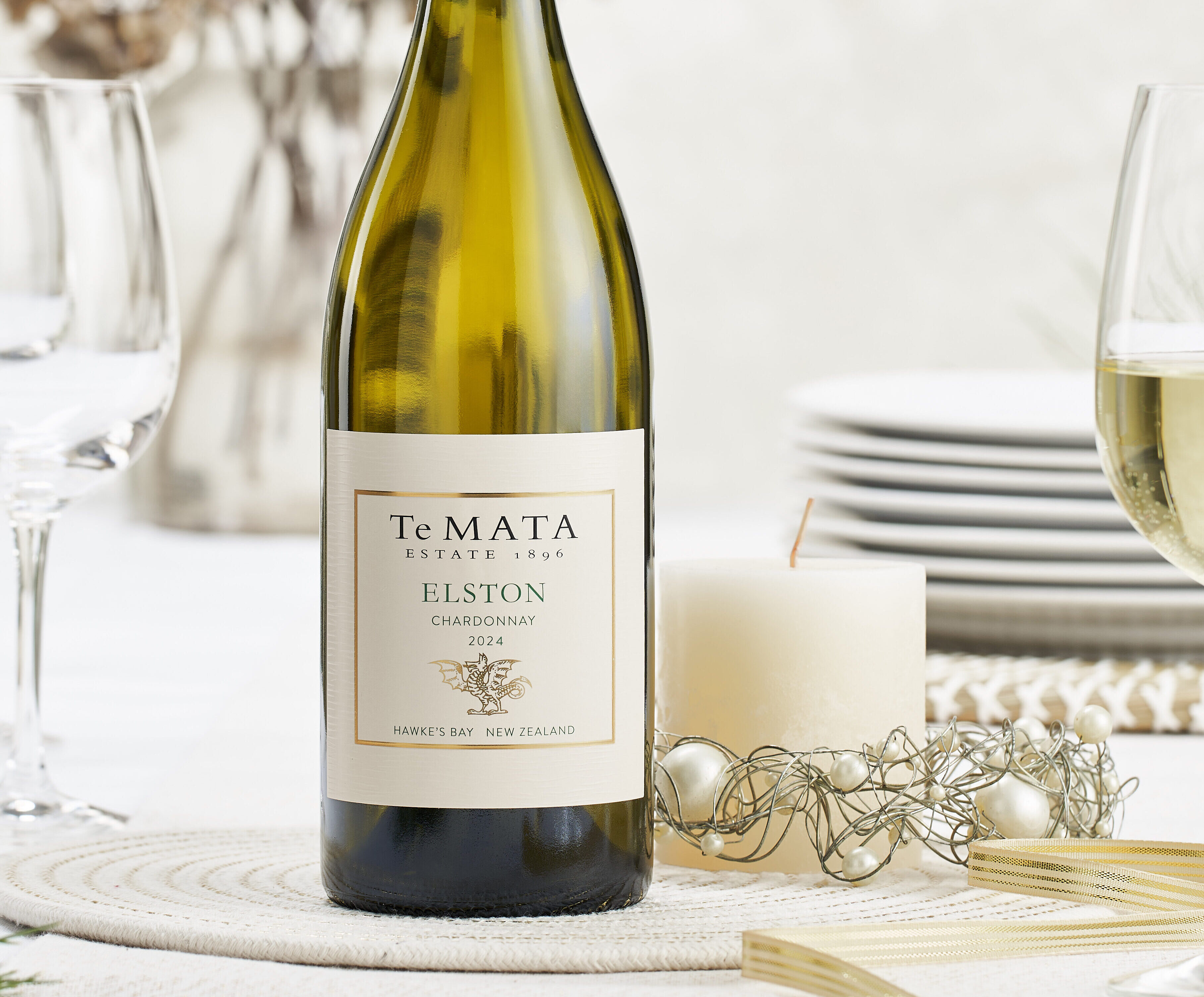
  • Elston #1 in the World for Value

    Elston Chardonnay has just been named the fourth best value wine, of any wine, of any style, from anywhere.

    And the best value chardonnay in the world.

    ‘Showing why chardonnay is clearly the premium white grape in New Zealand over sauvignon blanc, the No. 4 Te Mata Chardonnay Hawke’s Bay Elston 2024 combines depth and balance with freshness and clarity. 97 Points.’

    Nick Buck, CEO of Te Mata Estate, says “Chardonnay is the world’s favourite white wine style. For our Te Mata Elston Chardonnay to be singled out as the best value chardonnay and named in the Top 10 is fantastic, and the depth of quality to price on offer in New Zealand chardonnay is really reinforced with six wines selected in the Top 100.”


  • Coleraine: A New Era

    Something iconic happened recently.

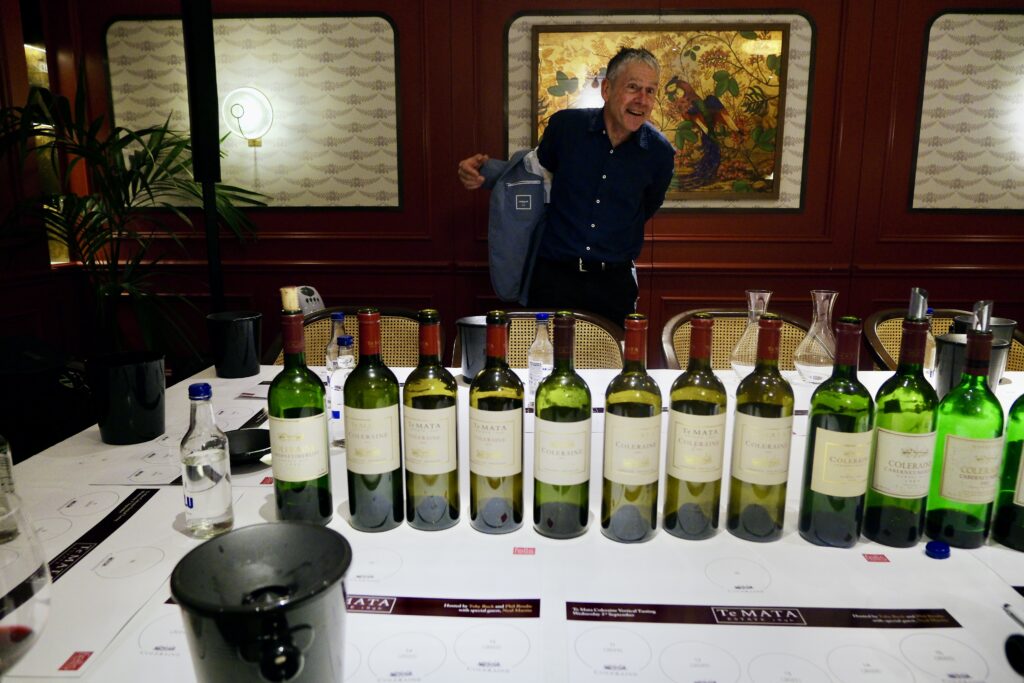
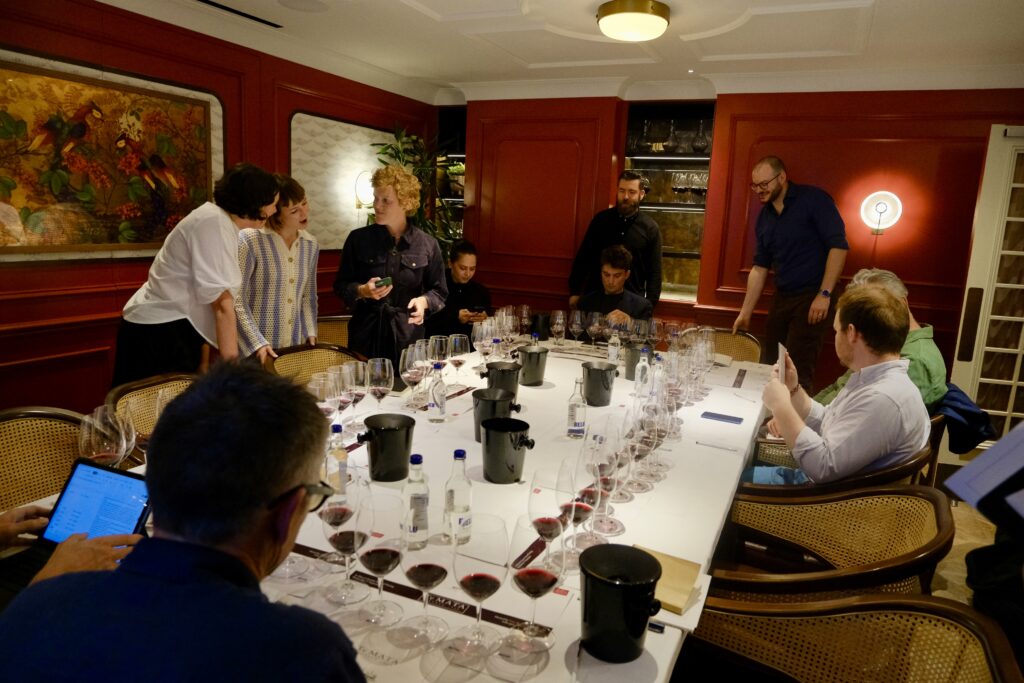
    In the Red Room in London’s Pavilion Hotel.


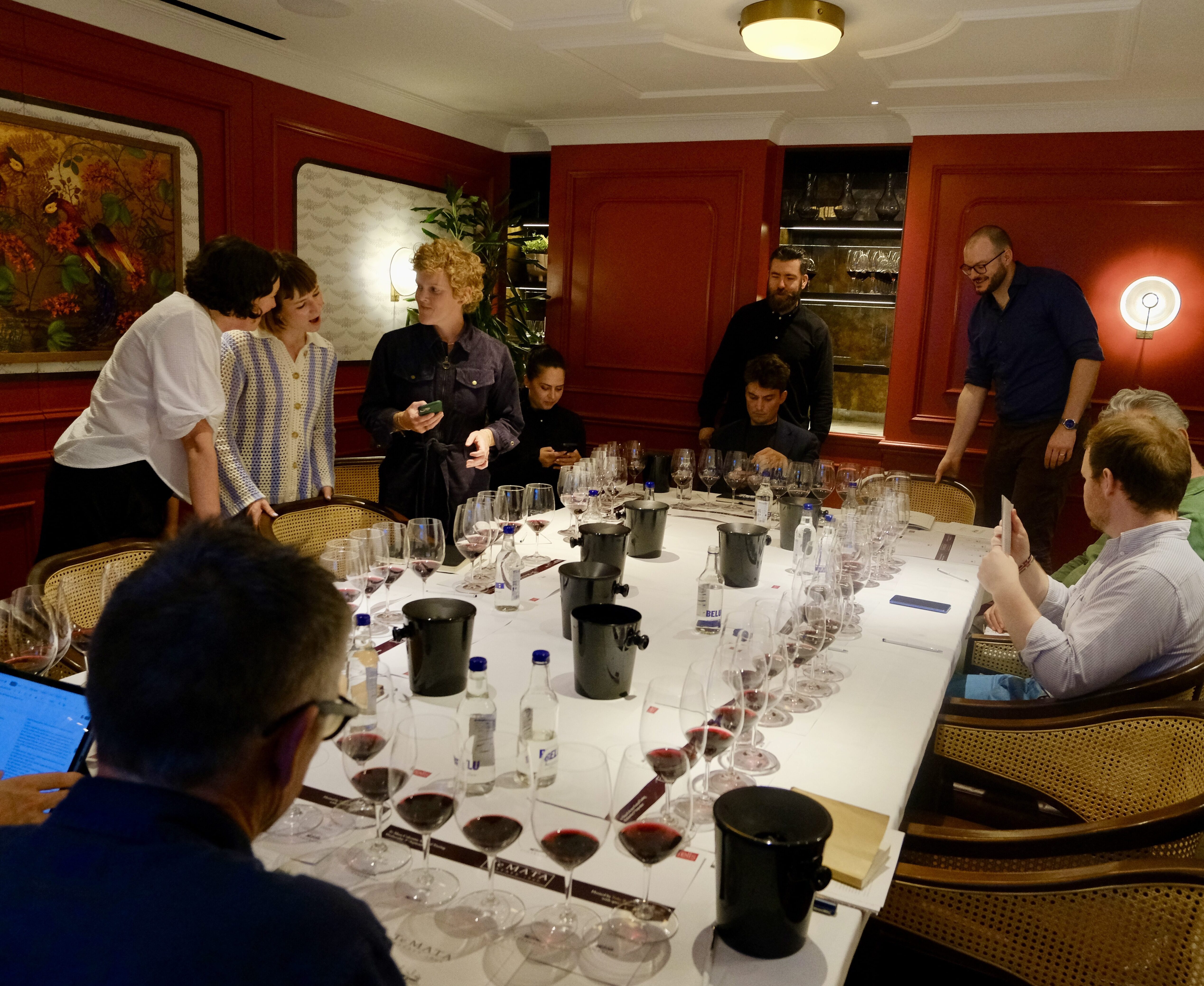
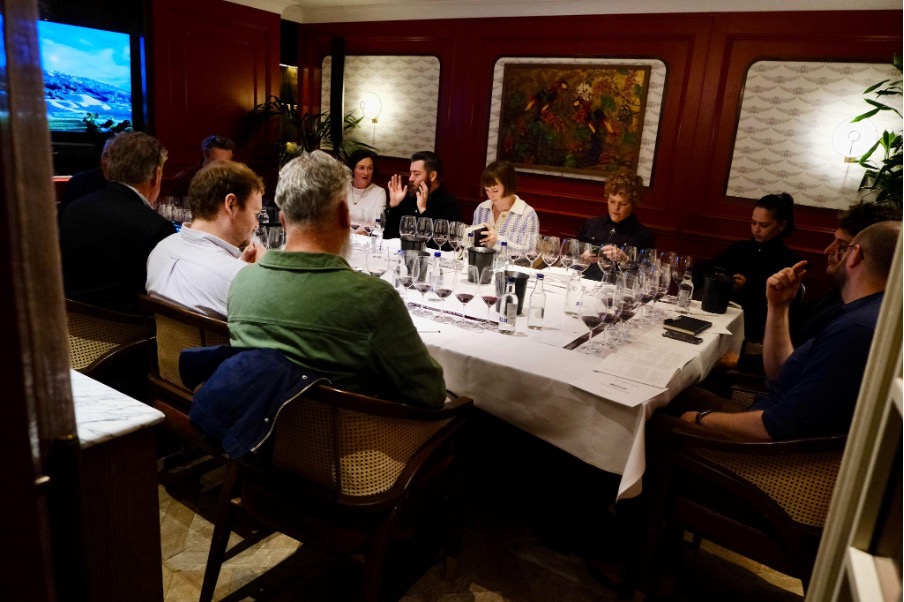
    For the first time outside of New Zealand, Te Mata held a tasting of fifteen vintages of Coleraine, stretching back over more than forty years.

    It was a technical deep-dive on Te Mata’s winemaking, and a gathering of fifteen of the UK’s top wine writers, sommeliers, and trade guests.


    To get to share these wines ourselves, and to see them recognised and understood by fine wine professionals, reflects generations of work at Te Mata Estate – and heralds a new era for the wine. It’s a proud moment to see a Hawke’s Bay wine – and a New Zealand wine – showing just how high quality and age-able NZ red blends can be.

    There were some common themes across each bottle: freshness, depth, energy, elegance. A decades long, evolving, modern, wine vision. And a remarkable consistency of quality – a confirmation of the wine’s “legacy-like” reputation. All this was evident in every glass.
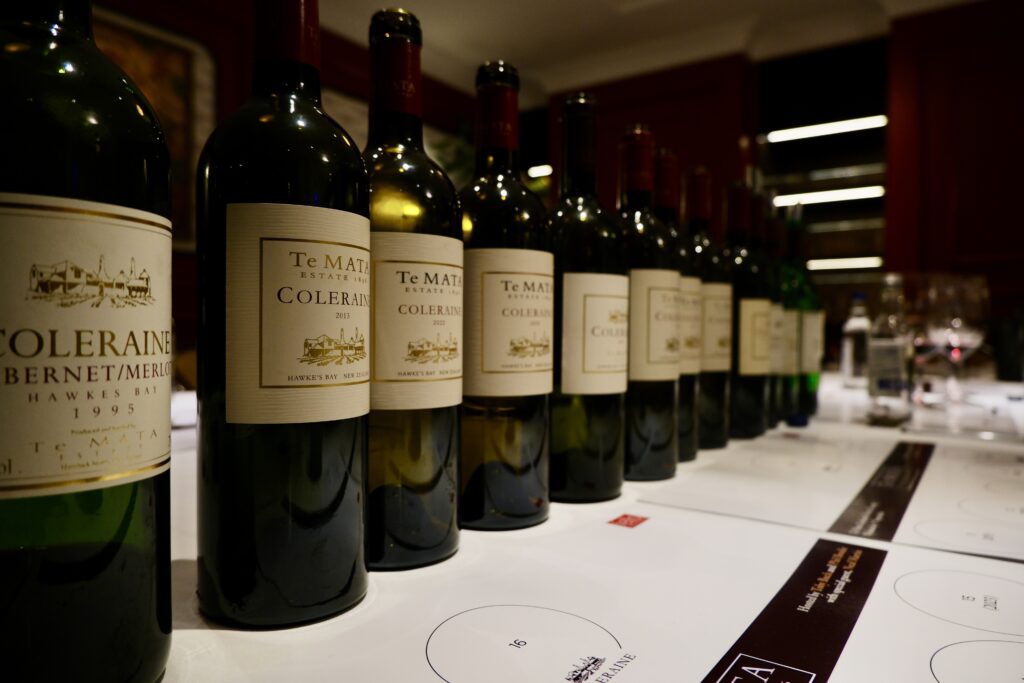
    More than ever though, what stands out is how much modern Coleraine appears as the cumulative result of refinements at every stage; at every vintage, and at every blending.

    In this specific aspect Coleraine sits at the forefront of contemporary winemaking – endlessly researched, tested, polished, honed and perfected – while also setting a benchmark standard for ageing potential.

    At this 130 year old winery, still independent and NZ family owned, and with wines created entirely in Hawke’s Bay by a dedicated  team who continue to push the wine forward – Coleraine continues to inspire conversation, respect, and admiration, wherever in the world a bottle is opened.


    Te Mata Coleraine: 1982-2023

    Neal Martin, Vinous, November 26, 2025


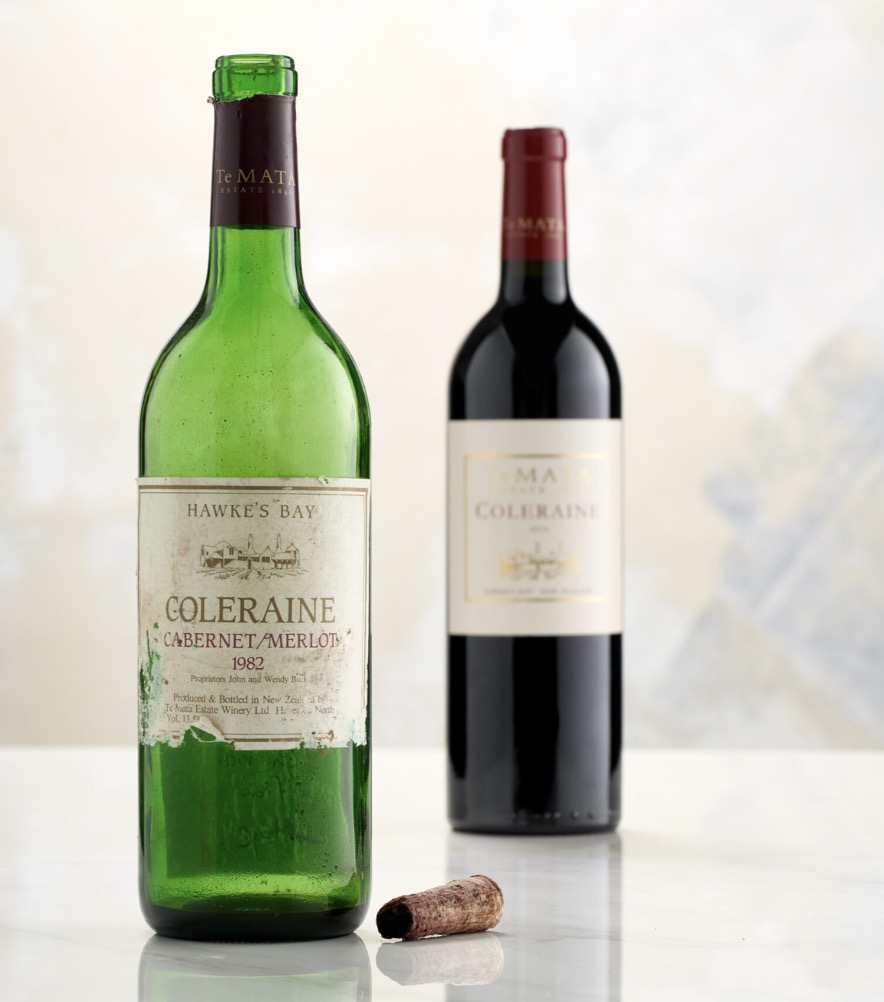
    ‘Allow me to step on my colleague Rebecca Gibb MW’s turf for one moment. Perusing a merchant’s list a few months ago, a particular wine caught my eye: the 1982 Coleraine from Te Mata Estate. Aside from being born during the primordial period of New Zealand’s wine industry, this wine has historical significance: it was the maiden release of this flagship Bordeaux blend.
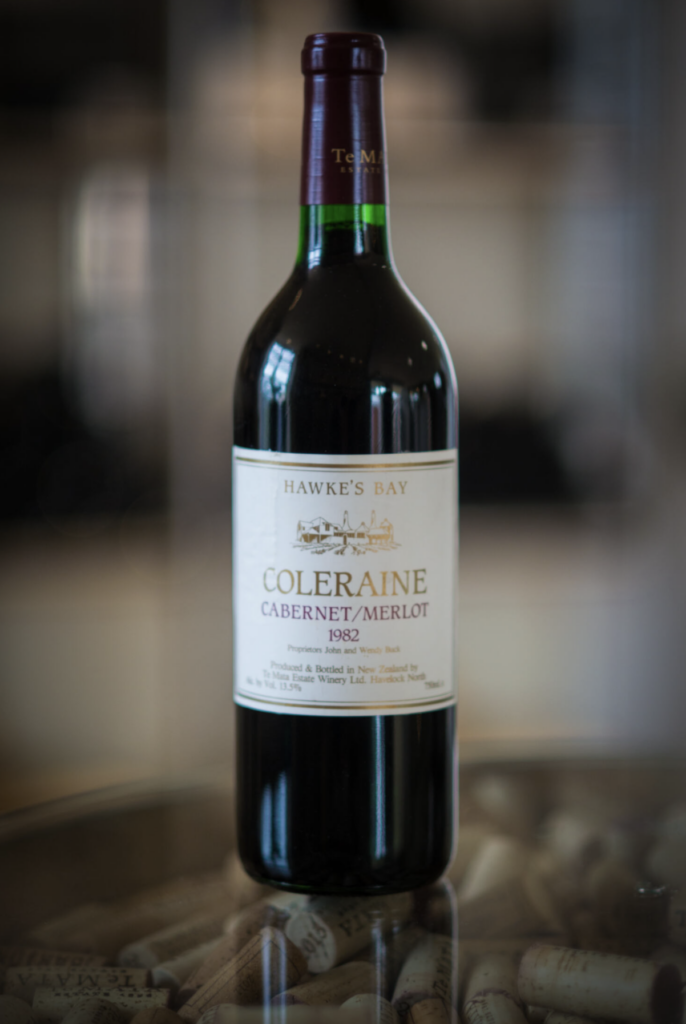
    I snapped it up. It was not particularly expensive, certainly less expensive than its 1982 contemporaries from elsewhere in the world. Having kept in touch with the Buck family since I handed over coverage, I contacted Toby Buck, curious to see if many bottles were extant in their own library. To cut a long story short, the exchange led to a vertical tasting through Te Mata’s U.K. importer (J.E Fells & Co), which took place in September of this year during Buck’s visit to London with winemaker Phil Brodie.

    Te Mata’s history stretches back to the mid-nineteenth century, ‘Te Mata Station’ having been established by English immigrant John Chambers in 1854.

    Three parcels of vines were planted towards the end of the century. Under Bernard Chambers, the estate expanded viticulture so that by 1909, it had become the country’s largest producer. Whereas most of the grape production was used to make fortified wines, Te Mata vinified a small amount of dry wine. It only just managed to survive New Zealand’s temperance movement, and in 1974, the estate was acquired by the present co-owners, the Buck and Morris families.’


    “From 1982 to 1988, Coleraine came from a single vineyard planted in 1900 in the Havelock Hills,” Buck explained. It had been over a decade since we had last met. “The varieties were based on Château Latour, although the first vintage did not contain any Cabernet Franc.”

    I wondered about the origins of the name: “Coleraine is the river port in County Derry, Northern Ireland, where my great-grandfather on my dad’s side of the family, Samuel Morrow, came from,” said Buck. The etymology is Cuil Raithin, which means ‘nook of ferns’. The Morrows had a hardware business in Coleraine, but in 1908, at just 20 years old, Samuel emigrated to New Zealand. He settled on the East Coast just above Hawke’s Bay, selling hardware to rural communities. Family stories suggest his departure was sudden – more of a ‘get on the next boat’ escape than a planned migration. Because he could never return to Europe, the name Coleraine stayed with our family in New Zealand as a mark of our origin – a distant but tough place.”

    “To us, it was a reminder of a wider world and a grand remembrance of life, family, community and conviviality. When the vineyard at Te Mata Estate was established, dad chose to name it Coleraine as a tribute to Samuel Morrow and the family story. It was also a way of putting this epic-sounding, evocative moniker – one that he had grown up with – out there in the public eye. In a sense, conjuring it back into reality. To him, it was this beautiful lyrical name to stand proudly among other grand names.”


    Phil Brodie explained the origins of the vineyard: “From 1982 to 1988, the Coleraine came from a single vineyard planted in 1900 and originally called The Hill. In 1989, it became a blend of pickings in order to represent the best of the vintage. From 1994 onward, Coleraine is still based on the Havelock Hills with some fruit coming from the other subregion of Bridge Pa Triangle, and occasionally a sprinkling from the Dartmoor and Gimblett Gravels subregions. It follows the idea that a wine is greater than the sum of its parts, exploiting differences in soil, orientation and so forth. Te Mata Estate owns all vineyards, and we use our own bottling line, so we have full control.”

    “I have been making the wine at Te Mata for 33 years,” Brodie continued. “I grew up on a sheep farm, so I was always outside, always walking through vineyards. We changed the viticulture in 2019 when we began using cover crops and mulching to lower soil temperatures in the vineyard. We also began to mechanically shake the vines when bunches reached 80 to 100 grams, to remove unripe berries. We started doing that with white varieties, and now the reds. We found that this temporarily shuts down the vine, resulting in smaller berries and thicker skins, which means we can use fewer sprays.”


    “We use open-top tanks and plunge the fruit. We used to do four plunges, but now with smaller berries and older vines with more extract, it’s twice daily. There’s a seven-day fermentation, then we taste the must to decide when to halt the maceration, using only free-run juice and practicing a lot of co-inoculation rather than letting the wine sit on the gross lees. This helps avoid the risk of contamination, Brettanomyces and so on. The wine spends 18 to 20 months in French oak barrels with around 30% new wood. In 2017, we initiated a five-year program with a cooperage in Saint-Estèphe to design a barrel suitable for our Cabernet Sauvignon.”


    ‘Admittedly, I assumed the 1982 Coleraine would be in decline after 43 years. Not in the slightest. I was startled by its vivacity and complexity, both undimmed after all these years.

    Incidentally, this was the only vintage of Coleraine that employed a little American oak. I would have no hesitation dropping it into a lineup of 1982 clarets to see if anyone noticed the imposter. I preferred the 1982 to the more savoury, meaty 1985.

    Thereafter, I was impressed by Coleraine’s consistency. Vintages such as 1996, 2007, 2013 and 2020 were highlights, though they only had their noses in front of a clutch of other impressive wines.

    What a pleasure it was to be reminded of the quality, classic stylishness and inherent longevity of one of New Zealand’s icons.

    Henceforth, I will peruse merchants’ lists carefully in case I spot any other bottles of Coleraine. I recommend you do likewise.’


    Original article here.  Additional images from Te Mata Estate.


    2013 Coleraine 95 Points

    Drinking Window: 2026 – 2045

    The 2013 Coleraine has a seductive bouquet with blackcurrant, raspberry coulis and blood orange scents, beautifully defined with a little more panache and charm than the 2009. The palate has a satin-like texture on the entry, moderate depth, sleek and sensual with a plush but restrained finish that demonstrates real sophistication. Classy from start to finish, this is a beautiful Coleraine that will give many years’ drinking pleasure.


    2007 Coleraine 95 Points

    Drinking Window: 2025 – 2045

    The 2007 Coleraine initially has a tighter, less expressive bouquet than the 2004, demands more coaxing though there is a similar fruit profile with blackberry, cedar and perhaps a touch more pressed flowers. Impressive delineation and focus. The palate is medium-bodied with finely sculpted tannins that carry layers of mulberry and blackcurrant fruit, allspice and Chinese 5-spice. This is very detailed on the finish with gentle grip: a wonderful Coleraine that will give 15, perhaps even 20 years of drinking pleasure.


    2020 Coleraine 94 Points

    Drinking Window: 2027 – 2052

    The 2020 Coleraine has a bit more flair and purity on the nose compared to the 2019 with perfumed black cherries, cassis, violet and incense aromas, the oak a little more integrated by direct comparison. The palate is medium-bodied with svelte tannins, a keen line of acidity, a little more powdery in texture but you cannot help but be seduced by the harmony, pepperiness and length on the finish. One of the best Coleraine vintages in recent years.


    1996 Coleraine 94 Points

    Drinking Window: 2025 – 2040

    The 1996 Coleraine is less flamboyant and concentrated compared to the previous vintage, but this has more delineation and complexity with cedar and tobacco infused red berry fruit, hints of bay leaf and wild mint. Very focused, very classy. The palate is medium-bodied with attractive piquancy and spiciness towards the finish. Old World beautifully married with New World. Superb.


    1982 Coleraine 94 Points

    Drinking Window: 2025 – 2038

    The 1982 Coleraine was the first commercialised vintage, an anomaly since it is the only vintage with a small percentage of American oak as there was a shortage of French oak in New Zealand. To say this surpasses my expectations is an understatement. It has a glorious, yes, Bordeaux-like nose, a doppelgänger for a Left Bank ’82: bright and vivid brambly red fruit with superb delineation and focus. Just a hint of dark chocolate emerges with time, betraying its non-Bordeaux roots. The palate is medium-bodied and driven by the silver thread of acidity. Quite a sweet core of red plum and crushed strawberry, silky smooth with ample weight on the finish, to my own surprise this historic New Zealand wine is nowhere near the end of its drinking window.


    2021 Coleraine 93 Points

    Drinking Window: 2027 – 2050

    The 2021 Coleraine has another very intense nose not dissimilar to the 2019: layers of blackcurrant, cedar and violet, though not the same level of mineralité as the 2020. Then again, the aromatics improve in the glass and reveal very appealing graphite/pencil shavings scents that lend it a Left Bank allure. The palate is medium-bodied with a keen line of acidity. Fresh and vibrant, this is endowed with plenty of graphite infused black fruit with impressive precision on the finish. I was tentative about this Coleraine at first, but it eventually wins you over.


    2023 Coleraine 92 Points

    Drinking Window: 2028 – 2048

    The 2023 Coleraine comes from the longest ever growing season and the second hottest on record. Unsurprisingly it has a very concentrated nose with dense blackberry, cassis, espresso and star anis, just a touch of pencil box with time. The palate is medium-bodied with a fine bead of acidity, silky tannins, very harmonious with just the right amount of sapidity on the finish. Fans out beautifully, though it just needs a little more persistence that may well manifest with time.


    Only a small amount of Coleraine is available each year.

    2026 will be the 40th release of Coleraine as Te Mata also celebrates its 130th anniversary.

    Be signed up to make sure you don’t miss out.


  • Elston Chardonnay

    Elston Chardonnay: The White Queen of Te Mata Estate

    Elston is a historic New Zealand Chardonnay from Te Mata Estate’s oldest continuously producing Chardonnay vineyard, first planted in 1892 on the limestone and sandstone slopes of Te Mata Peak in Hawke’s Bay.

    Recognised by James Suckling as the number one Chardonnay in the world for value, and the fourth wine overall in the world for value, Elston represents the unique combination of place, heritage and craftsmanship that defines Te Mata Estate.

    More than 130 years after the first Chardonnay vines were planted, Elston continues to express the character of its landscape: intense Hawke’s Bay sunlight, cooling maritime breezes, ancient marine soils and careful vineyard stewardship.


    The oldest continuously producing Chardonnay vineyard in New Zealand

    Elston Chardonnay comes primarily from Te Mata Estate’s historic Chardonnay vineyards in the Havelock Hills, surrounding Te Mata Peak.

    First planted in 1892, these vineyards represent New Zealand’s oldest continuously producing Chardonnay vineyard. For more than a century, Chardonnay has been cultivated in this landscape and crafted in the same historic Te Mata winery cellars.

    The connection between vineyard, place and winery is central to Elston’s identity. It is a wine shaped not only by a grape variety, but by generations of observation, farming and winemaking.


    Why is Elston Chardonnay called Elston?

    Elston Chardonnay takes its name from Elston Hall in Nottinghamshire, England, where members of the Chambers family, who played a foundational role in Te Mata Estate’s history, were educated as children.

    Elston Hall was also the ancestral home of the Darwin family. For the Chambers family, the name carried memories of education, curiosity and learning before their journey first to Australia and later to New Zealand, where they established Te Mata Estate.

    The name Elston reflects values that remain central to Te Mata today: knowledge, cultivation, exploration and a long-term relationship with the land.


    The White Queen of Hawke’s Bay Chardonnay

    Elston Chardonnay is sometimes known as “The White Queen”, a reference to the wine’s characteristic white-fleshed stone fruit flavours: white peach, nectarine and citrus.

    Hawke’s Bay’s combination of abundant sunshine and cool maritime influence creates ideal conditions for Chardonnay. The region allows grapes to achieve concentration and ripeness while maintaining freshness, acidity and aromatic lift.

    Te Mata’s Chardonnay vineyards sit within approximately five kilometres of the Pacific Ocean, on elevated north-facing slopes that capture cooling sea breezes.

    This combination creates a distinctive style of Chardonnay:

    • Ripe but not heavy
    • Textural but not broad
    • Mineral but not austere
    • Powerful yet elegant

    The geology behind Elston Chardonnay

    The character of Elston begins beneath the vines.

    Te Mata Peak is one of Hawke’s Bay’s most remarkable geological formations: a tectonically uplifted seabed formed from compressed marine sediments, shells and limestone.

    Ancient marine fossils can still be found within these soils, including oyster shells from the seabed that existed millions of years before the first vines were planted.

    In exposed areas of the vineyard, the limestone and silica-rich rock is so dense that striking it with a shovel produces a bell-like ring.

    The vineyard soils contain a rare combination of:

    • Sandy loam topsoil, which provides drainage and supports healthy vine growth
    • Sandstone and clay subsoil, combining drainage with water retention and mid-palate generosity
    • Limestone and silica-rich layers, creating restriction, mineral intensity and structure

    The vines cannot simply drive deep roots downward. Instead, roots spread through cracks and fissures in the rock, naturally restricting vigour and encouraging smaller, more concentrated berries.


    The influence of Chardonnay clones

    Elston Chardonnay is made from a combination of carefully selected Chardonnay clones, including:

    • Mendoza (Wente) clone
    • McRae clone
    • Burgundy Meursault clone

    The combination of these clones, Hawke’s Bay sunlight and the mineral soils of Te Mata Peak contributes to Elston’s distinctive character.

    The intensity of sunlight encourages thicker grape skins, creating phenolic texture and flavours often described as:

    • White nectarine skin
    • Grapefruit pith
    • Citrus peel
    • Mineral freshness

    These qualities are balanced by cool nights and ocean breezes, which preserve acidity and create freshness, length and precision.

    A vineyard shaped by restraint

    Elston Chardonnay comes from carefully managed vineyards that are naturally low yielding, typically producing around 4–6 tonnes per hectare.

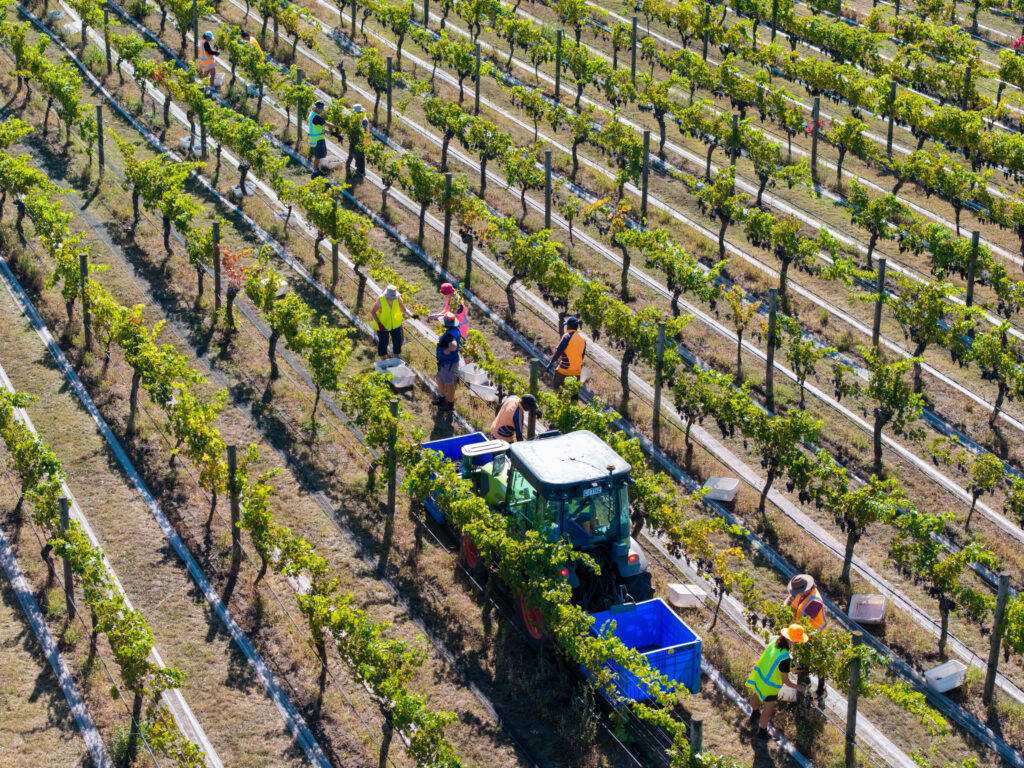
    The grapes are entirely hand harvested to preserve quality and protect the delicate balance between concentration and freshness.

    The long Hawke’s Bay growing season allows flavours to develop gradually without excessive sugar accumulation. The region’s reliable dry conditions, created partly by its rain-shadow position, allow grapes to ripen slowly and evenly.

    The character of Elston Chardonnay in the glass

    Elston Chardonnay is recognised for its combination of richness, elegance and persistence.

    Typical characteristics include:

    • White peach and nectarine
    • Citrus zest and grapefruit
    • Crème brûlée richness
    • Hazelnut and subtle vanilla
    • Saline mineral notes
    • Fine acidity and long persistence

    The defining quality of Elston is its internal tension: the ability to combine generosity with freshness.

    It offers the richness expected from Hawke’s Bay Chardonnay while retaining the line, precision and longevity associated with great vineyard sites.

    A Chardonnay recognised around the world

    Elston Chardonnay has earned international recognition throughout its history.

    Te Mata Chardonnay has been served at significant occasions including:

    • The wedding of Prince William and Catherine Middleton
    • The Queen Elizabeth II Diamond Jubilee celebrations
    • The inauguration of President Barack Obama

    The wine has also appeared in popular culture, including a reference in a Rosalind Boone novel.

    These moments reflect Elston’s place as both a distinctive expression of New Zealand and a Chardonnay recognised internationally.

    A wine of place, history and longevity

    For more than 130 years, the Chardonnay vineyards of Te Mata Estate have been shaped by the same essential forces: ancient seabed soils, Hawke’s Bay sunlight, cooling ocean breezes and careful human stewardship.

    Elston is not defined by one element alone. Its identity comes from the interaction of geology, climate, vineyard age, grape variety and generations of winemaking knowledge.

    Elston Chardonnay captures the character of Te Mata Estate: elegant, expressive and enduring.

    A wine with the richness of Hawke’s Bay, the precision of its soils and the history of a place that has been cultivating excellence since 1892.

  • Lighter Bottles, Bigger Impact

    For wine producers in Hawke’s Bay, sustainability is no longer an abstract ambition but a practical, daily discipline. At Te Mata Estate, this philosophy has long extended beyond the vineyard into packaging, where decisions about glass bottles carry real environmental weight. For more than fifteen years, the estate has worked with O-I to use recycled glass and progressively lighter bottles, embedding circular thinking into every stage of production.


    Glass is uniquely suited to this approach. It is one of the few packaging materials that can be recycled endlessly without loss of quality, forming the basis of a true circular economy. Around 80 percent of recycled glass is remade into new bottles, often within weeks, reducing reliance on raw materials and lowering energy use in manufacturing. Each increase in recycled content directly cuts carbon emissions, making recycled glass not just a symbolic choice but a measurable one.

    For a winery exporting roughly half its production to more than 45 countries, weight becomes a critical factor. Traditional heavy glass bottles, once associated with prestige, carry a hidden environmental cost in transport. Lighter bottles reduce shipping weight across every stage of the journey, from Hawke’s Bay to global markets, compounding emissions savings at scale. At Te Mata Estate, where wines are bottled onsite and shipped internationally, these incremental reductions add up to a meaningful impact over time.

    The choice of lighter recycled glass also reflects a broader cultural shift within the wine industry. Increasingly, producers are questioning the visual language of weight and excess, recognising that quality resides in the wine itself rather than in heavy packaging. For Te Mata, the move toward lighter bottles is both practical and philosophical: a commitment to authenticity, where presentation aligns with environmental responsibility rather than perceived luxury.

    Ultimately, the adoption of recycled, lightweight glass is not a single innovation but part of a continuum of small, deliberate improvements. As Te Mata Estate frames it, sustainability is built through “1% changes” across the entire system, from vineyard practices to packaging choices. In this context, the bottle becomes more than a container. It is a visible expression of stewardship, linking Hawke’s Bay to a global network of consumers while reducing the footprint of every glass poured.

  • Energy, Systems & Investment

    At Te Mata, our work begins in the vineyard and continues through the winery to the finished bottle. It is a continuous process, shaped by land, light and season. Increasingly, it is also shaped by the systems that support how we work, including energy, which sits quietly behind every stage of production.


    Today, all of our electricity, across both vineyard operations and on-site winemaking, is supplied by Kea Energy. From vineyard activity through to vinification, cellaring, bottling and labelling, every part of our day-to-day operation is connected to this supply.

    Kea Energy generates electricity entirely from renewable sources and matches its total generation to customer demand over the course of the year. By sourcing all of our electricity through this system, our work is supported by renewable generation that is grounded in New Zealand conditions and infrastructure.


    Electricity, however, does not move through the grid in a way that allows it to be traced directly from source to use. For this reason, the “renewable” attribute of electricity is often separated into certificates, which can be bought and sold independently of the power itself. Many organisations rely on these instruments to make renewable claims, regardless of their direct connection to generation.

    Our approach is to stay close to the physical system. We work directly with a New Zealand generator whose portfolio is entirely renewable, supporting both current supply and future development. We are continuing to strengthen the traceability of this relationship over time, but what matters most is the direction: towards an energy model that is grounded, transparent and aligned with how we actually operate.

Join the Club

Join the Te Mata Club