


Classical Hawke’s Bay with a Modern Twist.
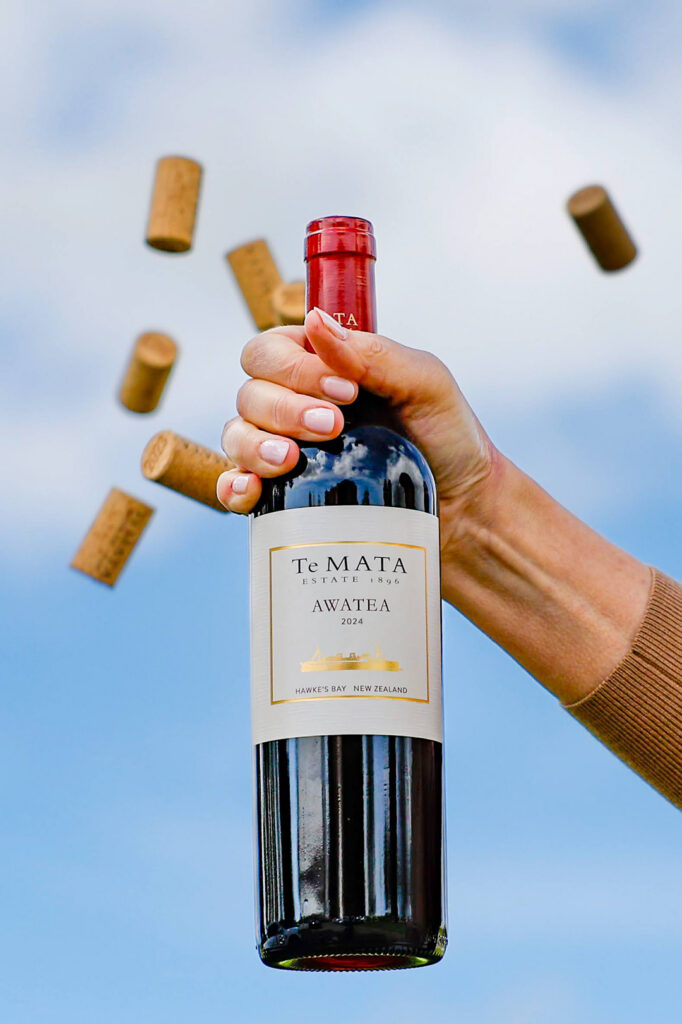
Awatea is Te Mata Estate’s Cabernet Merlot blend from Hawke’s Bay, New Zealand, first made in 1982 as the sibling wine to Coleraine, New Zealand’s most celebrated red. Grown almost entirely on the same Havelock Hills sites as Coleraine, Awatea offers much of its depth, structure and ageing potential at roughly a third of the price, making it one of the best-value fine wines the estate produces. The current release is the 2024 vintage.
Overview
Among people who know Te Mata Estate well, Awatea is one of the most loved wines in the range, in part because it can fly under the radar. It sits in the middle of the specialty winemaking Te Mata is best known for, effectively supported by Coleraine’s headline price, which lets Awatea offer serious quality without a serious price tag.
Critics have called it “modern claret at its finest,” pairing the architecture of a fine Bordeaux with the brightness and generosity of Hawke’s Bay fruit. It is more approachable young than Coleraine, more perfumed and more immediately seductive, while still rewarding a decade or more in the cellar.
In short: a Bordeaux-style Cabernet Merlot blend with the soul of claret, the warmth of Hawke’s Bay, and the pedigree of one of the Southern Hemisphere’s most established wine estates.
Story & Heritage
Awatea was first released in 1982 alongside Coleraine. The two wines were conceived as siblings: Coleraine built as a Cabernet-dominant, Left Bank-style wine, Awatea developed as its Merlot-dominant, Right Bank counterpart. That founding character has held: in every vintage, Awatea carries a significantly higher proportion of Merlot and Cabernet Franc than Coleraine, and Cabernet Franc is typically picked fairly ripe, giving Awatea a distinctive, perfumed lift that is one of its signatures.
Over more than four decades, the quality of Merlot and Cabernet Franc grown at Te Mata’s Hawke’s Bay vineyards has advanced enormously, and Awatea has evolved with it, gradually gaining finer tannins, more restrained oak, and a greater emphasis on vineyard expression. For many longtime fans, it is considered a “baby Coleraine”: sharing much of its bigger sibling’s depth and age-worthiness, at around a third of the price.
Awatea takes its name from the SS Awatea, a famously over-engineered New Zealand-built ocean liner that ran between New Zealand and Australia in the 1930s (the name is Māori for “the eye of the dawn”). The ship was requisitioned as a troop transport during the Second World War and was sunk off Algeria in 1942. In much the same spirit, Awatea the wine is an over-engineered Kiwi take on a small Bordeaux, one that has, over the decades since its first release, come to own a regional signature entirely its own: a wine that could not be made anywhere else in the world.
Alongside Coleraine, Awatea helped prove in the 1980s and 1990s that New Zealand could produce serious Cabernet-based wines, not only Sauvignon Blanc and Pinot Noir, and it remains one of the country’s longest-running modern red wine labels.
Vineyards & Terroir
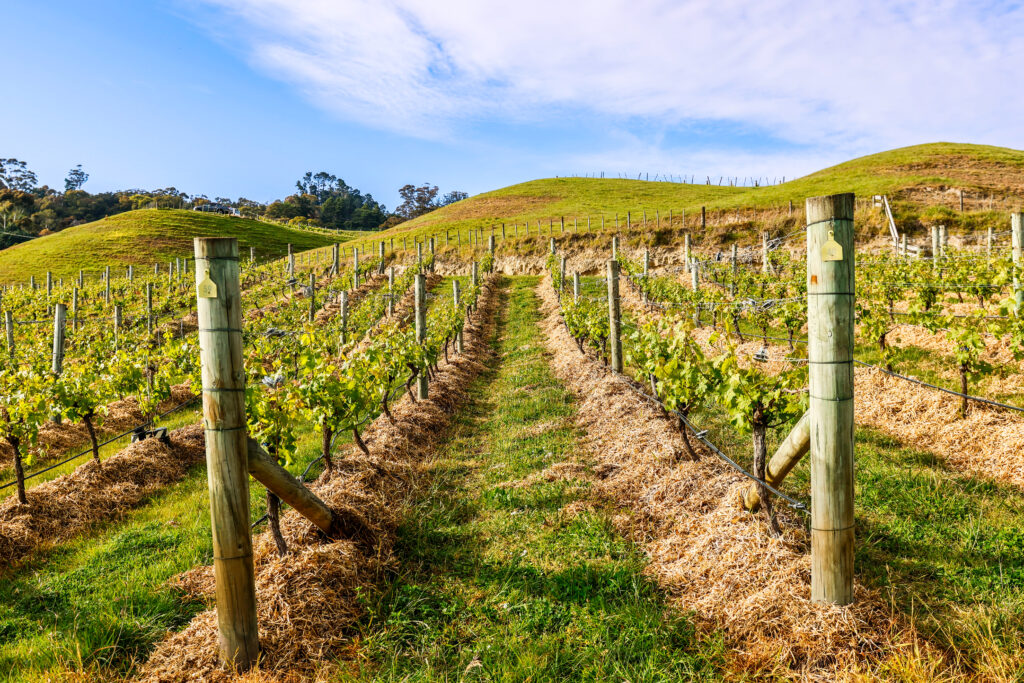
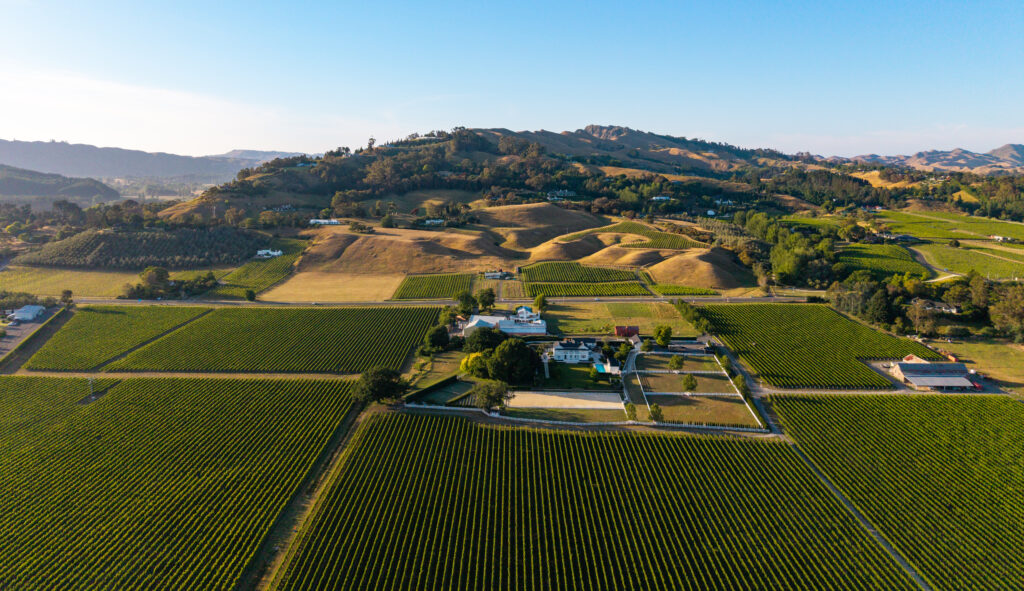
Awatea’s fruit comes almost entirely from Te Mata Estate’s best sites in the Havelock Hills: at least 85% of the blend is drawn from these elevated, north-facing, free-draining hillside vineyards on the slopes of Te Mata Peak, including the estate’s Buck Vineyard, the 1892 Vineyard, and the Coleraine Vineyard itself. Small parcels of Cabernet Sauvignon and Cabernet Franc, come from estate vineyards just inland of Hastings.
Te Mata Peak itself is formed from Jurassic seabed clay, with red iron, quartz and volcanic silica in the soil. The sloped vineyards sit just three kilometres in a straight line from the Pacific Ocean, giving them cool ocean breezes, afternoon thermal winds, and a dramatic diurnal swing between warm days and cool nights. That combination produces a freshness, precision and detail in Te Mata’s Cabernet-Merlot blends that has become a genuine regional signature.
The region has drawn comparisons to parts of Bordeaux, particularly the Médoc and Saint-Julien, and to Mendocino and other cooler, Pacific-influenced parts of California, where dry air, coastal light and rocky, pine and vine-covered hills produce a similar interplay of ripeness and freshness. High UV exposure, high-vigour soils, over fifty years of dedicated viticultural research, and New Zealand’s oldest vines of these varieties (Te Mata holds the country’s oldest Cabernet Sauvignon, Cabernet Franc and Merlot plantings) all contribute to the concentration and aromatic intensity in the glass, at only moderate alcohol, typically around 13.5%.
Winemaking Style
Awatea is made using the same winemaking and barrel programme as Coleraine. Grapes are hand-harvested, destemmed, and undergo a traditional warm-plunge fermentation with extended maceration on skins. The wine is matured in new and seasoned French oak barriques for around 12 to 16 months, with roughly a quarter to a third new oak, and is regularly topped and racked before blending and a second winter in barrel.
Compared to Coleraine, Awatea is made in a slightly more fruit-forward style, with plum, blackberry and rosewater notes to the fore, but carries the same tannic backbone from French oak, meaning it continues to evolve well after it leaves the estate. Its aromatic profile, blackcurrant, blackberry, violet, tobacco, cedar and graphite, sits closer to Pauillac or Margaux in character than to the more muscular Cabernets of the Napa Valley: a wine built for detail and evolution rather than sheer power.
Tasting Notes
General character
Across vintages, Awatea shows floral aromas with intense blackberry, currant and dark plum flavours, leading to a rich, supple palate with a sustained finish. Expect blackcurrant and cassis, blackberry and dark plum, violet and floral perfume, tobacco leaf, cedar and pencil shavings, cocoa and spice, with fresh herbs and a graphite-like minerality underneath. On the palate it is medium-to-full bodied rather than heavy, with silky, polished tannins and bright acidity that keeps the wine energetic through a long, refined finish.
2024 Vintage
Bright crimson with a royal purple edge, Awatea ’24 glows in the glass with youthful poise and vitality. The aroma is refined and perfumed, offering blackberry, dark plum, cassis, redcurrant and dark cherry, with layers of thyme, cedar, tapenade and a gentle floral lift. The palate is generous and seamless, with black plum and blackberry carried by silky, ripe tannins and a savoury, umami thread of black truffle, spice and plum sauce. The finish is long, polished and mouth-watering, showing clarity, balance and a classical Awatea structure with graceful evolution ahead.
2024 Vintage Specifications
| Specification | Detail |
|---|---|
| Blend | 62% Merlot, 27% Cabernet Sauvignon, 11% Cabernet Franc |
| Harvest | Hand-picked, 21 March to 9 April 2024 |
| Fermentation | Destemmed, traditional warm-plunge fermentation, extended maceration on skins |
| Oak | 17 months in new and seasoned French oak (28% new), regularly topped and racked |
| Blending | November 2024, returned to barrel for a second winter |
| Bottled | November 2025 |
| pH | 3.60 |
| TA | 5.5 g/L |
| Alcohol | 13.5% |
Cellaring Guide
Awatea is approachable from around two years after harvest, and then gains finesse, fragrance and complexity for ten to fifteen years, with its sweet spot generally between five and ten years from harvest. It’s a wine that ages slowly and gracefully: Te Mata has poured verticals of older Awatea vintages at twenty to thirty-plus years of age that still show remarkable vibrancy.
If you prefer the darker, more savoury notes of coffee, chocolate and firm tannin, Awatea can be enjoyed on release. For the wine at its most complex and complete, five to fifteen years in the cellar is ideal.
For general storage guidance across the Te Mata range, see the Te Mata Estate Cellaring Guide.
Food Pairings
Awatea is built for the classic Bordeaux table: grilled lamb, grilled steak, grilled aubergine, and roasted vegetables all work beautifully. But its New World acidity, slightly higher than a comparable claret, also opens it up to a wider, more global table.
- Middle Eastern: handles mild spice like paprika, fruit notes like pomegranate, and even a little fresh chilli. Think couscous with mint, pomegranate and lamb, or a shawarma-style spiced lamb dish.
- Chinese cuisine: its fruit brightness is a natural match for richer Chinese dishes.
- Indian cuisine: pairs well with gravy-based dishes and spiced, herbal preparations.
- Classic pairings: hard cheese and good company remain hard to beat.
Critical Acclaim
Used with permission.
2024 Vintage
- James Suckling: praised its texture and layered tannin, “hard not to drink now,” noting it will also reward holding.
- Sam Kim, Wine Orbit: compared it to a high-ranked classified Bordeaux at a fraction of the price.
- Gary Walsh: called it one of the most structured and serious Awateas to date.
- Stephen Wong, The Real Review: praised its precision, elegance and polished tannin, “delicious now” with room to unfold further.
2023 Vintage
- 96 points, Erin Larkin, Robert Parker Wine Advocate. Noted dusty cassis, bramble, raspberry, tobacco, cocoa and violet perfume; will evolve beautifully in bottle.
- 5 Stars, Michael Cooper. Praised deep blackcurrant, plum, spice and herbal complexity with a supple, savoury style.
2022 Vintage
- 95 points, Erin Larkin, Wine Advocate. “Modern claret at its finest,” with cassis, raspberry, chalk, tobacco, paprika and floral complexity.
- 94 points, Gary Walsh, Winefront. Praised mineral freshness, powdery tannins, raspberry and plum fruit and a long finish.
2021 Vintage
- 95+ points, Gary Walsh. Blackcurrant, raspberry, tobacco, cedar, precision and definition.
- 95 points, Huon Hooke, The Real Review. Praised its refinement, focus and ability to reward cellaring.
- 97 points, Sam Kim, Wine Orbit. Rich fruit, silky tannins and excellent value.
2020 Vintage
- 97 points, 5 Stars, Sam Kim. Called it “the best Awatea ever made” at the time, with blackcurrant, plum, tobacco, cedar and cocoa tannins.
- 95 points, 5 Stars, Bob Campbell MW. Praised its elegance, blackcurrant, rose petals, herbs, cedar and spicy oak.
Frequently Asked Questions
What is Awatea?
Awatea is Te Mata Estate’s Cabernet Merlot blend from Hawke’s Bay, New Zealand, first made in 1982 as the sibling wine to the estate’s flagship, Coleraine.
What grapes are in Awatea?
Awatea is a blend of Merlot, Cabernet Sauvignon and Cabernet Franc, sourced almost entirely from Te Mata’s Havelock Hills vineyards. The exact ratio shifts each vintage, but Merlot and Cabernet Franc are always present in significantly higher proportion than in Coleraine.
How is Awatea different from Coleraine?
Both wines come from the same estate, the same Havelock Hills vineyards, and the same winemaking and barrel programme. Awatea is more Merlot and Cabernet Franc-driven, more fruit-forward and more approachable young, while Coleraine is more Cabernet Sauvignon-dominant and more structured. Awatea typically costs around a third of Coleraine’s price.
How long can I cellar Awatea?
Awatea is approachable from around two years after harvest and reaches its best between five and ten years, continuing to gain complexity for up to fifteen years. Older vintages have been enjoyed at twenty to thirty-plus years of age and remain vibrant.
What food pairs well with Awatea?
Classic pairings include grilled lamb, grilled steak, grilled aubergine and roasted vegetables. Its bright New World acidity also makes it a strong match for Middle Eastern dishes with mild spice and pomegranate, as well as Chinese cuisine and Indian gravy-based dishes.
Where does the name Awatea come from?
Awatea is named after the SS Awatea, a New Zealand-built ocean liner of the 1930s. The name is Māori for “the eye of the dawn.”
What is the alcohol level of Awatea?
Typically around 13.5%, moderate for a wine of its concentration and intensity.
Current Release
The 2024 Awatea Cabernet Merlot is available now.