

Te Mata Estate nominated for New World Winery of the Year
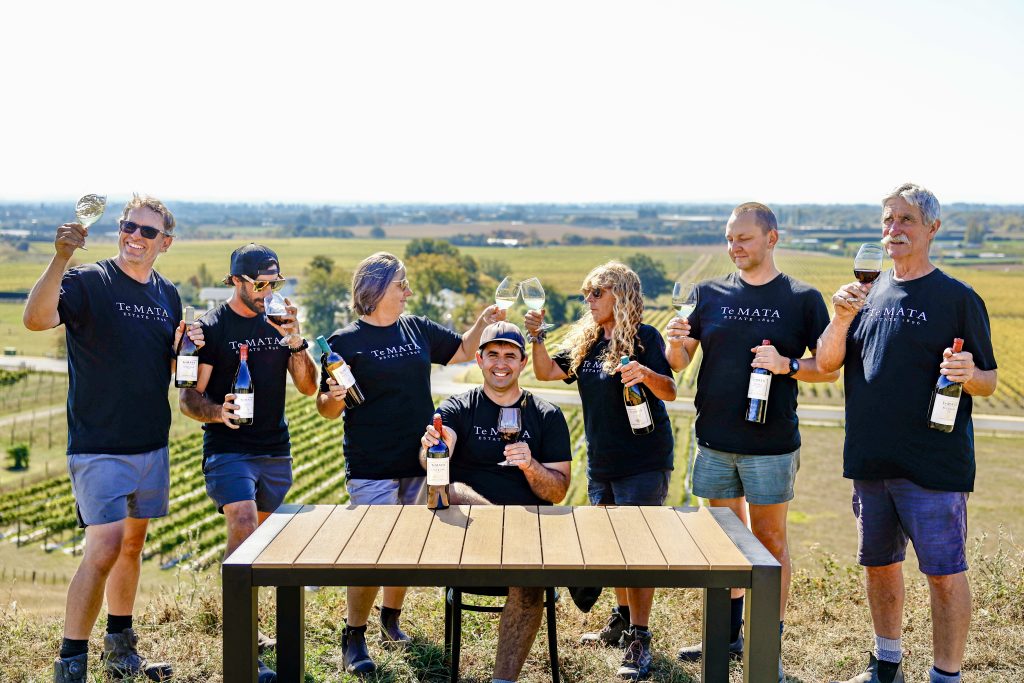
There are some wine awards that make you check the vintage, some that make you check the cellar, and some that simply make you smile. We were delighted to learn that Te Mata Estate has been nominated for New World Winery of the Year in Wine Enthusiast’s 2026 Wine Star Awards, alongside four remarkable wineries from some of the world’s most exciting wine regions: Leeuwin Estate in Margaret River, Bodegas Salentein in Argentina’s Uco Valley, Viña Don Melchor in Chile’s Alto Maipo, and Karas Wines in Armenia’s Ararat Valley.
It is a particularly pleasing nomination for Te Mata because, although the five wineries come from very different parts of the world, there is a common idea running through all of their stories. Each has helped demonstrate what a particular place can do. Each has combined a strong sense of place with ambition, patience and a willingness to challenge what was previously thought possible. In its description of Te Mata, Wine Enthusiast calls us a “north star” for New Zealand winemaking and identifies our secret as “listening to the land”. It is a lovely way of putting something that has been at the heart of Te Mata for more than 130 years.
Listening to the land
Te Mata was founded in 1892, when Bernard Chambers and his fellow English immigrants began planting vines in the hills above Havelock North. The landscape was already telling its story. Te Mata Peak rises above Hawke’s Bay, its north-facing slopes catching the sun, while the nearby Pacific Ocean and the region’s distinctive combination of soils and climate create conditions in which Cabernet Sauvignon, Merlot, Syrah and Chardonnay can develop remarkable depth while retaining freshness.
The challenge, then and now, is to understand what those conditions are saying. Winegrowing is a long conversation between people and place. You plant a vine, watch it grow, learn how it behaves, see where it thrives and gradually begin to understand which parts of a vineyard have something distinctive to say. Then you make a wine from them, taste it, wait, and do it all again the following year.
After 130 years, we have had a reasonable amount of practice.
Some of that accumulated knowledge is literally still growing in the ground. Te Mata’s oldest vineyards include the Cabernet Sauvignon, Merlot and Cabernet Franc plantings that contribute to Coleraine, while the historic Elston Chardonnay vineyard was planted in 1892. These old vines are not simply museum pieces. They remain productive vineyards, and their character continues to shape the wines we make today.
Coleraine is perhaps the clearest expression of this idea. First made in 1982, it is an age-worthy Bordeaux-style blend assembled from different vineyard plots, including some of Te Mata’s oldest plantings. The 2024 vintage marked its 40th release, an extraordinary continuity for a New Zealand wine and one that has helped establish Coleraine as one of the country’s benchmark fine wines.
Wine Enthusiast suggests that, if New Zealand had a Grand Cru system, Coleraine would surely rank among it. We will leave that particular argument to somebody else, but it is certainly nice to see one of our wines described in those terms.
Five New World stories
The other four nominees make the category particularly interesting because each represents a different version of the New World wine story.
Leeuwin Estate is one of Margaret River’s founding wineries and has helped make the region synonymous with great Australian Chardonnay and Cabernet Sauvignon. Bodegas Salentein took a very different gamble, planting vineyards at extraordinary altitude in Argentina’s Uco Valley when the area was still largely undeveloped as a fine-wine region. Today, San Pablo is one of Argentina’s most highly regarded wine-growing areas, with much of its identity shaped by that early conviction.
In Chile’s Alto Maipo, Viña Don Melchor carries a story that began in the nineteenth century, when Don Melchor de Concha y Toro recognised the potential of the foothills and planted French varieties there. More than a century later, those vineyards have helped establish Chilean Cabernet as one of the world’s great expressions of the variety. And in Armenia, Karas Wines is helping to bring renewed international attention to one of the world’s oldest wine cultures, combining Armenia’s extraordinary viticultural history with modern winemaking and a determined effort to tell the country’s story beyond its borders.
What connects these wineries is not a particular grape variety or winemaking technique. It is the conviction that a place can have something distinctive to offer, provided you are prepared to spend enough time listening to it.
That is something we recognise very strongly at Te Mata.
A place worth protecting
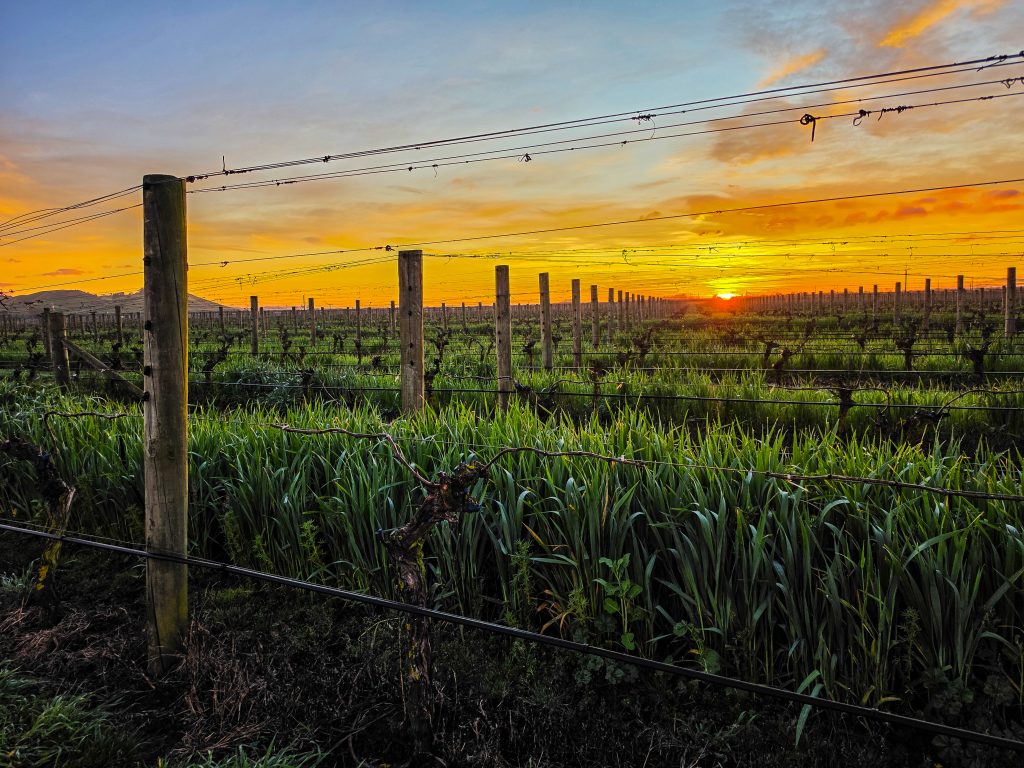
Listening to the land also means looking after it. More than 30 years ago, the Te Mata Special Character Zone was established to protect the landscape and viticultural heritage around Te Mata Peak. It was the first time in New Zealand that government planning protection had been used specifically to safeguard the character of a wine-growing area, and it remains an important part of what makes this corner of Hawke’s Bay special.
For a winery, the idea of place is not abstract. It is the soil beneath the vines, the shape of the hills, the climate, the water, the surrounding landscape and the accumulated knowledge of the people who have worked there. It is also the responsibility to make sure that all of those things remain in good shape for the next generation.
That means respecting old vines, but it does not mean standing still. Te Mata’s vineyards today combine generations of practical knowledge with new approaches to viticulture and winemaking, from increasingly precise vineyard monitoring and AI-assisted berry counting to careful sorting, cover crops and biodiversity initiatives. We use renewable energy and lighter recycled glass, and continue to look for practical ways to reduce the environmental footprint of making and moving our wines.
There is no contradiction between an old vineyard and new technology. In fact, the older the vines become, the more important it seems to be to give them a future.
Still listening
Perhaps that is why this nomination feels like a particularly fitting way to mark Te Mata’s 130th anniversary. It is recognition of a history, certainly, but it is also recognition of a way of thinking about wine.
The New World is no longer particularly new. Across Australia, New Zealand, Argentina, Chile, Armenia and many other regions, vineyards now have histories measured in generations rather than decades. The most interesting question is no longer whether these places can make great wine. It is what kind of great wine each place can make when its own character is allowed to lead the way.
That is the journey Te Mata has been on since 1892.
We are proud to be nominated alongside Leeuwin Estate, Bodegas Salentein, Viña Don Melchor and Karas Wines, and particularly pleased that Wine Enthusiast has chosen to recognise the importance of place in the stories of all five.
As for the result, we will have to wait until the Wine Star Awards in January 2027 to find out.
In the meantime, there is still work to do in Hawke’s Bay. The vines are growing, another vintage is taking shape, and there are always more things to learn from this remarkable place.
After 130 years, we are still listening.