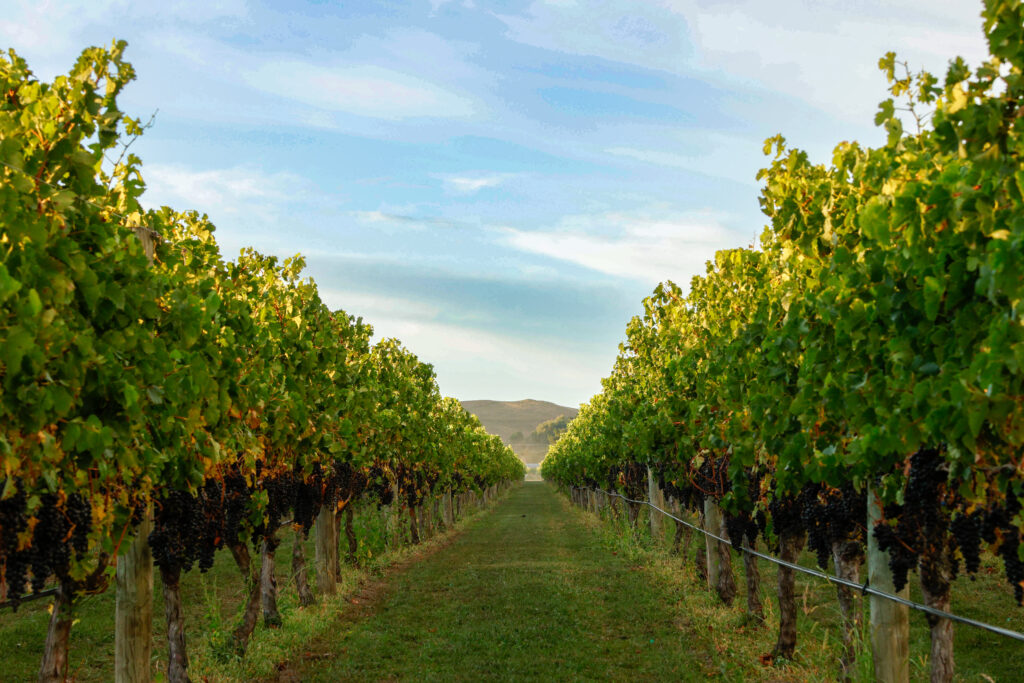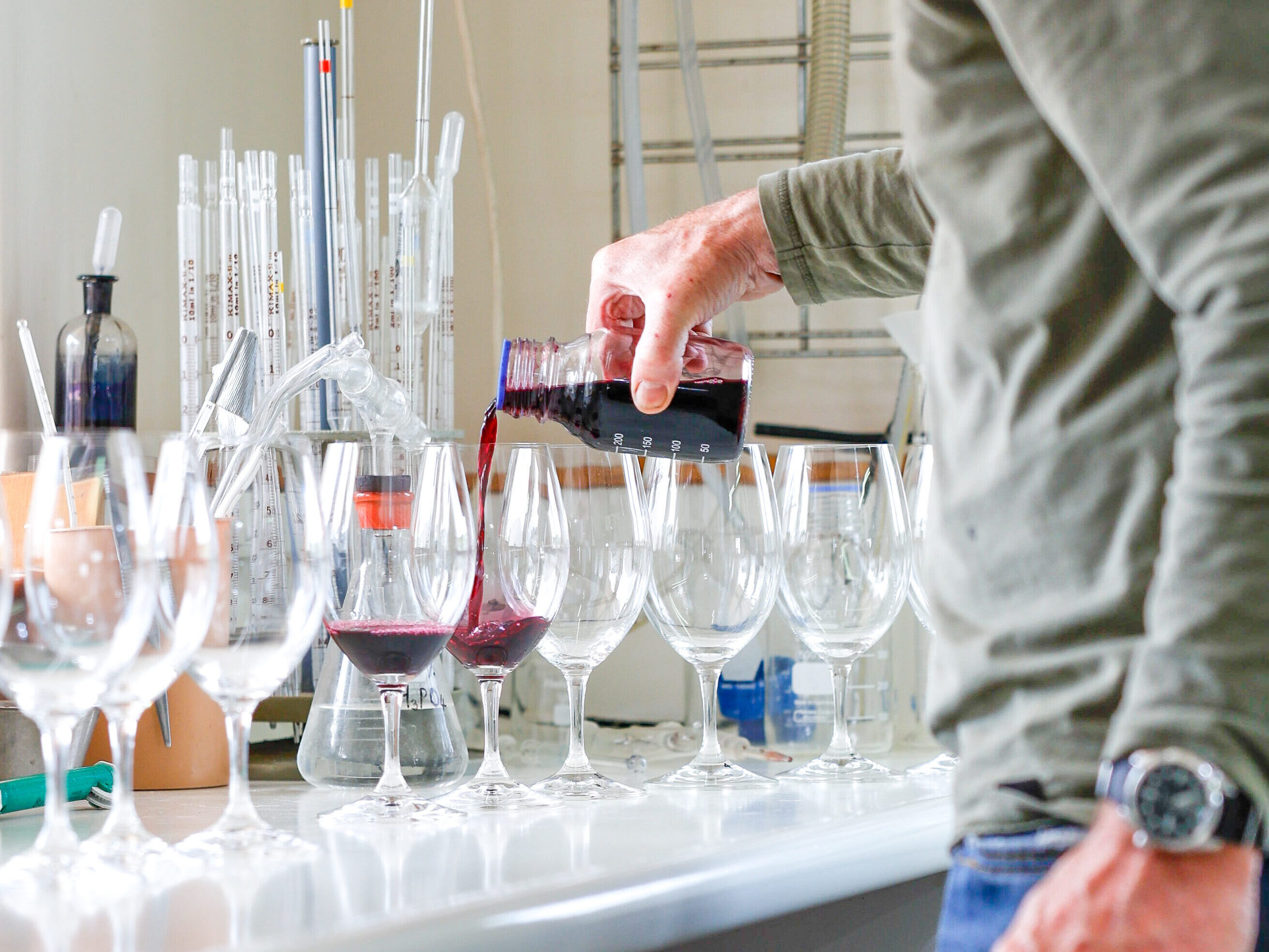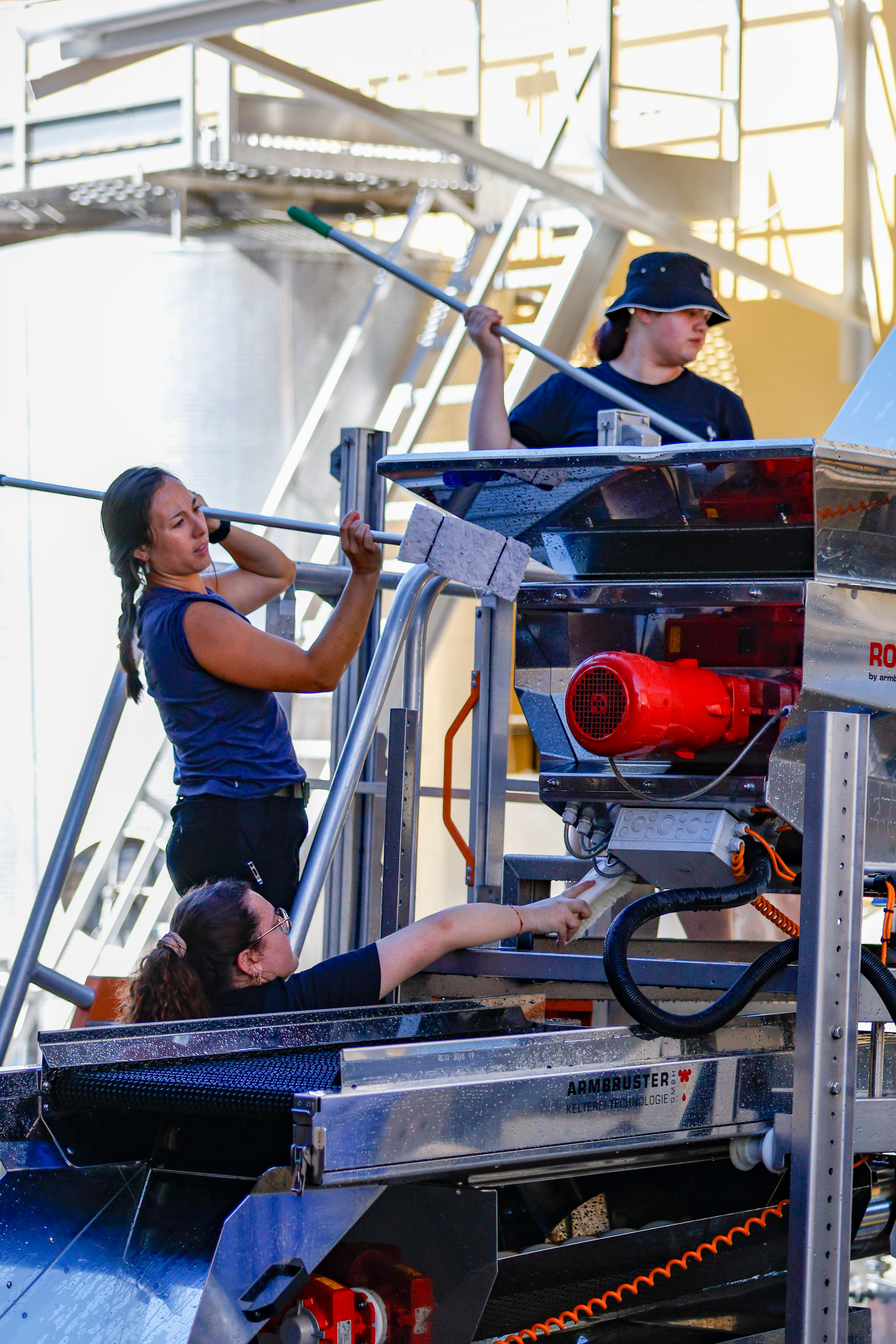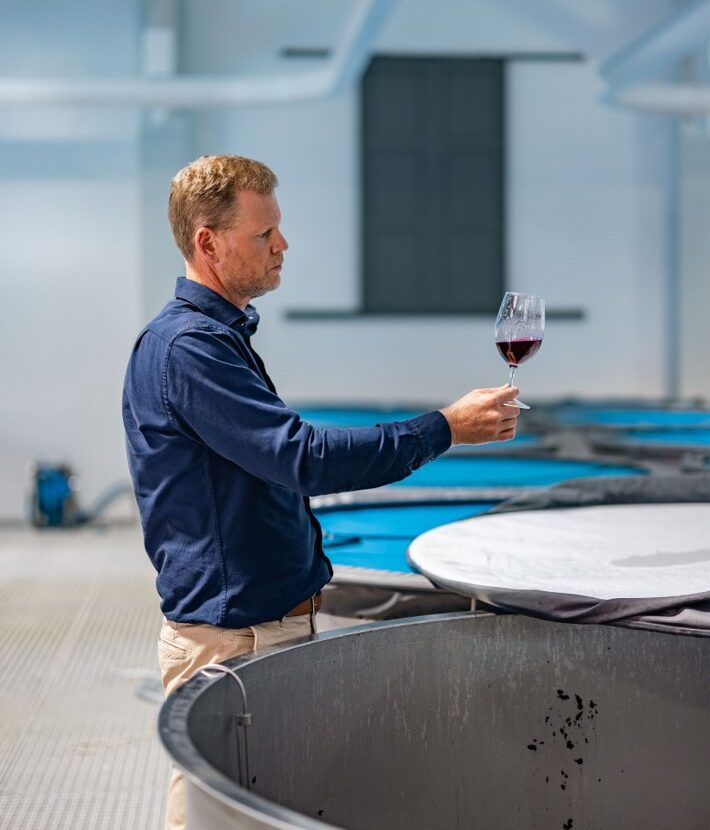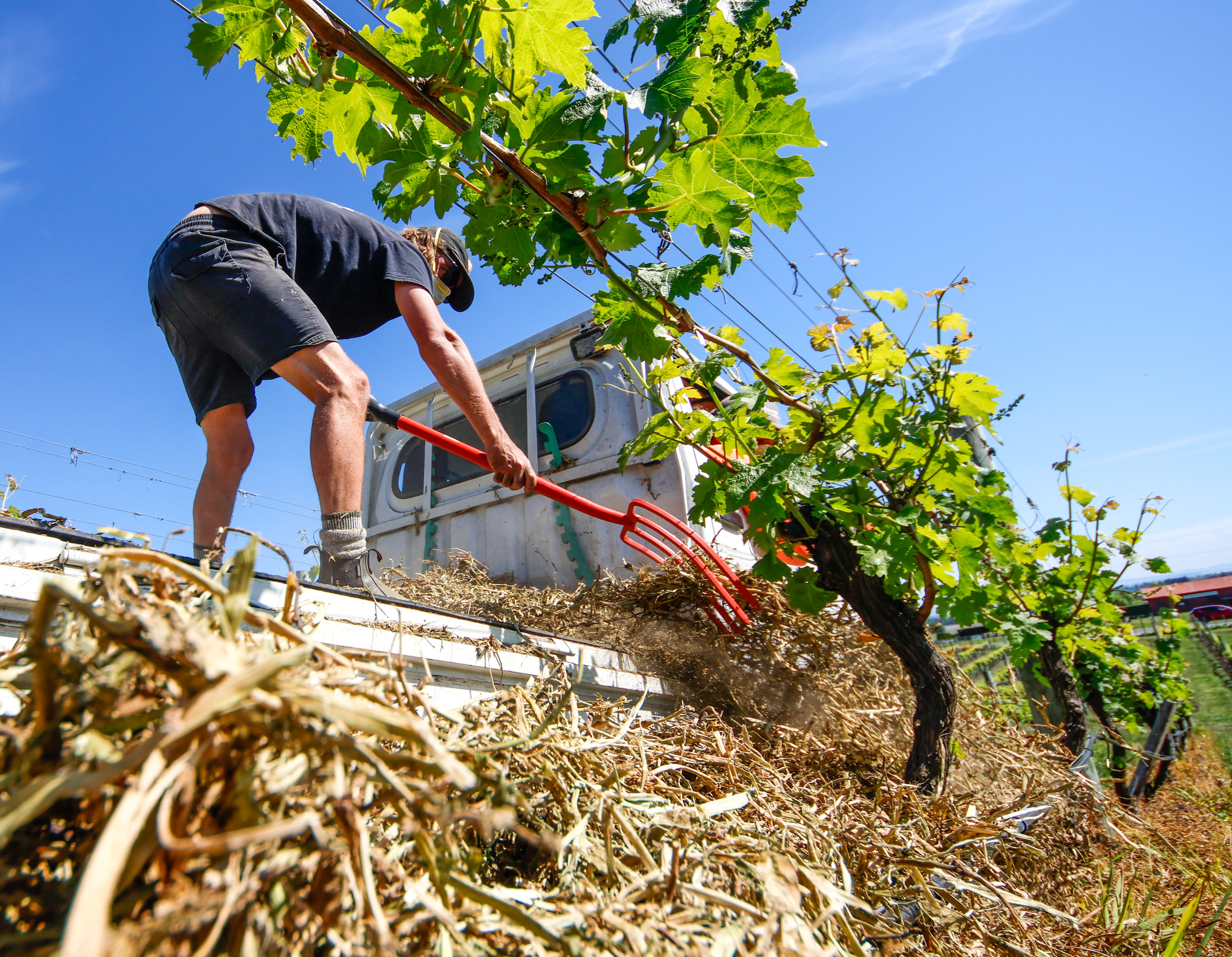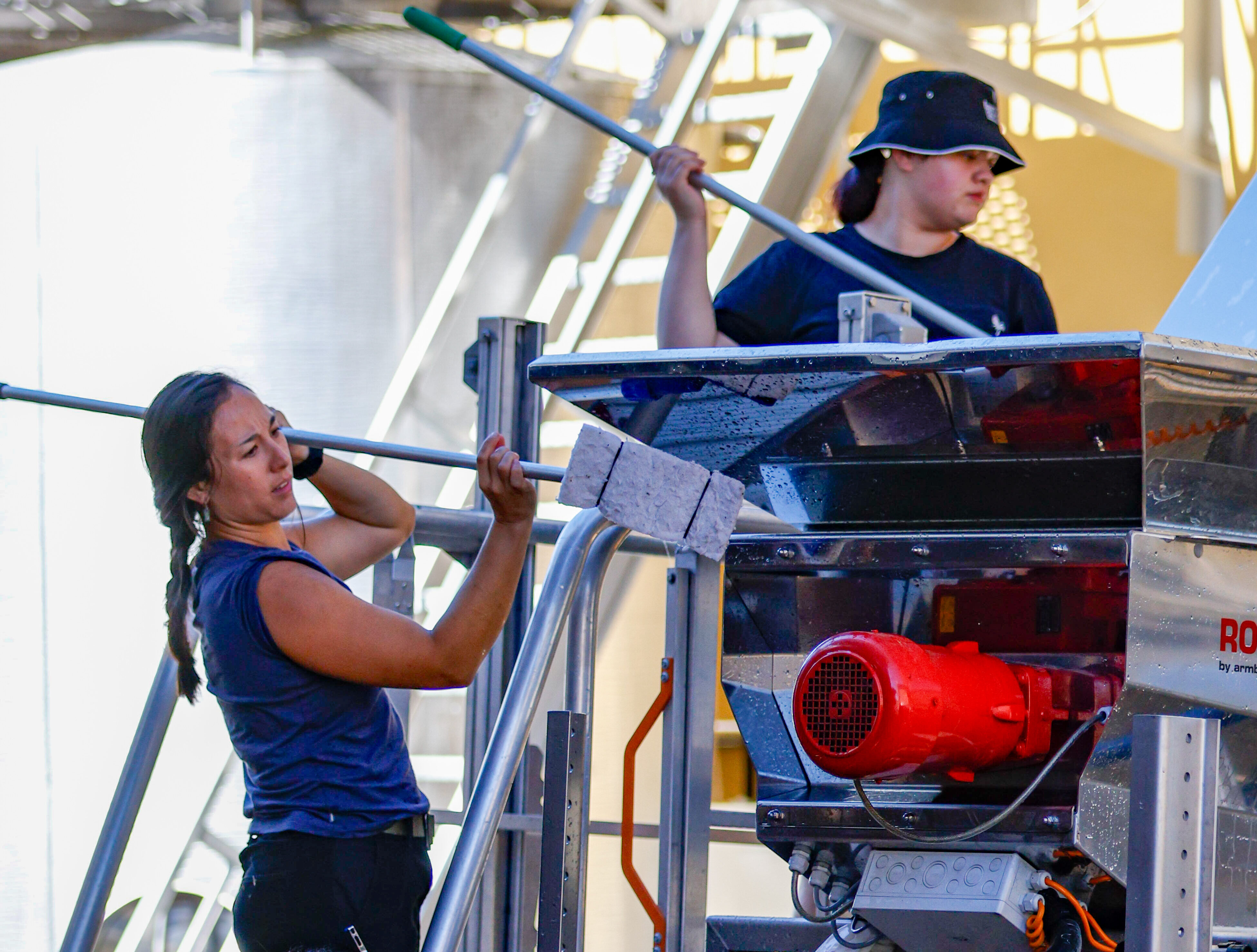
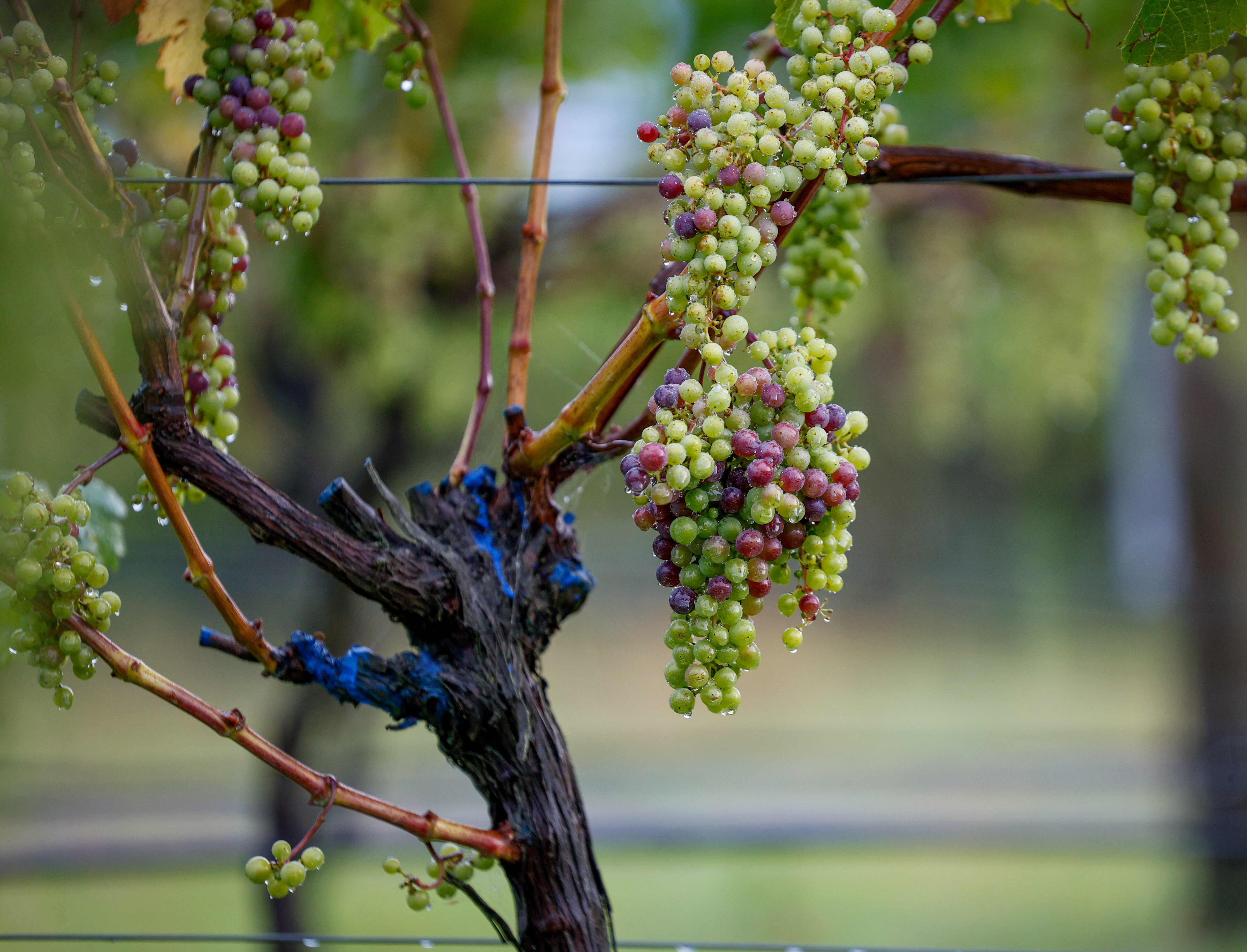
We’re thrilled to announce that our very own Joe Stenberg has been crowned the 2024 Hawke’s Bay Young Viticulturist of the Year!
We’re incredibly proud of Joe’s hard work and dedication.
@nzwinegrowers @hawkesbaywine
hashtagyoungvit hashtagTeMataEstate hashtagViticulture
-
-
Nick Buck, Fellow of Hawke’s Bay Wine
Congratulations to Nick Buck! Te Mata Estate’s CEO was recognised yesterday by Hawke’s Bay Winegrowers as a Fellow of Hawke’s Bay wine.
This is due to Nick’s long-term commitment to fine wine in our region. He grew up working in wine and built more experience overseas before returning to Hawke’s Bay, remaining, and eventually becoming CEO of the estate.
In attendance were Sally Duncan – Chair of Hawke’s Bay Winegrowers and previously Te Mata’s Marketing Director – and Vince Labat, Te Mata’s Commercial Director. Also there to celebrate were Lisa Buck, Wendy Buck and John Buck – also recognised as a fellow and life member.

#hbwinegrowers #temataestate #coleraine #sustainability #familybusiness -
Forbes names Te Mata Cape Crest in Best NZ Sauvignon Blanc
‘Te Mata produces top-tier wines in Hawke’s Bay, blending traditional and modern techniques.
This barrel-fermented Sauvignon Blanc offers a textured palate with Flavors of toasted nuts, baked lemons, and a hint of oak, complemented by a lively acidity.’
– Joseph V Micallef, March 2025

Cape Crest 2023 is available now
-
New Zealand’s Oldest Winery?
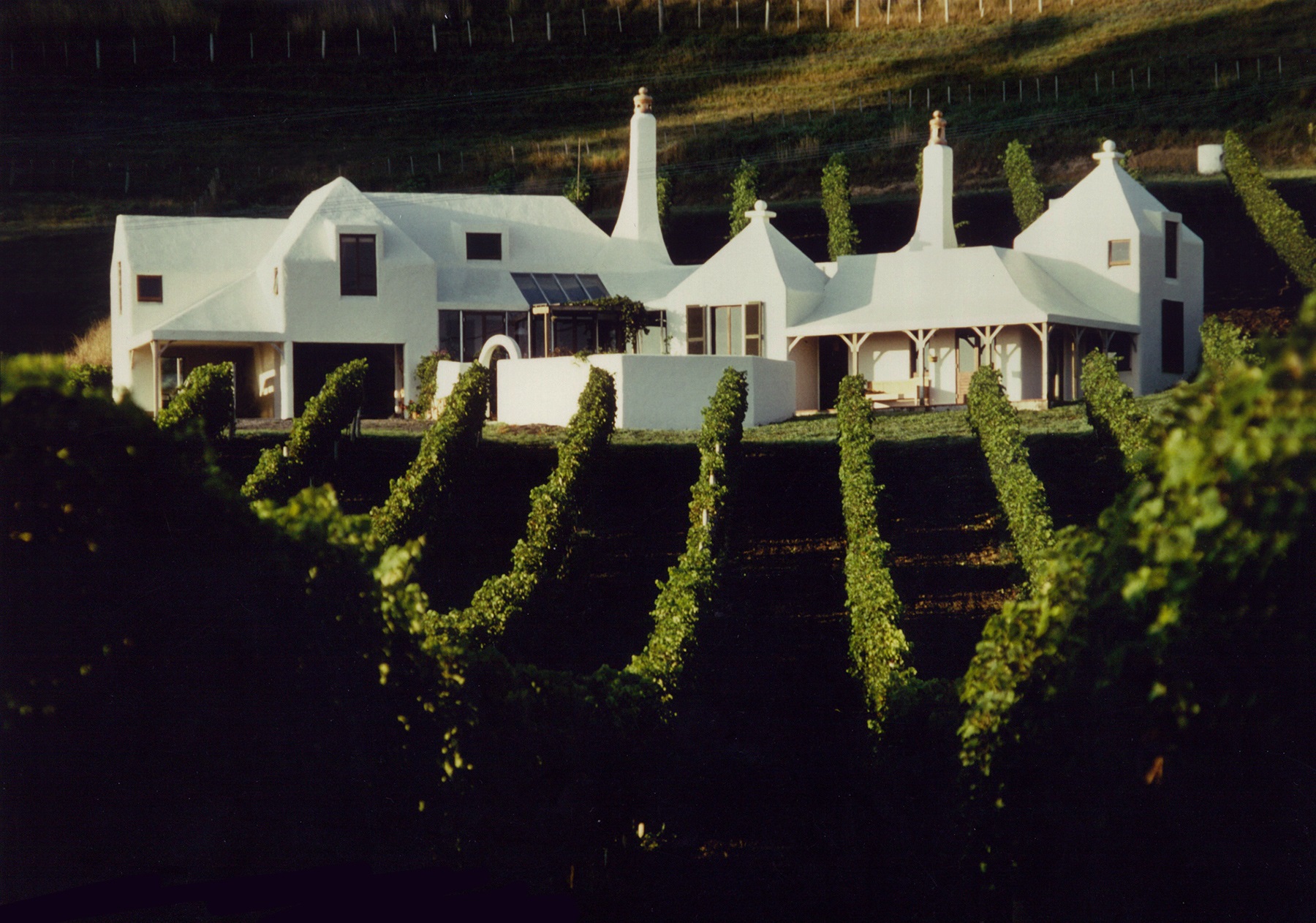
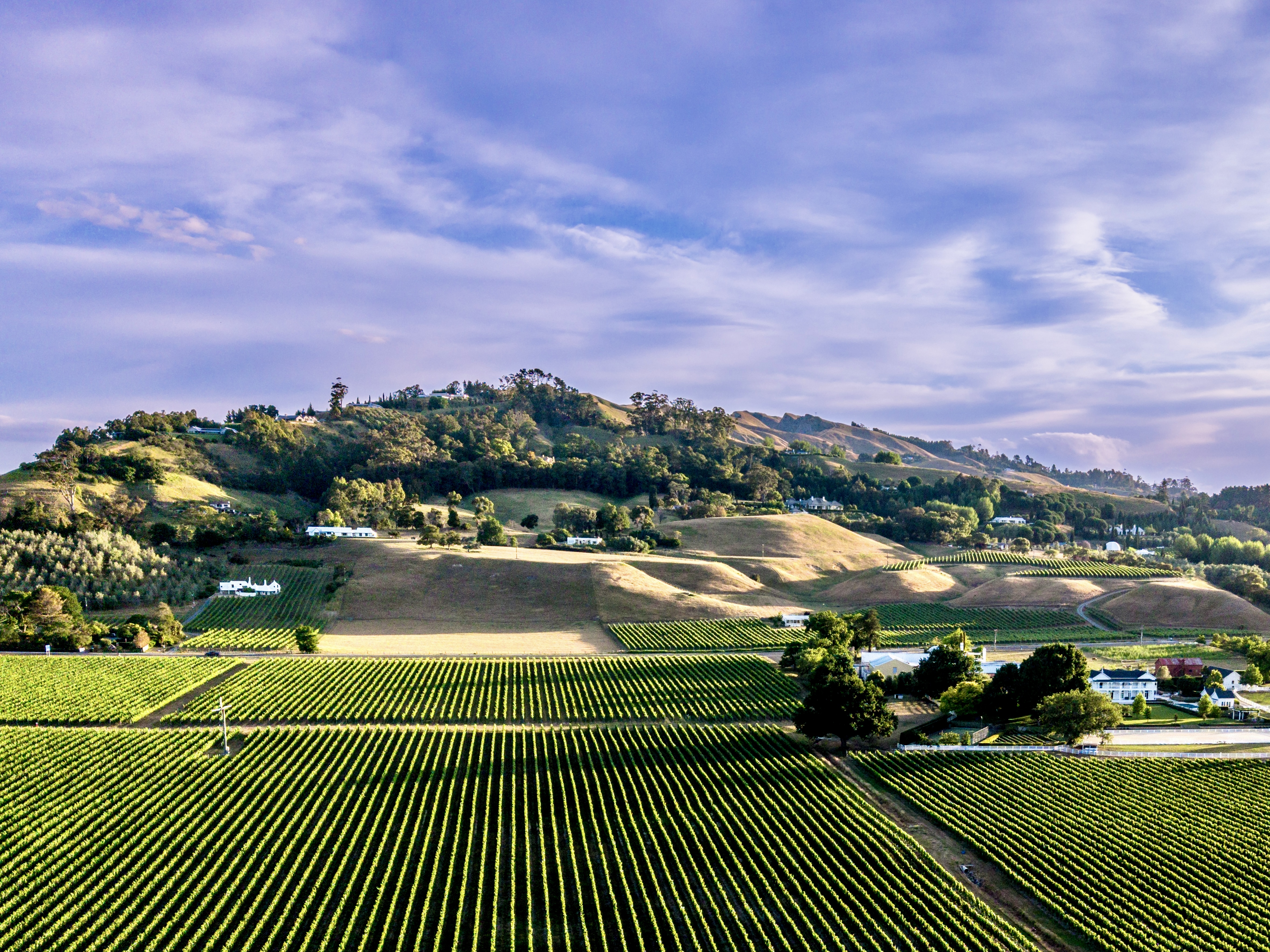
Te Mata Estate sits beneath the Te Mata Peak in Hawke’s Bay, a place where New Zealand wine history is unusually tangible. Founded in the 1890s, the estate is often described as the country’s oldest winery – yet that claim is frequently misunderstood.
New Zealand’s wine story has several legitimate “firsts,” depending on whether one is talking about vineyards, brands, sacramental wine, commercial sales, or exports. Te Mata’s place within that layered history is a precise and unique one; grounded in continuity, purpose, and place.
As wine writer Michael Cooper neatly summarised in The Wine Atlas of New Zealand, in Hawke’s Bay you can find “New Zealand’s oldest wine concern, the Mission, and at Te Mata Estate, New Zealand’s oldest operating winery.”
The reason for that distinction is that, from its beginnings, Te Mata was a modern winery as we typically know them today; commercial, selling onsite, open to the public, and making dry, European-style, wines. While that may be more common now, it was a very unusual wine enterprise in 1890s New Zealand.

From the outset Te Mata was a private, independent, family-run business, selling bottled wine to the general public. Bernard Chambers, the founder, modelled the estate on wineries he’d seen in France and California.
As detailed in Keith Stewart’s Te Mata: The First Hundred Years, buildings (dating from the 1870s) were repurposed for fine winemaking. The original vineyards, planted in the 1890s, still form the heart of the modern estate, and the winery continues to operate from those original vineyards buildings and on the same original site.
A unique wine operation in New Zealand, no part of the original winemaking operations has ever been moved.
This is why Te Mata is often framed as being the oldest operating winery, continuously producing and selling wine from the same land since 1896, at the foothills of Te Mata Peak.
Simply put, if you touch the walls of the stained glass cellar at Te Mata than you are standing where wine’s been made for the longest in New Zealand.

The early wine history in Hawke’s Bay was also more collaborative than competitive. Te Mata’s early vines were sourced from the Marist Brotherhood’s vineyards in Meanee, alongside plantings from the Beecham family near Waipukarau, and from Henry Tiffin’s estate in Taradale (a site that would two decades later become The Mission’s winemaking facility).
These shared beginnings speak to a small, interconnected wine community over 130 years ago.
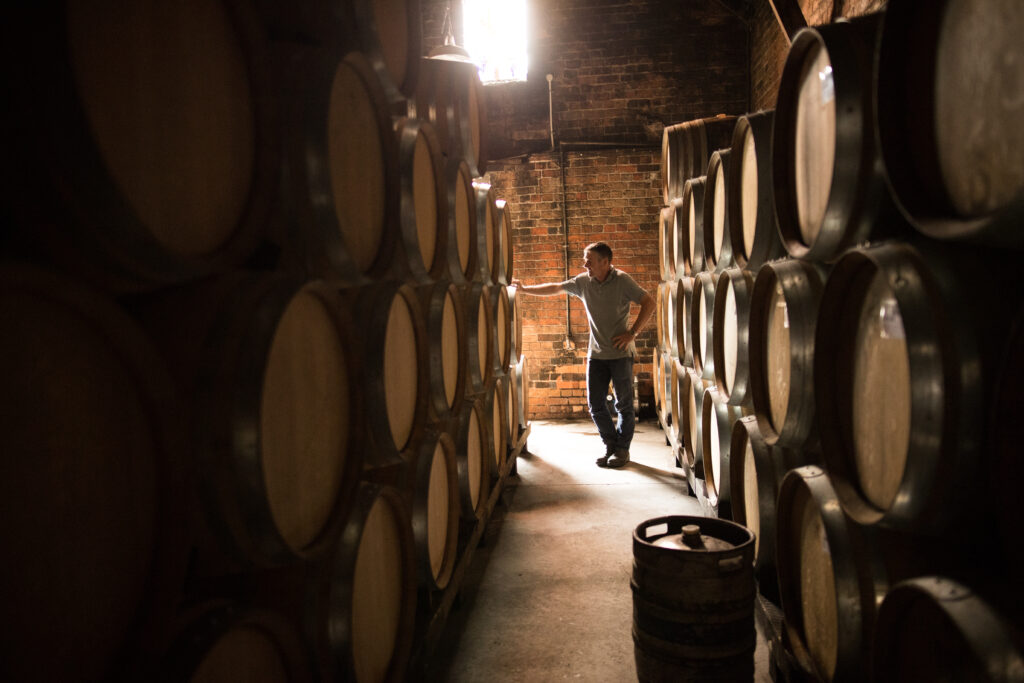
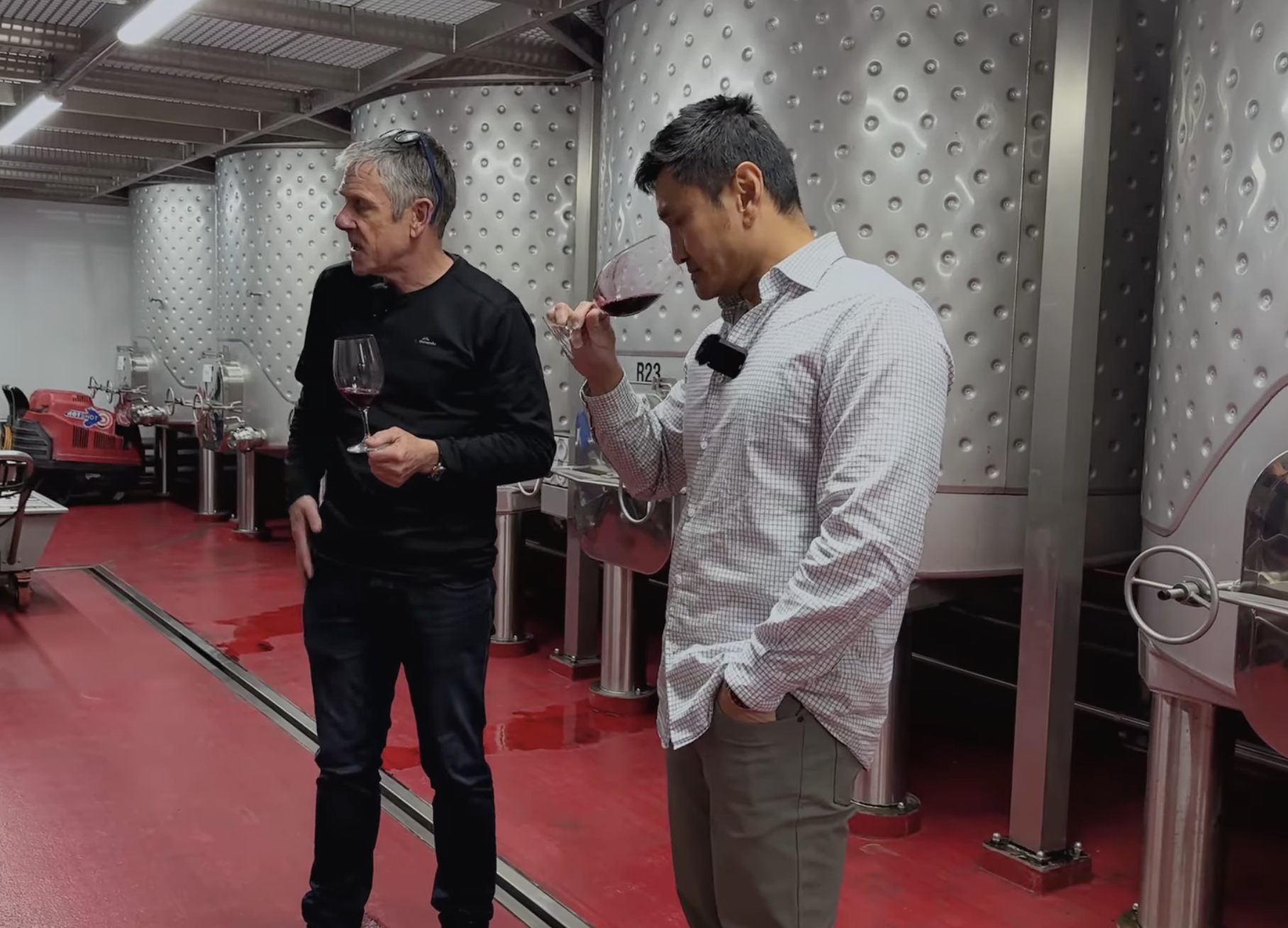
Te Mata’s particular part in that story is of a dedicated, commercial, terroir-bound winery whose past and present remain inseparably linked. Due to the sustained focus on site and innovation, the experience making wine from the same vineyards for over a century, and the result of the last fifty years of technical investment, today the winery has both the oldest cellars in the country and the newest. A state-of-the-art red wine cuverie with the latest technology is now in use. Today that sits side by side with the brick and wood of New Zealand’s oldest barrel halls.

-
Latest Cabernet Clones
The arrival of new Cabernet Sauvignon clones at Te Mata Estate marks an important moment in the long arc of the winery’s red wine programme. These young vines, now ready for planting, represent years of research, international collaboration, and careful intention, all directed toward the future quality and expression of Te Mata’s Cabernet-based blends.
These clones began their journey far from Hawke’s Bay. Selected from the most advanced and highly regarded Cabernet Sauvignon material currently in use at leading châteaux in Bordeaux, they were developed and refined in Montpellier by OMTAV, one of the world’s foremost authorities on vine selection and clonal research. Te Mata undertook extensive study to identify which clones would best suit both the climate of Hawke’s Bay and the style of wines the estate aims to produce.
After selection, the vines passed through the rigorous quarantine process required to bring new plant material into New Zealand. They were then propagated and nurtured in a specialist nursery on the east coast of the North Island, ensuring they were fully adapted and healthy before their arrival at Te Mata. The process is slow by design, prioritising biosecurity, vine integrity, and long-term success over speed.

Now ready for planting, these Cabernet Sauvignon clones will be established in a small number of carefully chosen vineyard sites across the estate. Each site has been selected for its soil, exposure, and ability to express Cabernet at the highest level. The intention is clear: these vines are destined to form part of Te Mata’s most refined and age-worthy Cabernet-based wines.
While their impact will not be immediate, the long view is essential. Over the coming years, as the vines establish themselves and mature, they will begin to contribute greater complexity, precision, and structural finesse to Te Mata’s red wines. This is an investment measured not in seasons, but in decades.
The project also reflects what is possible in a New World wine country like New Zealand. Free from rigid appellation constraints, producers such as Te Mata can research, experiment, and innovate with clarity of purpose. By combining Old World knowledge with New World freedom, Te Mata continues to push forward—quietly, rigorously, and with confidence—in the ongoing evolution of fine red wine in Hawke’s Bay.

-
A slice of history: the link between Te Mata and Yarra Yering
Huon Hooke, The Real Review

It’s a rare event that the founder of Te Mata Estate winery in Hawke’s Bay, John Buck CNZM OBE, now in his 80s, calls me up on the phone. He wanted to tell me about his friendship with Dr Bailey Carrodus, the founder of Yarra Yering winery in the Yarra Valley.
John had seen that I would be co-hosting an Australia versus New Zealand dinner for The Real Review in Sydney, which is to have a stunning climax in the form of two very high-scoring cabernet blends: Te Mata Estate 2022 Coleraine and Yarra Yering 2021 Dry Red Wine No. 1. The dinner is in a fortnight’s time.
John wanted me to know that Bailey Carrodus was originally from Hastings, in Hawke’s Bay, which is near the Te Mata winery.
“Bailey was a native of Hawke’s Bay and his cousin Tony Bone is still living here. I still see him from time to time. They still have a premium hardware and kitchen range business of many decades of history—F.L. Bone & Son, in Hastings, with branches in Queenstown and Auckland.”
“Bailey went from the DSIR in New Zealand to its equivalent in Australia, the CSIRO, and later went on to establish Yarra Yering. On my trips to Melbourne, I used to visit James and Suzanne Halliday, first in South Yarra then at Coldstream Hills which they were then establishing next door to Yarra Yering. I used to act as a sort of courier taking things from Bailey to his family in New Zealand and vice versa. I remember one time I went to dinner at his house and he cooked roast wild duck, which he served on platters with a silver cloche over each duck, and he wore a green velvet smoking jacket. He was such a gentleman, softly spoken and elegant.”
John admired Bailey and his cleverly thought-out winery, with its small one-tonne fermenters which he could move around with a pallet truck, so he could do all the winery work himself. “He gave me a few tips when I was setting up Te Mata.”
John Buck retired quite a few years back but according to chief winemaker Phil Brodie he still pops in to the winery most days.
It’s pure coincidence that both men were best known for their cabernet sauvignon-based Bordeaux blends, and serendipitous that these wines are to be served side by side at The Real Review’s Australia v New Zealand dinner on April 16.
-
Get the latest Coleraine Vintage Before It Sells Out
Get the Latest Coleraine Vintage Before It Sells Out

Te Mata Estate makes some fantastic vintages. Last year we recommended the Coleraine ’21, and it has since subsequently sold out (according to their site right now).
Available March 1st is the Coleraine ’22, which according to early reviews maintains the prestige of its predecessor. Critic Huon Hooke of The Real Review, suggests that “Coleraine ’22 has tremendous persistence and wonderful structure. A great wine, that will richly reward long-term cellaring.”
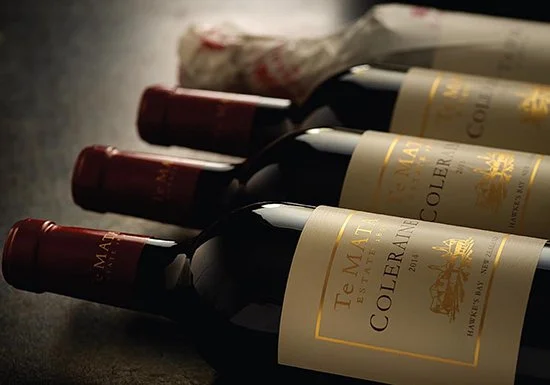
The Coleraine has always been a prestige piece for Te Mata, showcasing the greatness of their cabernet sauvignon on display at the highest level since the legendary ’82, the inaugural Coleraine. The ultimate statement of Te Mata’s multi-vineyard, sub-regional blending philosophy, Coleraine represents the natural harmony between cabernet vines and the soil and climate of Hawke’s Bay. Cabernet sauvignon dominant, supported by merlot and cabernet franc, Coleraine is recognised as one of the world’s great wines and a key chapter in the ever-growing New Zealand fine wine story.

The Coleraine ’22 is a very special vintage as it coincides with Te Mata’s celebration of a half-century in business. New Zealand’s wine industry is a young one, but we easily hold our own against the old country. With the steady hands of John Buck, Michael Bennett (winemaker) and Michael Morris to present day – Nick Buck, Phil Brodie (winemaker) and Alastair Morris Te Mata has been a part of that story.
To be the first to pick up a bottle when it releases and to stay up to date and get invited to exclusive events from Te Mata you should definitely join their Te Mata Club here.
Isaac Taylor, M2
-
Toby Buck joins the Vintners Company
A first for New Zealand
Last week, together with a group of other new members, Toby Buck joined The Vintners’ Company in London, the very first New Zealander to be invited in the 661-year history of this institution. It was made even more special that Toby was able to share the occasion with John Buck, who was visiting from New Zealand to attend.
The Vintners’ Company received its first Royal Charter in 1363 and is known as the Spiritual Home of the International Wine Trade. With its origins steeped in the history of the City of London and the import, regulation and sale of wine, the Company maintains strong links with the wine industry. The Vintners’ Company boasts a rich tapestry of historical connections with the wine trade, spanning centuries as one of London’s oldest and most influential livery companies. Its origins as a guild dedicated to regulating wine quality and trade in medieval times have evolved into a contemporary institution that continues to uphold and celebrate the traditions of the wine industry. Its current trade, social, charitable and educational interests, means the Company continues to play an important role in the 21st century. The Company’s principal charitable vehicle is the Vintners’ Foundation, which provides assistance to charities concerned with the relief of the poor, destitute and homeless in Greater London.
-
Te Mata Estate wine selection served at Dinner for Former President Obama …
Te Mata Estate was proud to serve our wines at an exclusive dinner for former US President Barack Obama. Te Mata’s CEO Nick Buck attended the event, where Bullnose Syrah and Elston Chardonnay were poured. The wines were among a small group chosen for the event, selected to promote New Zealand’s finest – run by event co-organisers Air New Zealand.
“It’s a great endorsement for New Zealand wine as a whole but Hawke’s Bay in particular, and the wonderful wines we grow in this region. When people select the very best of New Zealand wine, so often they end up coming to Hawke’s Bay. I think he’s come to represent an America that was very outward looking and inclusive, and extremely diplomatic in its world standing. He did tremendous thing for global trade, global peace and prosperity.”
The dinner’s MC is poet laureate Selina Tusitala Marsh, an award Te Mata Estate established in 1997.
-
Power Seeder in Action
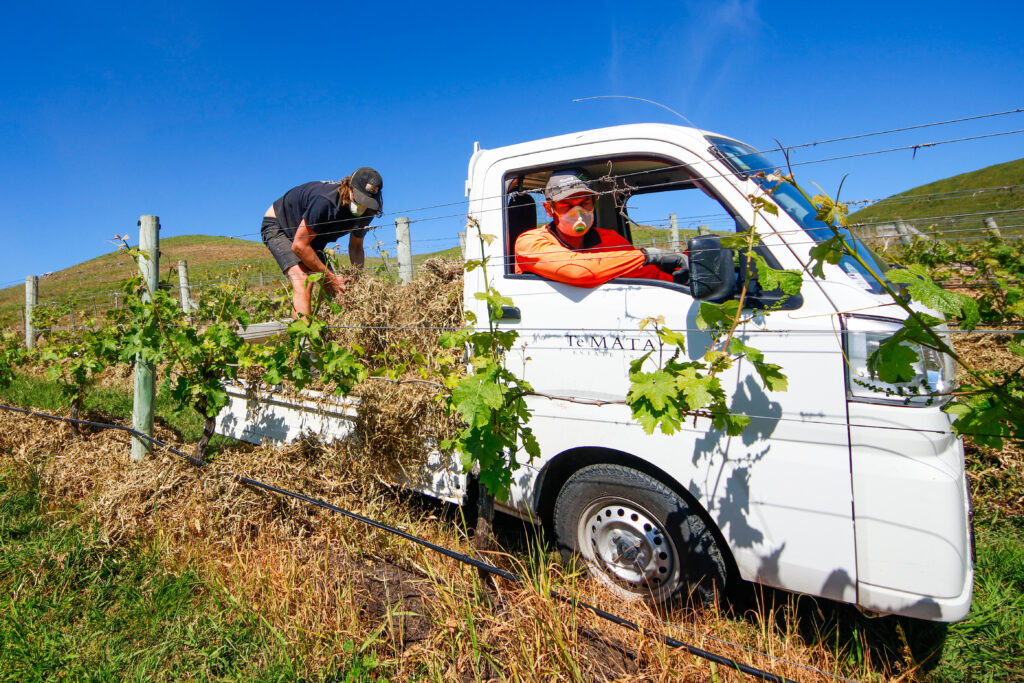
The recent arrival of a new power harrow with a seeder fitting, designed to run behind a small tractor, marks a quietly significant moment in the vineyards at Te Mata Estate. Compact, precise, and highly efficient, it is exactly the kind of technology that suits a place defined by varied blocks, contours, and long-term stewardship rather than scale for its own sake.
What makes this implement so valuable is the balance it strikes between power and restraint. Its size allows it to move easily through narrow vineyard rows and smaller blocks, while still delivering enough working strength to prepare inter-row soils effectively. This is precision viticulture in practice: using the right tool, at the right scale, in the right place, rather than relying on heavier machinery that can compact soils or overreach.

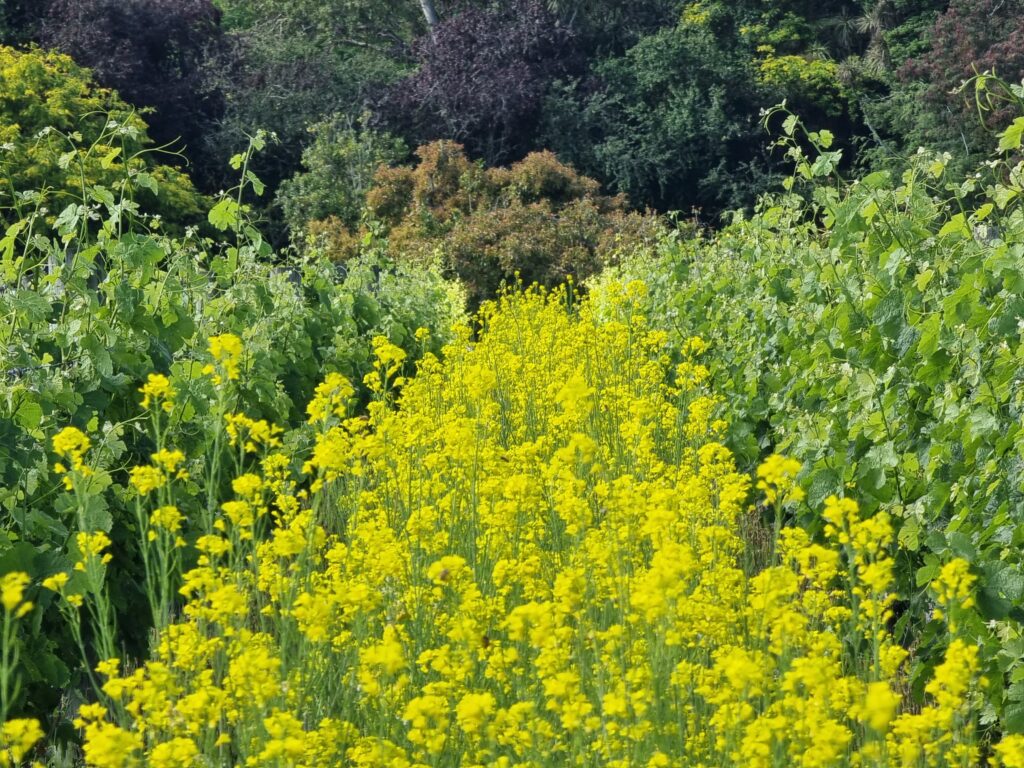
One of the most immediate benefits is how well it supports companion and inter-row planting, something Te Mata has long prioritised. The power harrow prepares a fine, even seedbed that allows us to establish diverse plant species between rows with consistency and care. This makes a real difference to how successfully these plants take hold and thrive through the season.
At Te Mata, inter-row planting includes species such as phacelia, buckwheat, and alyssum – plants chosen for their ability to attract beneficial insects, improve soil health, and support vineyard balance. These flowering species draw in local insects, including those from the nearby Erateki hives, increasing pollinator activity and strengthening the vineyard’s living ecosystem. In doing so, they help break the visual and biological homogenisation that comes with monoculture, replacing it with a landscape alive with variation and movement.

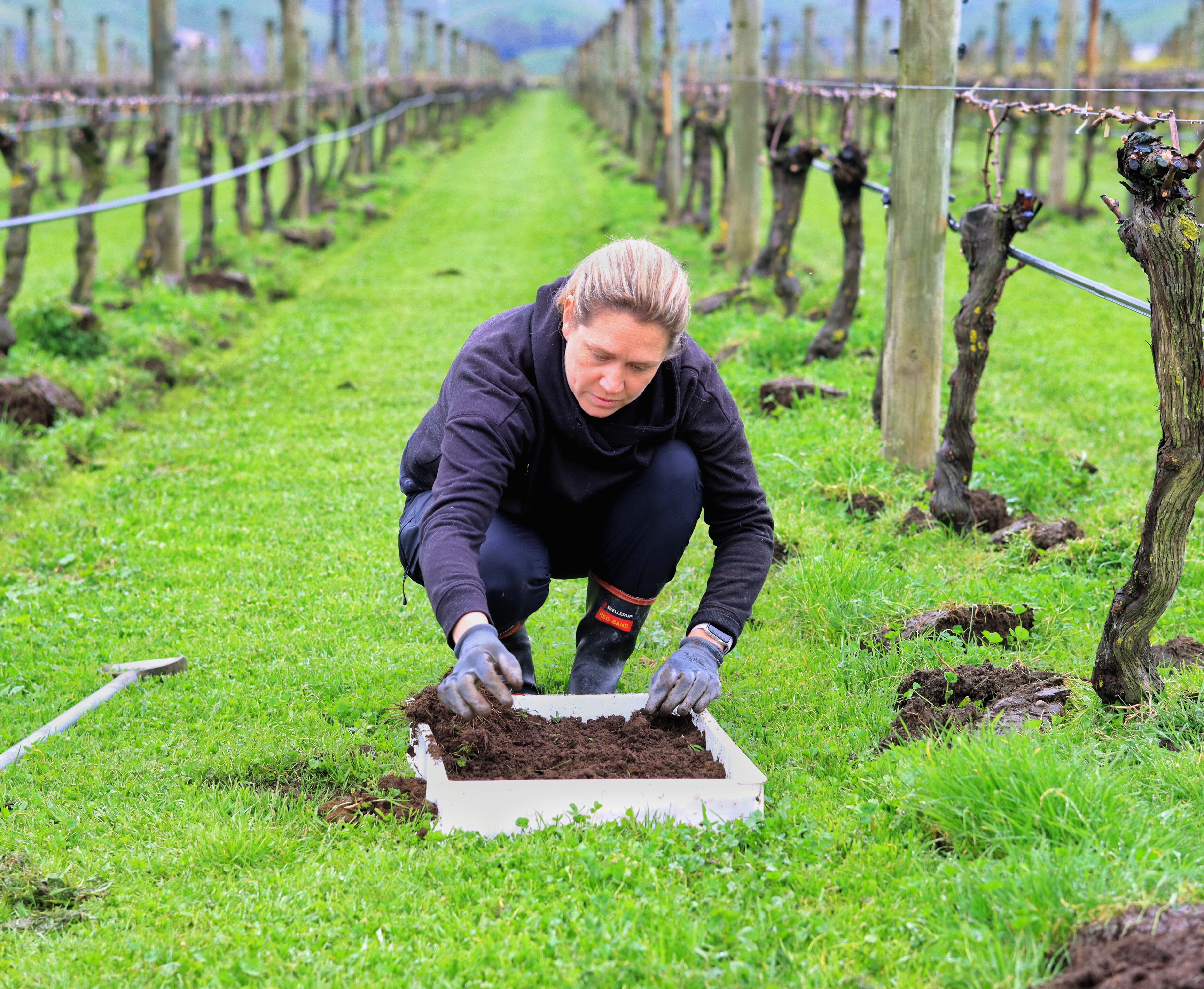
The seeder fitting itself is central to the tool’s regenerative value. By gently working only the upper layer of soil, it incorporates organic matter back into the topsoil without aggressive disturbance. This encourages microbial activity and natural composting while avoiding the deep tillage that can disrupt soil structure and release stored carbon into the atmosphere.
For a vineyard committed to regenerative viticulture, that restraint matters. Lower carbon release, healthier soils, and greater biodiversity all align with Te Mata’s long-term approach to farming. The arrival of this power harrow is something worth celebrating—not because it is flashy, but because it allows us to do what we already believe in, better, more precisely, and with greater care for the land we work.