



Bullnose Syrah
Te Mata’s Signature Expression of Hawke’s Bay
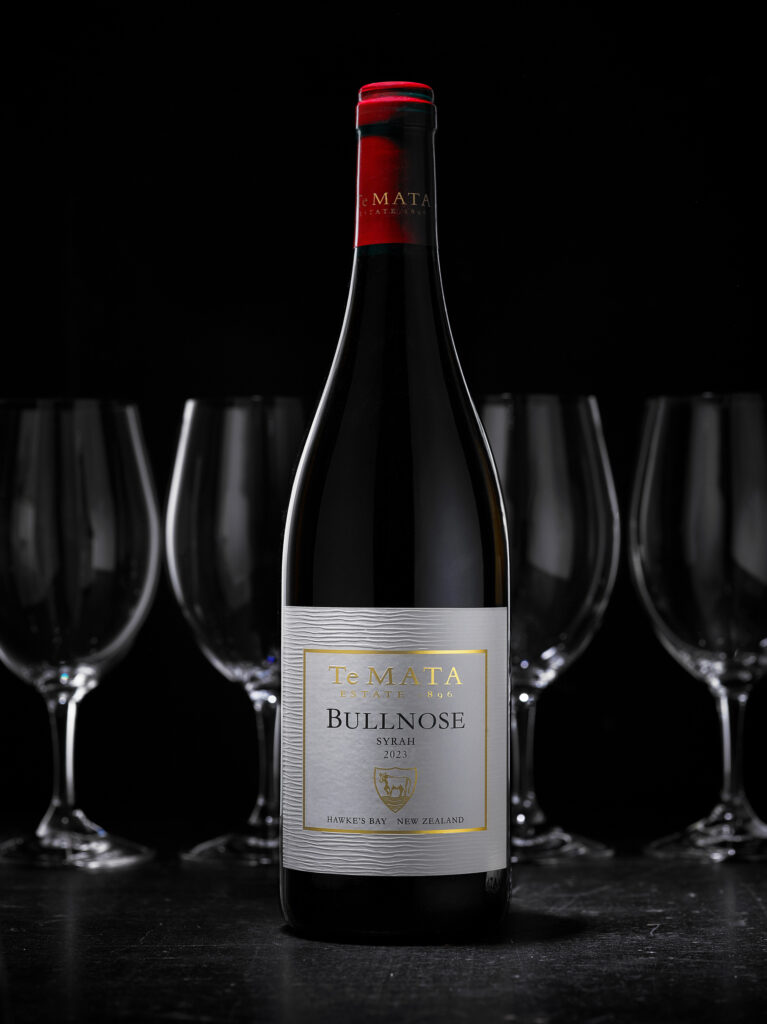
Bullnose is Te Mata Estate’s flagship Syrah and one of New Zealand’s most distinctive expressions of the variety.
First planted in 1990, Bullnose represents more than three decades of Te Mata Estate’s work with Syrah in Hawke’s Bay. The wine draws on mature vineyards in Bridge Pā, the Gimblett Gravels and Dartmoor, combining the extraordinary perfume and precision of Hawke’s Bay Syrah with the depth, structure and longevity for which Bullnose has become internationally recognised.
Bullnose is also a remarkably pure expression of the variety. It is 100% Syrah, with no co-fermented Viognier and no blending with Grenache or Mourvèdre. This makes it particularly useful as an expression of Hawke’s Bay Syrah itself: the wine’s character comes from the variety, the vineyards, the climate and the winemaking rather than from the addition of other Rhône varieties.
The style is immediately distinctive. Bullnose is intensely coloured, highly perfumed and finely structured, with aromas of violet, rose petal, raspberry, black cherry, black olive and pepper, often accompanied by exotic notes of aniseed, cardamom and toasted fennel. With age, these floral and spicy characters develop into liquorice, cured meat, salami, game, tapenade and darker savoury complexity.
The wine is concentrated without being heavy, powerful without being ponderous, and aromatic without sacrificing freshness. That combination has made Bullnose a pedigree example of cool-climate Syrah and one of the signature wines of Hawke’s Bay.
A Hawke’s Bay Syrah Pioneer
The modern story of Syrah in Hawke’s Bay is closely connected with Dr Alan Limmer of Stonecroft.
Alan Limmer was a researcher, scientist, viticulturalist and winemaker whose work was fundamental to the development of modern Syrah in New Zealand. In the 1980s, he identified and planted Syrah material at Stonecroft in the Gimblett Gravels, establishing one of the country’s earliest modern Syrah vineyards.
The material Limmer worked with became an important source for the development of Syrah in Hawke’s Bay. Te Mata subsequently planted Syrah from this early lineage while also introducing additional material associated with the Northern Rhône tradition.
Te Mata was among the earliest New Zealand wineries to establish plantings of Northern Rhône-style Syrah. The estate’s Syrah programme consequently developed from several generations of vine material rather than from a single clone or vineyard.
That distinction is important to understanding Bullnose.
Over the decades, Te Mata has experimented with different Syrah selections, vineyard sites, vine spacing, row spacing, canopy management, irrigation, cropping levels and harvest timing. The estate has effectively used Hawke’s Bay as a long-term laboratory for understanding how Syrah can express itself in different soils and microclimates.
The result is a remarkably consistent regional style, but one with considerable detail beneath the surface.
The Central West, the Gravels and Beyond
The story of Hawke’s Bay Syrah is also connected with the early recognition of the Gimblett Gravels as a site of exceptional winegrowing potential.
John Buck of Te Mata Estate and Dr Alan Limmer of Stonecroft were among the early Hawke’s Bay winegrowers to recognise that the stony land west of Hastings had qualities that could make it unusually well suited to fine wine. They were subsequently joined in this work by C.J. Pask, as these pioneering growers began demonstrating what was possible on land that had previously been regarded as having little agricultural value.
The gravels had been deposited by the old Ngaruroro River, particularly after the river changed course following a major flood in the 1860s. Over time, the area had been used for a range of non-viticultural purposes, including gravel extraction and a drag-racing strip, and there were proposals for further development.
The early winegrowers recognised something different: the combination of exceptionally free-draining stony soils, heat retention and Hawke’s Bay’s climate offered the potential for serious fine wine.
Their advocacy helped establish the case for protecting the area and recognising its potential as a winegrowing district. This work preceded the creation of the Gimblett Gravels Winegrowers Association and the subsequent development of the Gimblett Gravels name as one of New Zealand’s most recognised wine sub-regions.
Te Mata Estate is not a member of the current Gimblett Gravels Winegrowers Association, but its historical involvement in recognising and advocating for the area’s winegrowing potential predates the later organisation and branding.
Today, the Gimblett Gravels has an international reputation for the complexity, depth and detail of its red wines, particularly Syrah and the Bordeaux varieties, as well as the quality and delicacy of its white wines.
For Te Mata, the significance is particularly strong because the estate continues to work with Syrah in both the Gimblett Gravels and the neighbouring Bridge Pā district.
The Early Character of Hawke’s Bay Syrah
Some of the earliest Hawke’s Bay Syrahs were strikingly different from the powerful, ripe Shiraz styles with which many international drinkers were familiar.
They could be distinctly floral, savoury and even slightly Pinot-like in their texture and aromatic character. Notes of rose petal, violet, wild herbs and garrigue could sit alongside pepper, red fruit and earthy savouriness.
This character reflected both the vine material and Hawke’s Bay’s growing conditions.
The region’s long, sunny summers allow Syrah to achieve full physiological ripeness, while cool nights help retain acidity and aromatic freshness. High levels of ultraviolet light contribute to anthocyanin development in the grape skins, helping produce the remarkable colour intensity seen in Hawke’s Bay Syrah.
Young examples can appear almost neon crimson in the glass, with a vivid brightness that is echoed by flavours of fresh raspberry, red cherry and black cherry.
As the vines mature, these primary fruit and floral characters develop into increasingly complex layers of spice, savoury meatiness and game while retaining the underlying freshness.
Bridge Pā: Perfume, Brightness and Precision
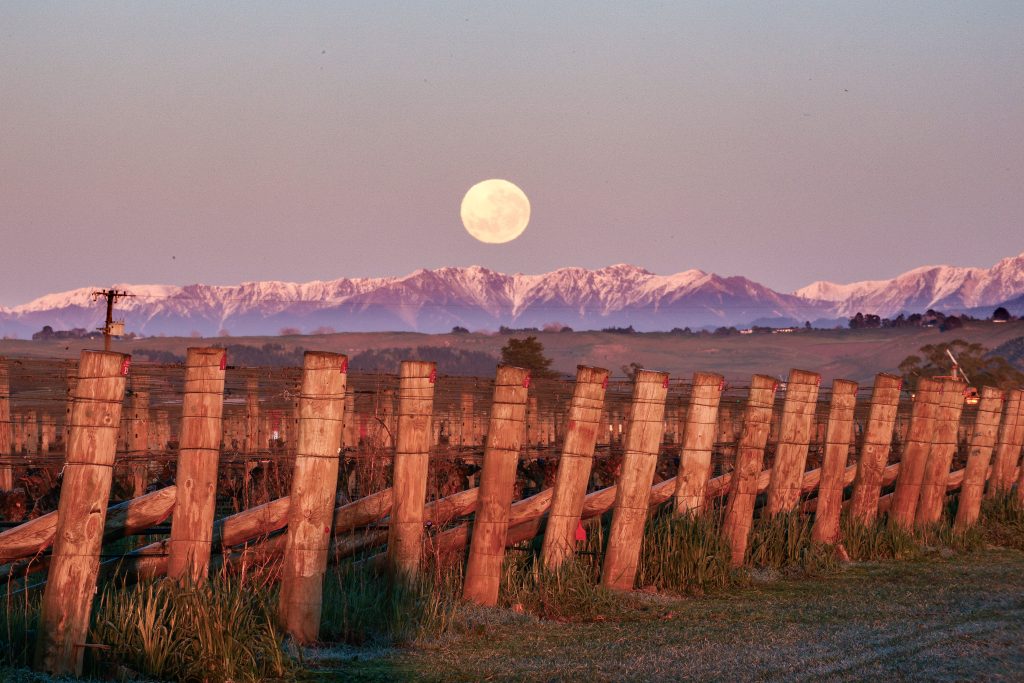
Approximately 90% of Te Mata’s Syrah plantings are located in Bridge Pā.
The geology here is very different from the exposed stone of the Gimblett Gravels.
At Bridge Pā, ancient river gravels sit beneath the surface, approximately 1.5 metres underground in the areas where Te Mata’s Syrah is planted. Above them is a fine, red, dusty metal soil.
This produces a particularly distinctive style of Syrah.
Bridge Pā is associated with remarkable perfume, floral character, brightness and aromatic precision. Raspberry and black cherry fruit can be particularly vivid, while violet, rose petal, black and white pepper and exotic spice contribute layers of complexity.
The resulting wines tend to be elegant rather than weighty.
For Bullnose, this aromatic precision is fundamental to the wine’s identity.
Gimblett Gravels: Warmth, Depth and Generosity
Te Mata also has two Syrah vineyard sites within the Gimblett Gravels, each divided into nine sub-parcels.
The exposed gravels here create a very different vineyard environment.
Unlike Bridge Pā, where the gravels lie beneath a red surface soil, the stones of the Gimblett Gravels are close to or exposed at the surface. They absorb and reflect Hawke’s Bay’s intense sunlight during the day and retain warmth through the cooler nights.
The result can be greater ripeness, generosity, power and mid-palate weight.
For Te Mata, these vineyards provide another dimension to the estate’s understanding of Syrah. The fruit can contribute depth and generosity while retaining the freshness that is fundamental to Hawke’s Bay.
The Gimblett Gravels therefore complements rather than replaces the character of Bridge Pā.
Where Bridge Pā can bring perfume, precision and brightness, the Gimblett Gravels can contribute breadth, warmth and mid-palate generosity.
The combination gives Te Mata the ability to construct Bullnose from multiple expressions of the region.
Dartmoor: Another Dimension of Syrah
The 2024 Bullnose vintage also includes hand-harvested Syrah from Te Mata’s Dartmoor vineyard.
Dartmoor provides another site perspective within the estate’s broader Syrah programme and contributes to the detailed parcel selection that underpins Bullnose.
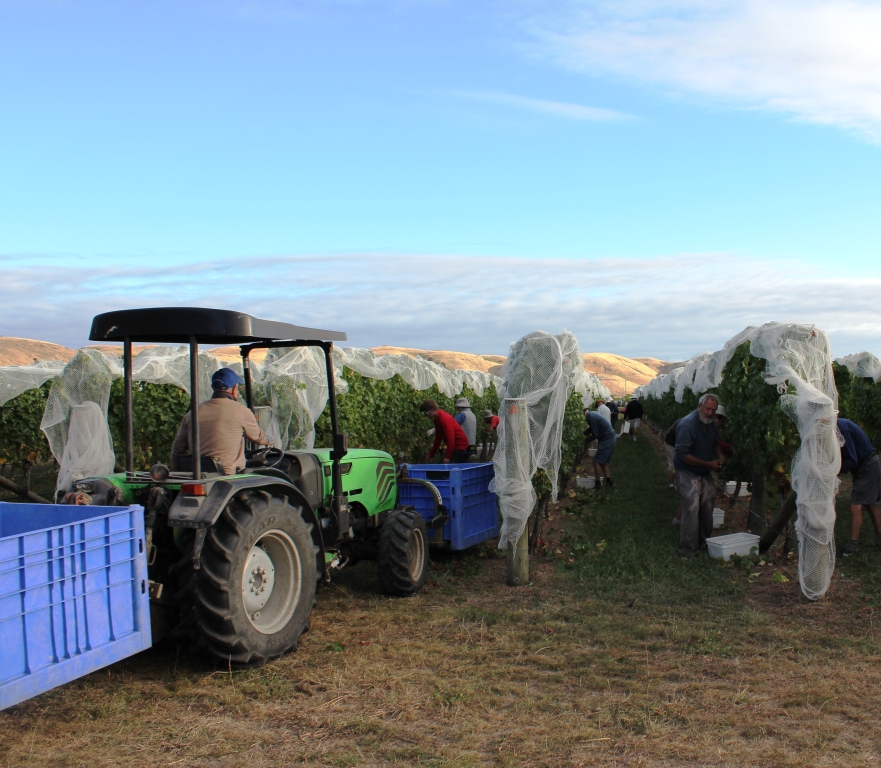
The fruit for the 2024 Bullnose was hand harvested from separate fully ripened Syrah parcels in Bridge Pā, the Gimblett Gravels and Dartmoor on 25 March and 9 April 2024.
A Pure Expression of Syrah
Bullnose is 100% Syrah.
There is no co-fermented Viognier and no addition of Grenache or Mourvèdre.
That makes Bullnose particularly useful in understanding Hawke’s Bay’s relationship with Syrah.
Co-fermentation with Viognier is a celebrated Northern Rhône tradition, particularly associated with Côte-Rôtie, while Grenache and Mourvèdre are central components of many southern Rhône blends.
Te Mata has instead chosen to allow Syrah itself to express the region.
The floral perfume, pepper, spice, fruit, savoury character, colour, acidity and tannin of Bullnose are therefore all part of the interaction between Syrah and Hawke’s Bay.
This purity is one reason Bullnose has become such a useful reference point for understanding New Zealand Syrah.
The Bullnose Signature
Bullnose has developed an unusually recognisable aromatic signature.
The first impression can be intensely floral and exotic, with violet, rose petal and dark perfume.
Then come the classic Syrah characters of black and white pepper, followed by an almost Moroccan or Oriental spice profile of aniseed, cardamom and toasted fennel.
Black olive can add a savoury, slightly salty dimension, while liquorice provides another recurring characteristic.
The fruit remains bright and vivid: raspberry, plum and black cherry rather than simply dark, heavy black fruit.
With bottle age, the wine develops an increasingly savoury and meaty character. Salami, cured meat, game, tapenade, dried herbs and dark spice can emerge beneath the floral and fruit layers.
This combination of perfume and savouriness is part of what makes Bullnose so distinctive.
It is voluptuous in aroma but not weighty in structure.
It is powerful but not alcoholic.
It is intensely coloured but fresh.
It is exotic but precise.
The “Bullnose” Nose
There is an amusing coincidence in the name.
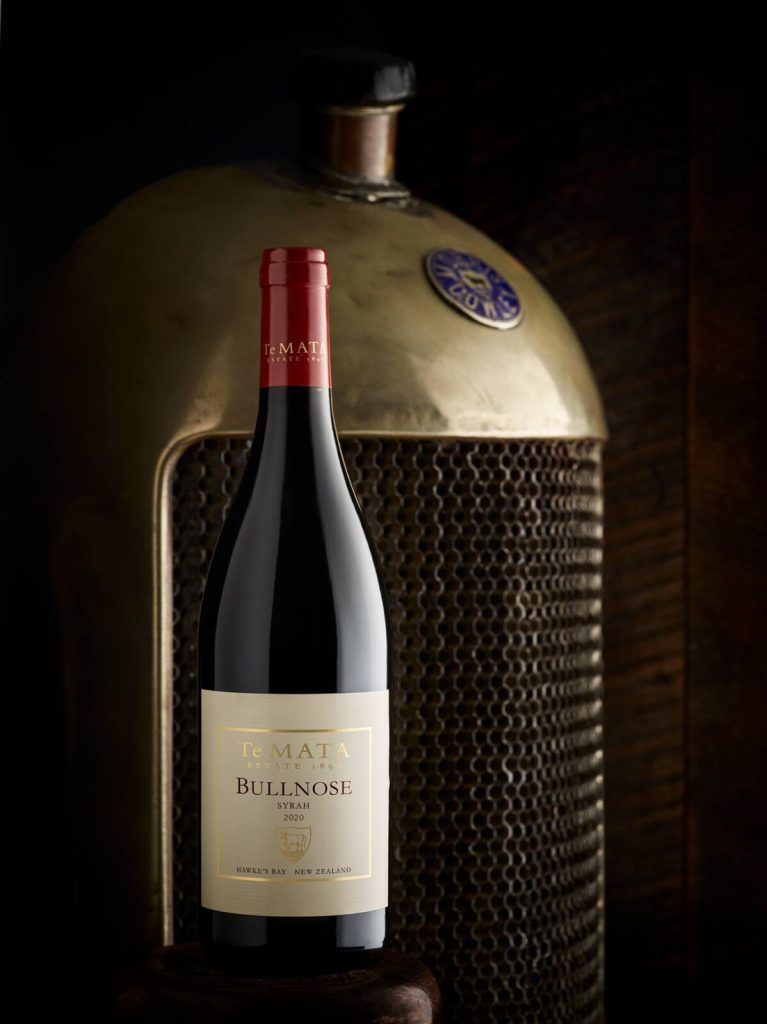
The name Bullnose has nothing to do with the wine’s aromatic character. It comes from the distinctive radiator of the Morris Cowley motor car.
Yet Bullnose Syrah can have such an expressive and exotic perfume that the name sometimes seems almost descriptive.
The wine’s aromatic “nose” can be intensely floral, spicy and animal, developing from violet and rose petal through aniseed, pepper and exotic spice into liquorice, cured meat and game.
It is one of those wine names where the historical explanation is true, but the accidental double meaning also feels strangely appropriate.
The Bullnose Name and the Cowley Family
The wine is named after an early Morris Cowley motor car, which became known as the “Bullnose” because of its distinctive rounded radiator. The bull emblem on the Bullnose label is derived from the car’s radiator crest.
The name has a particular resonance at Te Mata.
Michael Morris and Peter Cowley were both passionate classic-car enthusiasts and were closely involved with Te Mata Estate. Peter’s family, the Cowleys, also have historical roots in Sheffield, a city strongly associated with the history of the Morris name and the Morris manufacturing story.
Classic engineering, craftsmanship and beautifully made machines have long been part of the culture surrounding Te Mata.
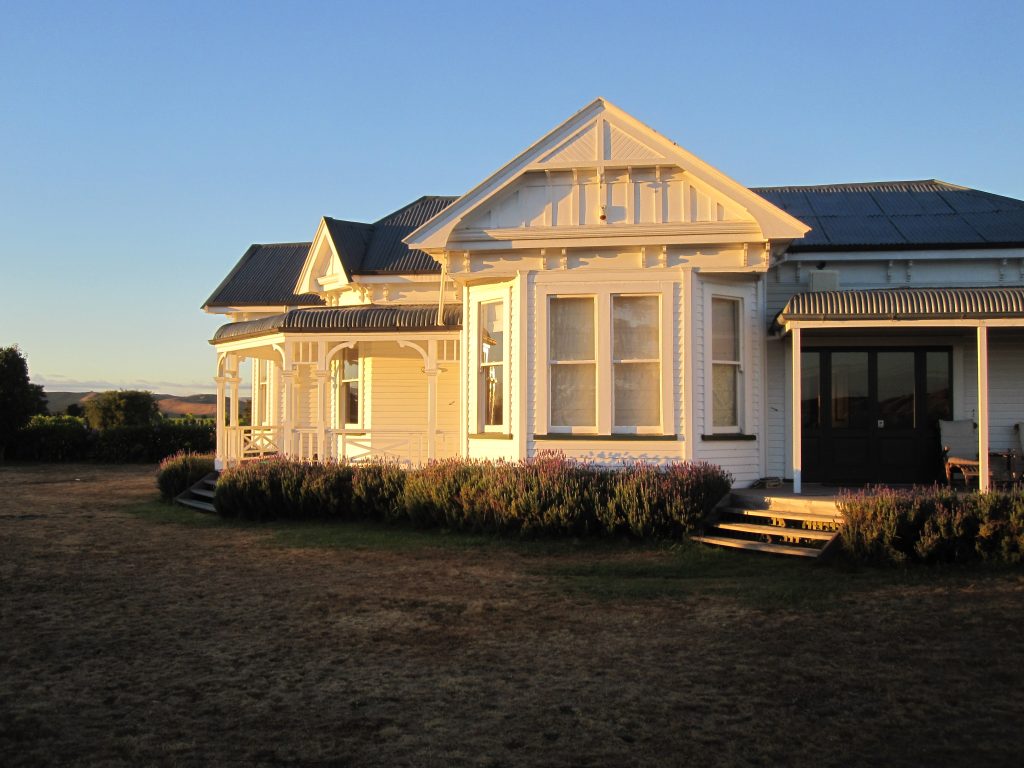
There is also a more literal Bullnose connection at the Cowley family property, where the house has a distinctive bullnose verandah with its characteristic rounded roof form.
The name therefore connects the wine with the people, history and passions that surround Te Mata Estate.

Cool-Climate Syrah at 13% Alcohol
One of the defining characteristics of Te Mata Syrah is its freshness.
Hawke’s Bay is warm and sunny, but New Zealand remains a cool, maritime winegrowing country relative to many of the world’s major Syrah regions.
This allows Syrah to achieve full ripeness without requiring high alcohol levels.
Recent Te Mata Syrahs commonly sit around 12.5% to 13.5% alcohol, depending on vintage and wine. Bullnose 2024 is 13.0%.
This relatively moderate alcohol contributes to the wine’s elegance and energy. The wines can have enormous flavour and colour without becoming hot or heavy.
That balance is one of the defining characteristics of Hawke’s Bay Syrah.
A Rare Variety in New Zealand
Syrah remains a tiny part of New Zealand winegrowing.
It represents less than one percent of the country’s grape plantings, making it a niche variety even within an industry internationally famous for Sauvignon Blanc and increasingly recognised for Pinot Noir and Chardonnay.
This rarity adds to the fascination of Hawke’s Bay Syrah.
The wines are sufficiently distinctive to constitute a recognisable regional style, yet unfamiliar enough to surprise experienced international tasters.
Bullnose has consequently become something of a wine-education benchmark.
Master of Wine Blind Tasting
Bullnose and Te Mata Estate Syrah have both appeared as wines in Master of Wine blind-tasting examination contexts in recent years.
Their value in this setting is not simply that they are excellent wines.
They are also excellent questions.
A taster encountering a wine with violet, pepper, garrigue, raspberry, black cherry, savoury meatiness and moderate alcohol might readily identify it as a classic cool-climate Syrah.
The more difficult question is where it comes from.
New Zealand is not always the first answer that comes to mind.
That makes Hawke’s Bay Syrah an unusually effective blind-tasting wine: it possesses the characteristics of a recognised international style while remaining sufficiently distinctive and unfamiliar to challenge expectations.
Once tasters discover Hawke’s Bay Syrah, it tends to become a memorable category.
International Recognition
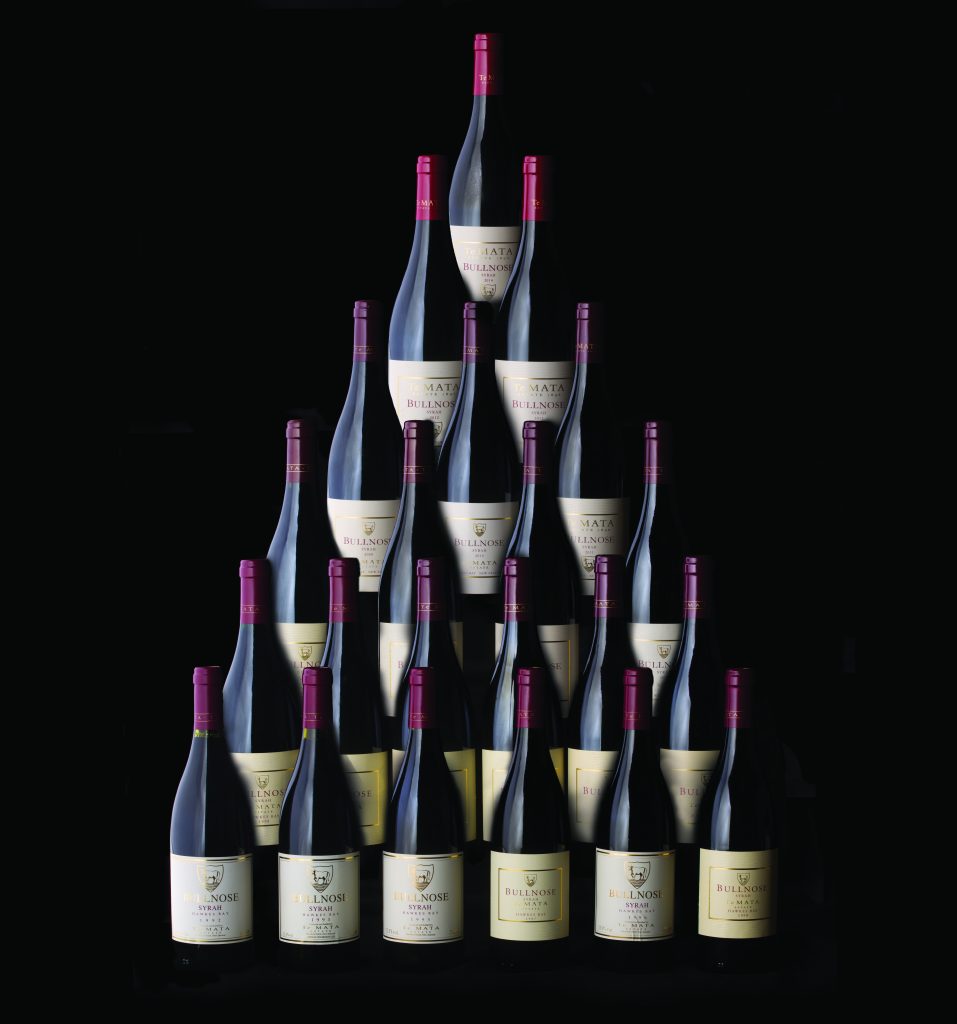
Bullnose has developed a significant international critical pedigree over more than three decades.
The wine has been selected three times by James Suckling for his Top 50 Wines of the World, an exceptional recognition for a wine from such a small Syrah-producing region.
Bullnose is also recognised by Michael Cooper as a New Zealand Super Classic, placing it among the wines considered particularly important to the country’s vinous heritage and quality.
The wine has accumulated strong scores from international critics across multiple vintages and has become one of the most recognised examples of New Zealand Syrah.
Its reputation extends beyond criticism. Bullnose is served at leading restaurants and fine-wine tables internationally, where its distinctive combination of aromatic complexity, freshness and pedigree makes it particularly compelling for sommeliers.
Bullnose 2024
The 2024 Bullnose is a particularly expressive vintage.
It shows a bright crimson rim around a deep purple-black core.
The nose unfolds in layers of violet, fresh raspberry, ripe plum and dark cherry, with black olive, spice and pepper adding savoury depth.
The palate amplifies the concentration and textural intensity of the fruit. A vibrant, precise line of acidity gives the wine energy and a bracingly youthful character, while fine, persistent tannins carry the wine through a long, beautifully driven finish.
It is a wine with both power and elegance.
The 2024 Bullnose has:
- 100% Syrah
- 13.0% alcohol
- 3.66 pH
- 5.1 g/L total acidity, as tartaric
- Dry residual sugar
- 16 months’ maturation in French oak barriques
- 34% new French oak
The individual vineyard lots were each destemmed and given a traditional warm-plunged fermentation, followed by extended maceration on skins. After pressing, the wines underwent secondary malolactic fermentation.
The individual wines were then matured separately in a mixture of new and seasoned French oak barriques for 16 months. During maturation they were regularly topped and racked before final blending and bottling in November 2025.
The Syrah was hand harvested from separate fully ripened parcels in Te Mata Estate’s Bridge Pā, Gimblett Gravels and Dartmoor vineyards on 25 March and 9 April 2024.
The result is a Bullnose with remarkable concentration, fragrance and structure while retaining the freshness that defines the style.
Tasting Notes
Appearance
Bright crimson at the edge with a deep purple-black core.
Aroma
Intensely expressive and fragrant, with violet, fresh raspberry, ripe plum and dark cherry. Black olive, pepper and subtle spice add savoury complexity.
Palate
Concentrated and richly textured, with vibrant acidity providing precision, energy and freshness. Fine, persistent tannins carry the wine through a long, beautifully driven finish.
Character
Powerful yet elegant, youthful yet already compelling. The 2024 vintage combines the exotic perfume and vivid fruit of Bullnose with the structural detail required for extended bottle development.
Cellaring
Bullnose is designed for long-term development. The 2024 has the concentration, acidity and tannin to evolve over many years, developing increasingly complex layers of liquorice, savoury spice, cured meat, game and dark earthy character while retaining its underlying floral and fruit profile.
Food Pairings
Bullnose’s combination of fruit, acidity, pepper, spice and savoury character makes it particularly versatile with food.
Classic pairings include:
- Roast or grilled lamb
- Beef and venison
- Duck and game birds
- Slow-roasted and barbecued meats
- Moroccan and Middle Eastern dishes
- Aromatic spice dishes
- Mushroom and umami-rich dishes
- Roast eggplant and vegetables
- Hard and washed-rind cheeses
The wine’s freshness means it works particularly well with dishes that combine richness with aromatic herbs and spice.

Frequently Asked Questions
What is Bullnose Syrah?
Bullnose is Te Mata Estate’s flagship Syrah from Hawke’s Bay, New Zealand. First planted in 1990, it is made from carefully selected Syrah grown in Te Mata’s mature vineyards.
Is Bullnose 100% Syrah?
Yes. Bullnose is a pure varietal expression of Syrah. It contains no co-fermented Viognier and no Grenache or Mourvèdre.
Where is Bullnose Syrah grown?
Te Mata’s Syrah is predominantly planted in Bridge Pā, with additional vineyards in the Gimblett Gravels and Dartmoor. Bullnose combines selected fruit from these sites.
What is the difference between Bridge Pā and the Gimblett Gravels?
Bridge Pā has ancient gravels lying beneath a fine red metal topsoil. The resulting Syrah is particularly aromatic, floral, bright and precise.
In the Gimblett Gravels, stones sit much closer to the surface and absorb, reflect and retain heat. These vineyards can produce Syrah with greater ripeness, generosity, power and mid-palate weight.
Is Bullnose a cool-climate Syrah?
Yes. Bullnose is a pedigree example of cool-climate Syrah, although it comes from a sunny New World region. Hawke’s Bay’s maritime climate allows full ripening while cool nights preserve freshness and acidity.
What does Bullnose Syrah taste like?
Bullnose is known for violet, rose petal, raspberry, black cherry, plum, black olive, black and white pepper, aniseed, cardamom and toasted fennel. With age it develops liquorice, cured meat, salami, game, tapenade and dried herbs.
Why is Bullnose so floral?
The combination of Syrah vine material, Hawke’s Bay’s climate, mature vines and Te Mata’s vineyard sites produces unusually expressive floral aromatics. Bridge Pā is particularly associated with perfume and aromatic precision.
Why is Bullnose so intensely coloured?
Hawke’s Bay receives very high levels of ultraviolet light. This contributes to anthocyanin development in the grape skins and helps produce the vivid crimson and purple colour characteristic of the wines.
Is Bullnose high in alcohol?
No. Bullnose is generally moderate in alcohol compared with many Syrahs from warmer climates. The 2024 vintage is 13.0% alcohol.
Has Bullnose appeared in the Master of Wine examination?
Bullnose and Te Mata Estate Syrah have both appeared in Master of Wine blind-tasting examination contexts. Their distinctive cool-climate Syrah characteristics combined with their unexpected New Zealand origin make them particularly effective blind-tasting wines.
How important is Syrah in New Zealand?
Syrah represents less than one percent of New Zealand’s grape plantings. It is therefore a very small category within New Zealand winegrowing, despite the international recognition achieved by leading Hawke’s Bay producers.
How many times has Bullnose been in James Suckling’s Top 50 Wines of the World?
Bullnose has been selected three times for James Suckling’s Top 50 Wines of the World.
Is Bullnose recognised as a New Zealand classic?
Yes. Bullnose is recognised by Michael Cooper as a New Zealand Super Classic, reflecting its established importance within the country’s fine-wine history.
Why is the wine called Bullnose?
The wine is named after the early Morris Cowley motor car, which became known as the Bullnose because of its distinctive rounded radiator. The bull emblem on the Bullnose label comes from the car’s radiator crest.
Why is Bullnose important to Hawke’s Bay Syrah?
Bullnose has more than thirty years of consistent production, a distinctive vineyard and winemaking pedigree, international critical recognition and a particularly pure expression of Syrah. It has become one of the reference wines through which Hawke’s Bay Syrah is understood internationally.
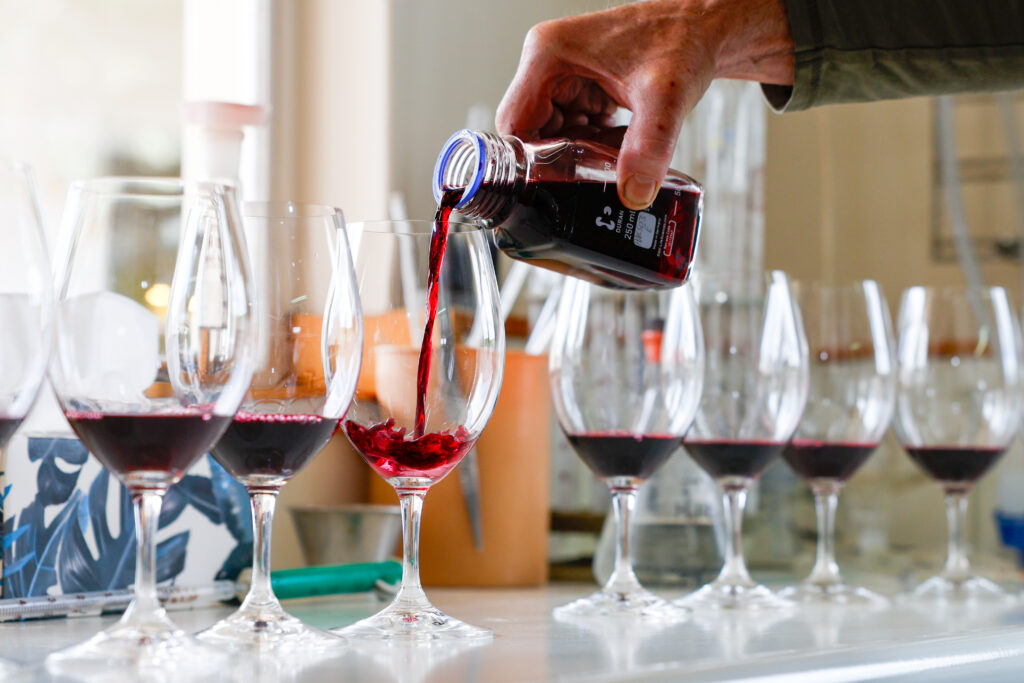
The Bullnose Signature
Bullnose is ultimately a wine of contrasts.
It is intensely coloured but bright rather than heavy.
It is exotic and voluptuous on the nose but fresh and precise on the palate.
It has the floral perfume, pepper and savoury character of classic cool-climate Syrah, yet the vivid raspberry and black-cherry fruit of Hawke’s Bay.
It is 100% Syrah, allowing the variety itself to express the region without the influence of co-fermented Viognier or other Rhône varieties.
It can be enjoyed young for its floral energy, vivid fruit and spice, but develops increasingly complex layers of liquorice, cured meat, game and savoury spice with age.
It comes from a country where Syrah represents less than one percent of the vineyard.
And it comes from a region whose Syrah was championed by pioneers such as Alan Limmer, John Buck and C.J. Pask long before Hawke’s Bay’s modern international reputation was established.
After more than three decades of planting, experimentation and careful winemaking, Bullnose has become more than a successful New Zealand Syrah.
It is a benchmark for what Hawke’s Bay Syrah can be: fragrant, vivid, savoury, elegant, age-worthy and unmistakably of its place.