• Coleraine: A New Era

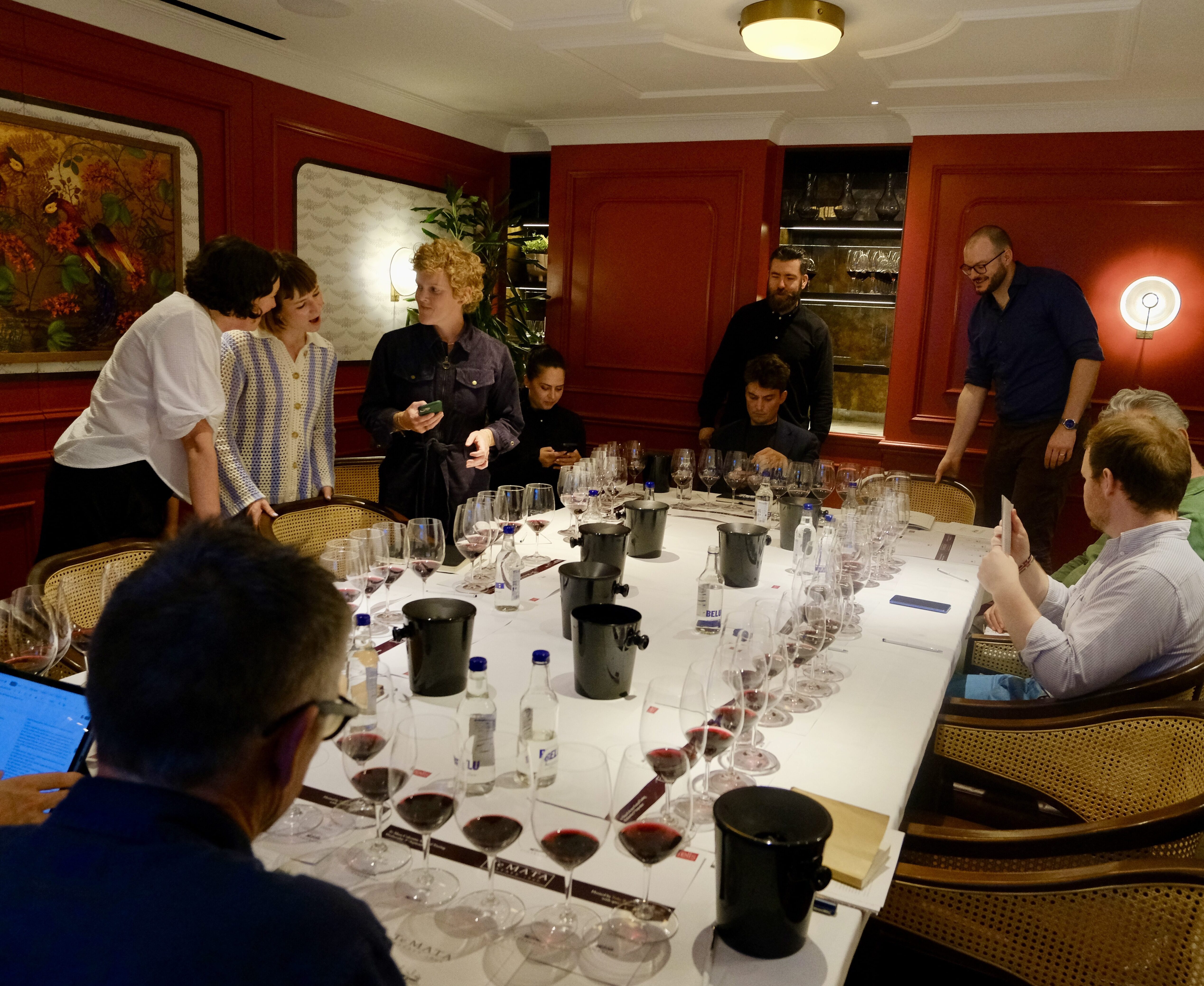
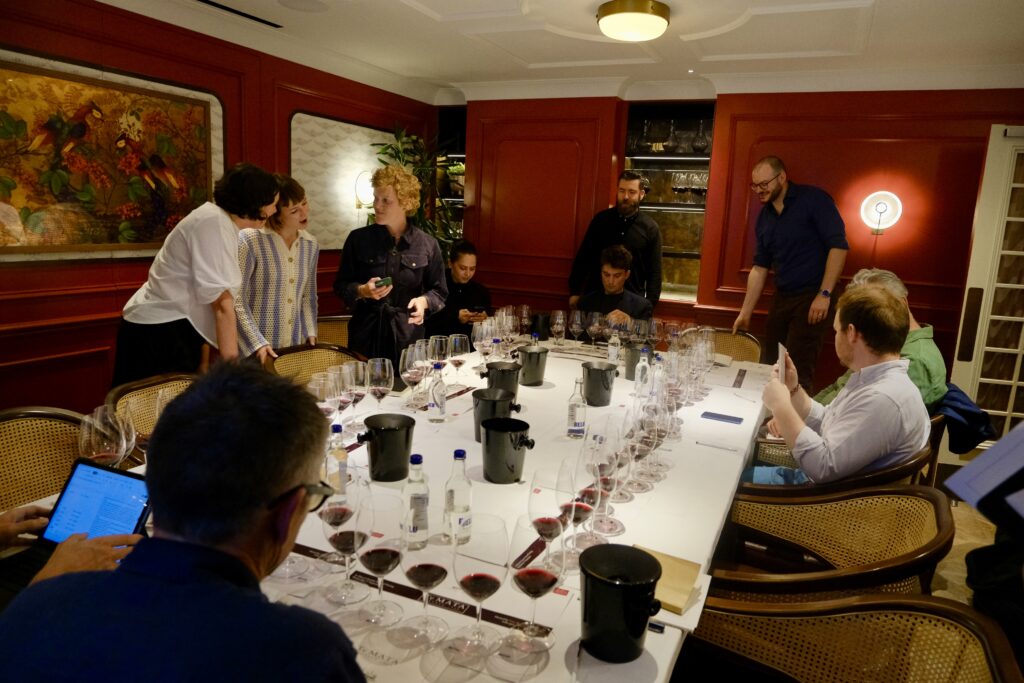
    Something iconic happened in London recently, in the Red Room at the Pavilion Hotel in Knightsbridge.



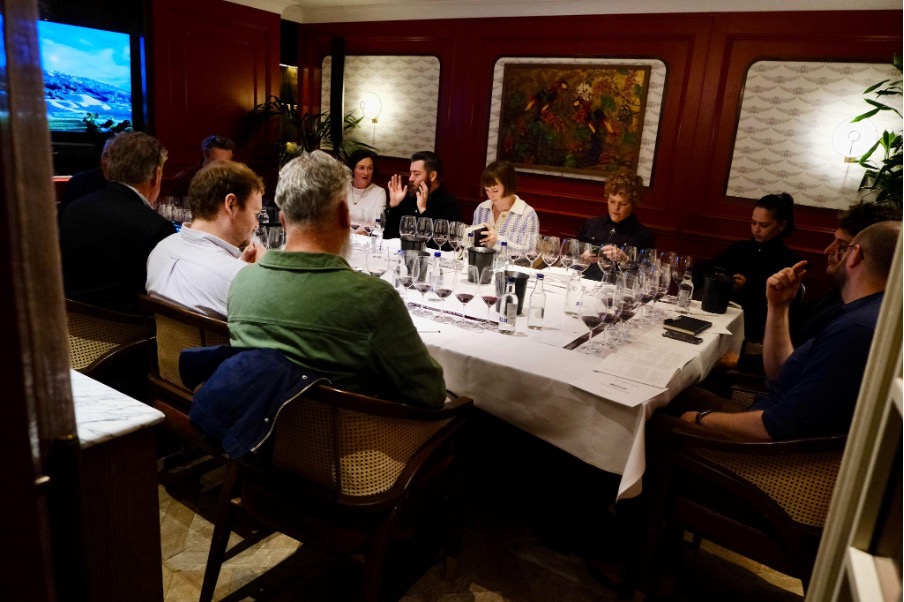
    Te Mata Estate held a tasting of fifteen vintages of Coleraine, stretching back more than forty years. It was an extraordinary opportunity to look at innovation and continuation within Coleraine’s development, and how the wine UK press called ‘beating heart of Hawke’s Bay in vinous form’ has evolved over four decades.


    This event carried real significance for us as a team, as a family, and as a winery.

    At the suggestion of Bordeaux expert Neal Martin at Vinous (his write-up is below), this was a deep dive on Te Mata’s winemaking and a remarkable gathering of fifteen of the UK’s top wine writers, sommeliers, and trade guests from some of London’s most respected fine wine merchants.
     

    To get to share these wines personally, and to see them recognised and understood by fine wine professionals, reflects generations of work at Te Mata and a new era. It was a proud moment for Hawke’s Bay wine and the larger story of New Zealand wine – a testament to how far age-able reds from New Zealand have come on the world stage.

    There were common threads that ran through every glass and every bottle: freshness, depth, elegance and energy. This was a celebration of both a unique wine vision, and consistency of quality – a confirmation of Coleraine’s place as a modern New Zealand icon.

    Seen like this, the legacy of this wine was evident.

    More than ever, Coleraine stands at the forefront of contemporary winemaking, while continuing to set the benchmark for cellaring longevity.

    Created entirely in Hawke’s Bay – by a dedicated and independent team who continue to push Coleraine forward – this is a wine that inspires conversation, respect, and admiration, wherever it is enjoyed around the world.


    Te Mata Coleraine: 1982-2023

    Neal Martin, Vinous, November 26, 2025


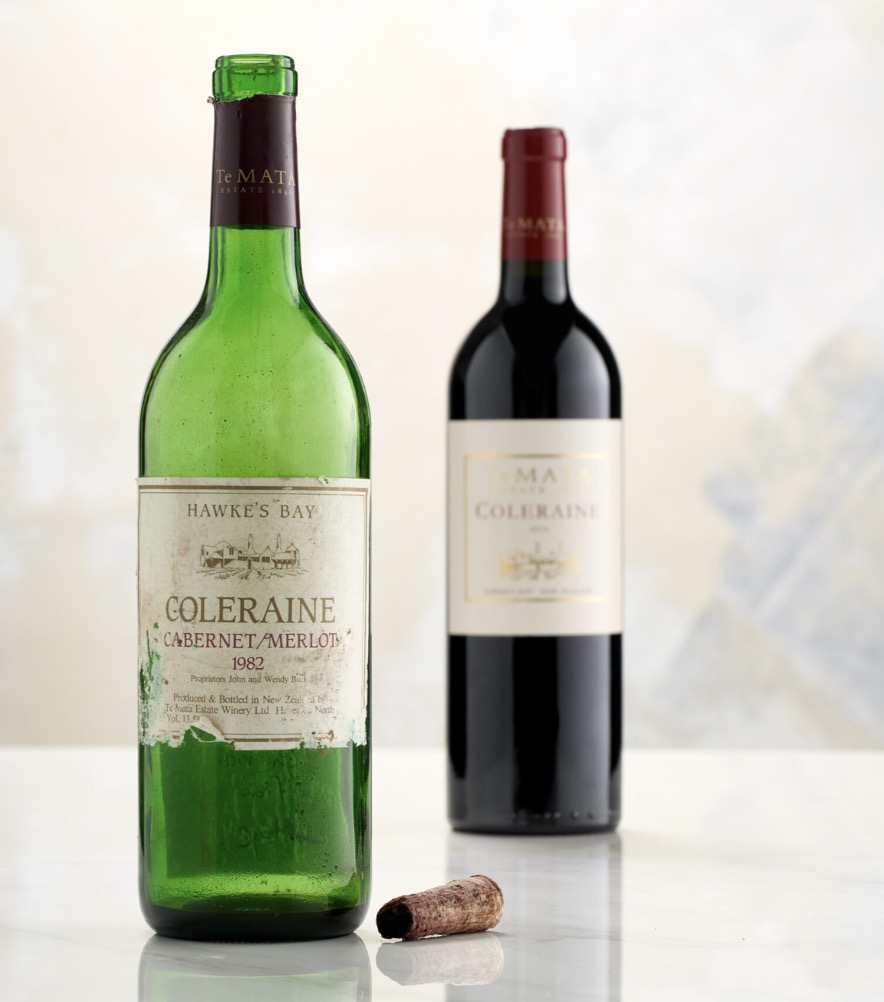
    ‘Allow me to step on my colleague Rebecca Gibb MW’s turf for one moment. Perusing a merchant’s list a few months ago, a particular wine caught my eye: the 1982 Coleraine from Te Mata Estate. Aside from being born during the primordial period of New Zealand’s wine industry, this wine has historical significance: it was the maiden release of this flagship Bordeaux blend.

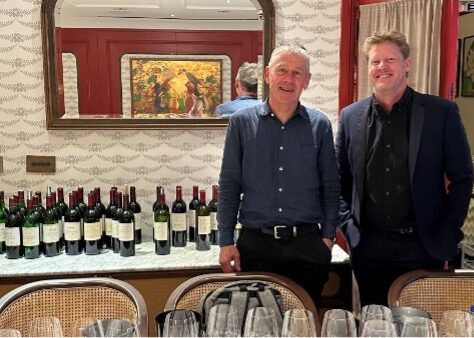
    I snapped it up. It was not particularly expensive, certainly less expensive than its 1982 contemporaries from elsewhere in the world. Having kept in touch with the Buck family since I handed over coverage, I contacted Toby Buck, curious to see if many bottles were extant in their own library. To cut a long story short, the exchange led to a vertical tasting through Te Mata’s U.K. importer (J.E Fells & Co), which took place in September of this year during Buck’s visit to London with winemaker Phil Brodie.
    Te Mata’s history stretches back to the mid-nineteenth century, ‘Te Mata Station’ having been established by English immigrant John Chambers in 1854.

    Three parcels of vines were planted towards the end of the century. Under Bernard Chambers, the estate expanded viticulture so that by 1909, it had become the country’s largest producer. Whereas most of the grape production was used to make fortified wines, Te Mata vinified a small amount of dry wine. It only just managed to survive New Zealand’s temperance movement, and in 1974, the estate was acquired by the present co-owners, the Buck and Morris families.’
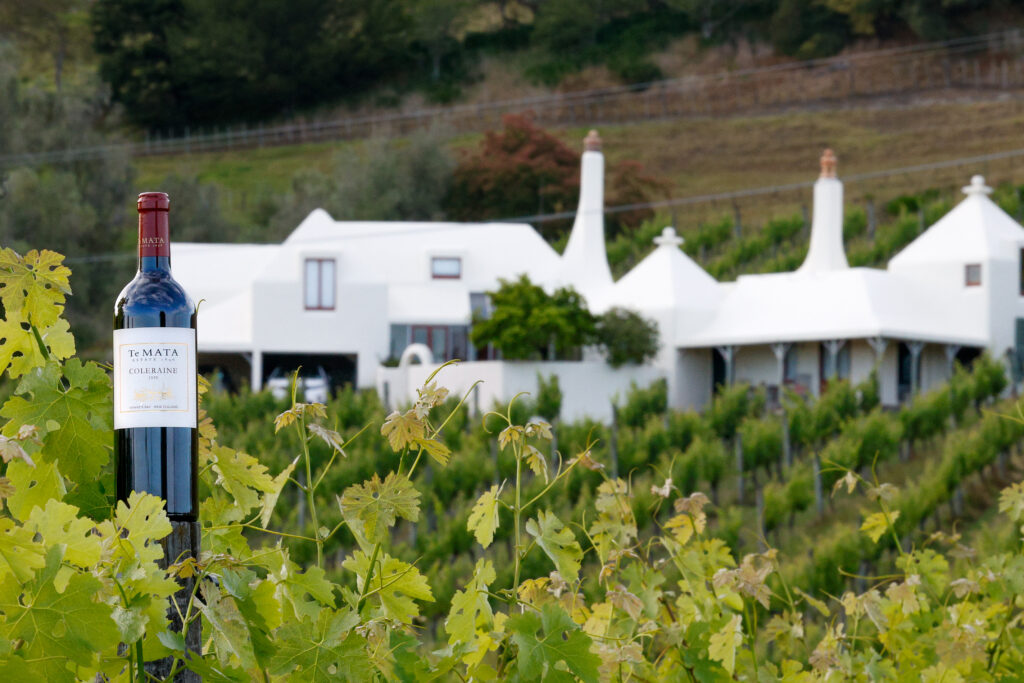


    “From 1982 to 1988, Coleraine came from a single vineyard planted in 1900 in the Havelock Hills,” Buck explained. It had been over a decade since we had last met. “The varieties were based on Château Latour, although the first vintage did not contain any Cabernet Franc.”

    I wondered about the origins of the name: “Coleraine is the river port in County Derry, Northern Ireland, where my great-grandfather on my dad’s side of the family, Samuel Morrow, came from,” said Buck. The etymology is Cuil Raithin, which means ‘nook of ferns’. The Morrows had a hardware business in Coleraine, but in 1908, at just 20 years old, Samuel emigrated to New Zealand. He settled on the East Coast just above Hawke’s Bay, selling hardware to rural communities. Family stories suggest his departure was sudden – more of a ‘get on the next boat’ escape than a planned migration. Because he could never return to Europe, the name Coleraine stayed with our family in New Zealand as a mark of our origin – a distant but tough place.”

    “To us, it was a reminder of a wider world and a grand remembrance of life, family, community and conviviality. When the vineyard at Te Mata Estate was established, dad chose to name it Coleraine as a tribute to Samuel Morrow and the family story. It was also a way of putting this epic-sounding, evocative moniker – one that he had grown up with – out there in the public eye. In a sense, conjuring it back into reality. To him, it was this beautiful lyrical name to stand proudly among other grand names.”
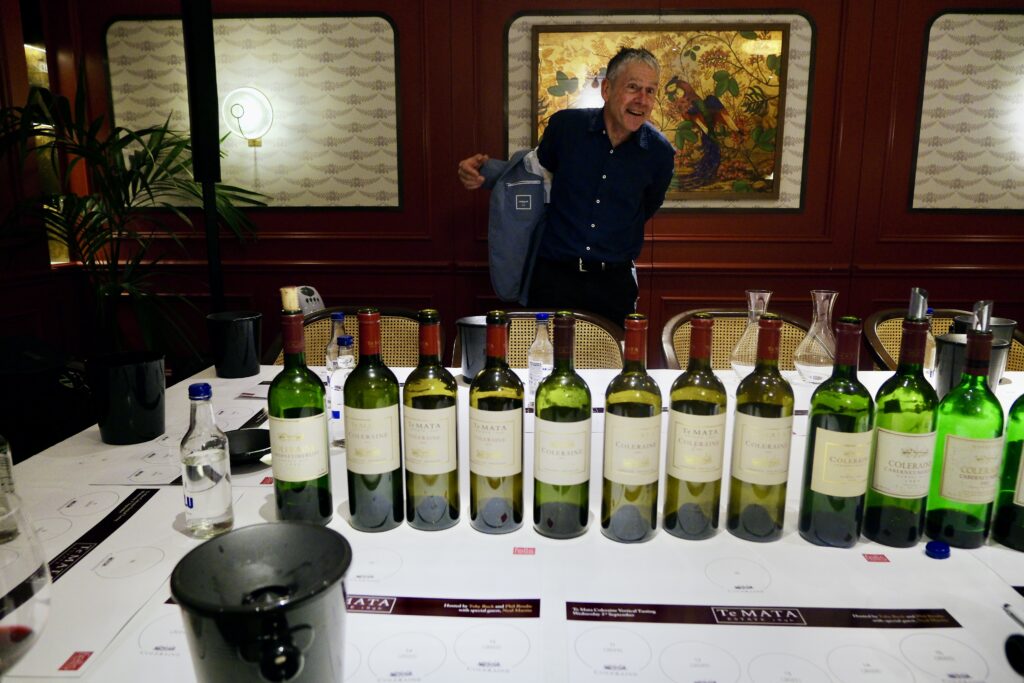


    Phil Brodie explained the origins of the vineyard: “From 1982 to 1988, the Coleraine came from a single vineyard planted in 1900 and originally called The Hill. In 1989, it became a blend of pickings in order to represent the best of the vintage. From 1994 onward, Coleraine is still based on the Havelock Hills with some fruit coming from the other subregion of Bridge Pa Triangle, and occasionally a sprinkling from the Dartmoor and Gimblett Gravels subregions. It follows the idea that a wine is greater than the sum of its parts, exploiting differences in soil, orientation and so forth. Te Mata Estate owns all vineyards, and we use our own bottling line, so we have full control.”

    “I have been making the wine at Te Mata for 33 years,” Brodie continued. “I grew up on a sheep farm, so I was always outside, always walking through vineyards. We changed the viticulture in 2019 when we began using cover crops and mulching to lower soil temperatures in the vineyard. We also began to mechanically shake the vines when bunches reached 80 to 100 grams, to remove unripe berries. We started doing that with white varieties, and now the reds. We found that this temporarily shuts down the vine, resulting in smaller berries and thicker skins, which means we can use fewer sprays.”
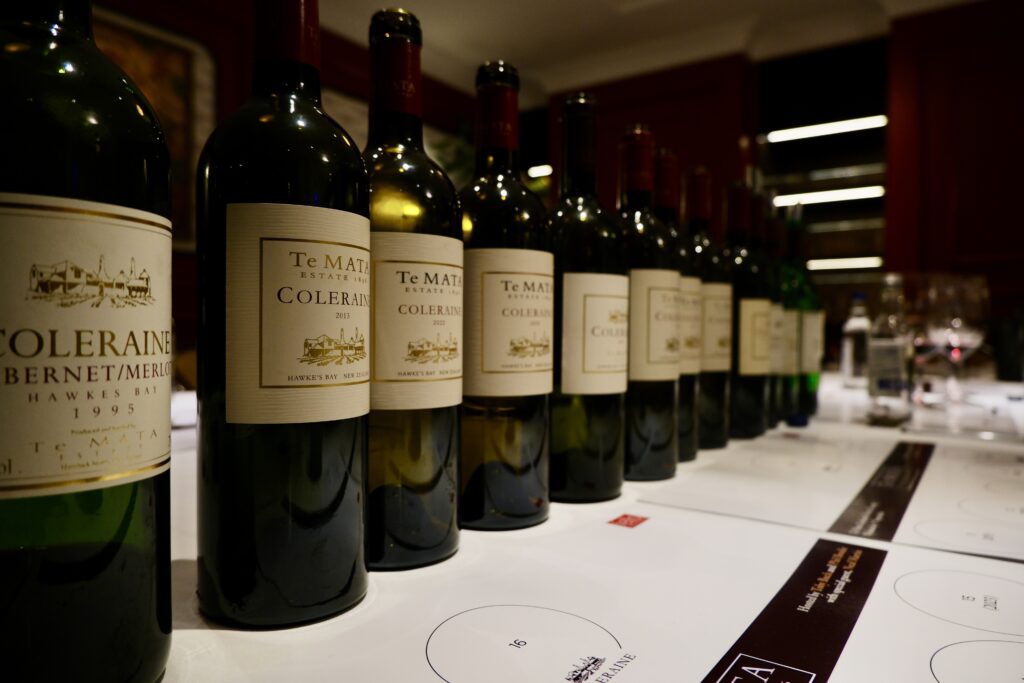


    “We use open-top tanks and plunge the fruit. We used to do four plunges, but now with smaller berries and older vines with more extract, it’s twice daily. There’s a seven-day fermentation, then we taste the must to decide when to halt the maceration, using only free-run juice and practicing a lot of co-inoculation rather than letting the wine sit on the gross lees. This helps avoid the risk of contamination, Brettanomyces and so on. The wine spends 18 to 20 months in French oak barrels with around 30% new wood. In 2017, we initiated a five-year program with a cooperage in Saint-Estèphe to design a barrel suitable for our Cabernet Sauvignon.”


    ‘Admittedly, I assumed the 1982 Coleraine would be in decline after 43 years. Not in the slightest. I was startled by its vivacity and complexity, both undimmed after all these years.

    Incidentally, this was the only vintage of Coleraine that employed a little American oak. I would have no hesitation dropping it into a lineup of 1982 clarets to see if anyone noticed the imposter. I preferred the 1982 to the more savoury, meaty 1985.

    Thereafter, I was impressed by Coleraine’s consistency. Vintages such as 1996, 2007, 2013 and 2020 were highlights, though they only had their noses in front of a clutch of other impressive wines. What a pleasure it was to be reminded of the quality, classic stylishness and inherent longevity of one of New Zealand’s icons.

    Henceforth, I will peruse merchants’ lists carefully in case I spot any other bottles of Coleraine. I recommend you do likewise.’


    Original article here.  Additional images from Te Mata Estate.


    Neal Martin Vinous


    2013 Coleraine 95 Points

    Drinking Window: 2026 – 2045

    The 2013 Coleraine has a seductive bouquet with blackcurrant, raspberry coulis and blood orange scents, beautifully defined with a little more panache and charm than the 2009. The palate has a satin-like texture on the entry, moderate depth, sleek and sensual with a plush but restrained finish that demonstrates real sophistication. Classy from start to finish, this is a beautiful Coleraine that will give many years’ drinking pleasure.


    2007 Coleraine 95 Points

    Drinking Window: 2025 – 2045

    The 2007 Coleraine initially has a tighter, less expressive bouquet than the 2004, demands more coaxing though there is a similar fruit profile with blackberry, cedar and perhaps a touch more pressed flowers. Impressive delineation and focus. The palate is medium-bodied with finely sculpted tannins that carry layers of mulberry and blackcurrant fruit, allspice and Chinese 5-spice. This is very detailed on the finish with gentle grip: a wonderful Coleraine that will give 15, perhaps even 20 years of drinking pleasure.


    2020 Coleraine 94 Points

    Drinking Window: 2027 – 2052

    The 2020 Coleraine has a bit more flair and purity on the nose compared to the 2019 with perfumed black cherries, cassis, violet and incense aromas, the oak a little more integrated by direct comparison. The palate is medium-bodied with svelte tannins, a keen line of acidity, a little more powdery in texture but you cannot help but be seduced by the harmony, pepperiness and length on the finish. One of the best Coleraine vintages in recent years.


    1996 Coleraine 94 Points

    Drinking Window: 2025 – 2040

    The 1996 Coleraine is less flamboyant and concentrated compared to the previous vintage, but this has more delineation and complexity with cedar and tobacco infused red berry fruit, hints of bay leaf and wild mint. Very focused, very classy. The palate is medium-bodied with attractive piquancy and spiciness towards the finish. Old World beautifully married with New World. Superb.
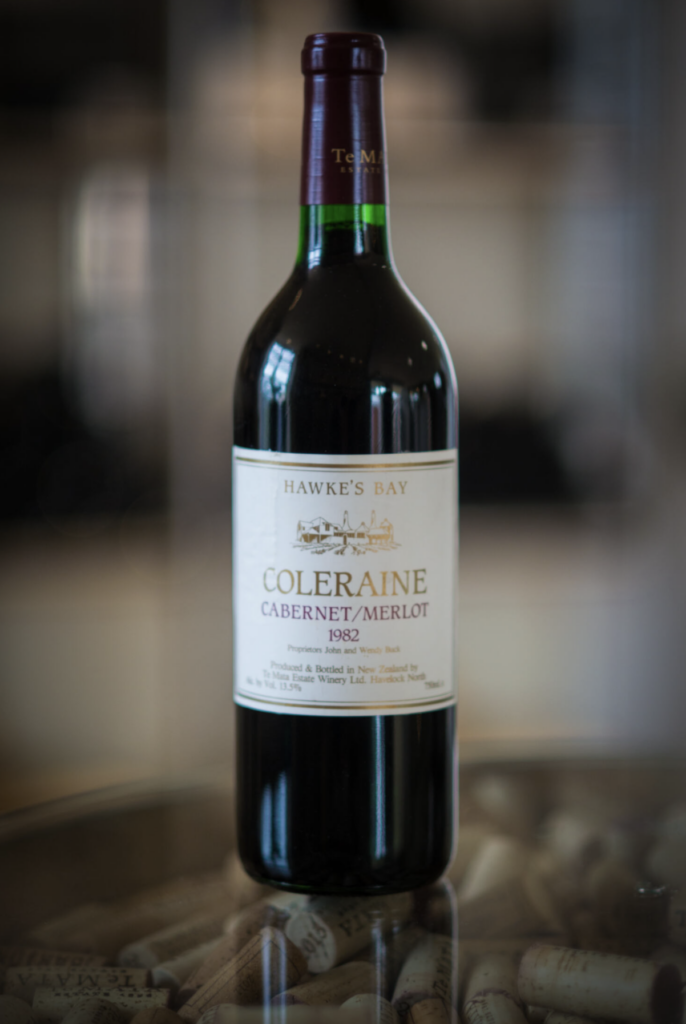


    1982 Coleraine 94 Points

    Drinking Window: 2025 – 2038

    The 1982 Coleraine was the first commercialised vintage, an anomaly since it is the only vintage with a small percentage of American oak as there was a shortage of French oak in New Zealand. To say this surpasses my expectations is an understatement. It has a glorious, yes, Bordeaux-like nose, a doppelgänger for a Left Bank ’82: bright and vivid brambly red fruit with superb delineation and focus. Just a hint of dark chocolate emerges with time, betraying its non-Bordeaux roots. The palate is medium-bodied and driven by the silver thread of acidity. Quite a sweet core of red plum and crushed strawberry, silky smooth with ample weight on the finish, to my own surprise this historic New Zealand wine is nowhere near the end of its drinking window.


    2021 Coleraine 93 Points

    Drinking Window: 2027 – 2050

    The 2021 Coleraine has another very intense nose not dissimilar to the 2019: layers of blackcurrant, cedar and violet, though not the same level of mineralité as the 2020. Then again, the aromatics improve in the glass and reveal very appealing graphite/pencil shavings scents that lend it a Left Bank allure. The palate is medium-bodied with a keen line of acidity. Fresh and vibrant, this is endowed with plenty of graphite infused black fruit with impressive precision on the finish. I was tentative about this Coleraine at first, but it eventually wins you over.


    2023 Coleraine 92 Points

    Drinking Window: 2028 – 2048

    The 2023 Coleraine comes from the longest ever growing season and the second hottest on record. Unsurprisingly it has a very concentrated nose with dense blackberry, cassis, espresso and star anis, just a touch of pencil box with time. The palate is medium-bodied with a fine bead of acidity, silky tannins, very harmonious with just the right amount of sapidity on the finish. Fans out beautifully, though it just needs a little more persistence that may well manifest with time.


    Only a small amount of Coleraine is available each year.

    2026 will be the 40th release of Coleraine as Te Mata also celebrates its 130th anniversary.

    Be signed up to make sure you don’t miss out.
     

  • Te Mata Tops 2025 Auctions

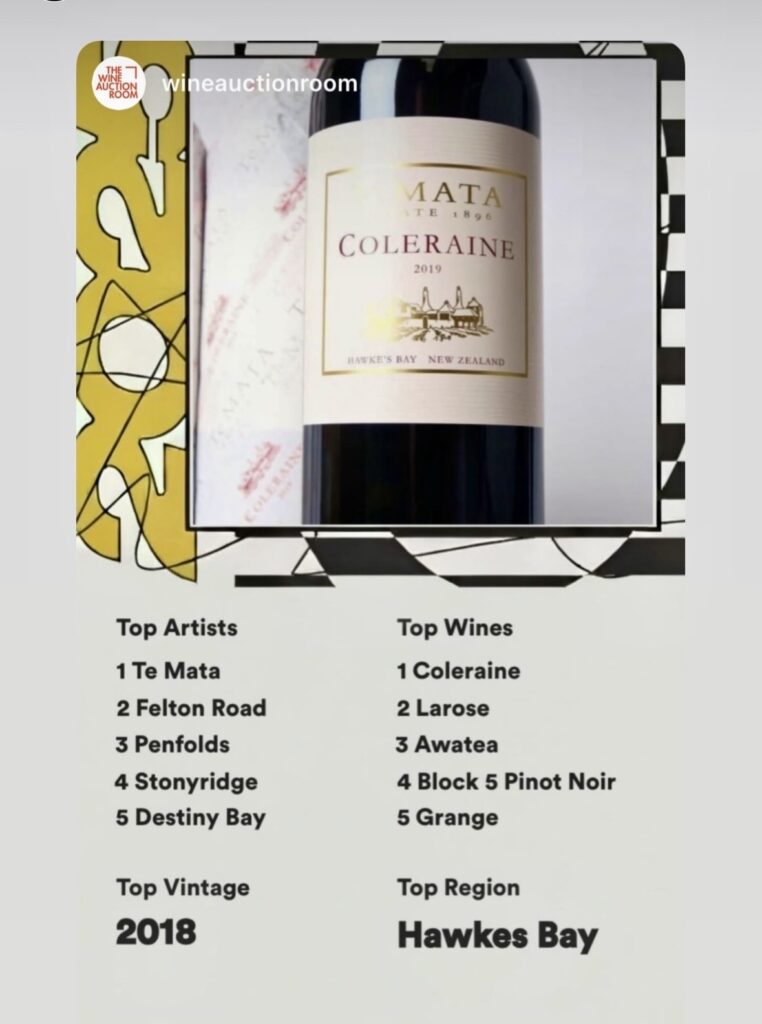
    Te Mata Estate’s flagship Cabernet Merlot, Coleraine, has once again asserted its dominance at the top of New Zealand’s wine auction market. Long regarded as one of the country’s most collectable wine producers, Te Mata continues to make headlines for its consistent ability to command premium prices on the secondary market. Coleraine and Awatea’s ongoing success reflect not only their pedigree and provenance, but also the enduring confidence collectors place in the estate.


    In 2025, Coleraine once again topped the auction charts, reinforcing its reputation as one of New Zealand’s most sought-after fine wines. Year after year, the wine’s performance at auction highlights its rare combination of elegance, complexity, and longevity. This sustained demand positions Coleraine not just as a benchmark for quality, but also as a blue-chip wine with proven investment appeal.


    This year’s results are particularly notable, with both Coleraine and Te Mata’s Awatea Cabernet Sauvignon securing places among the top five wines sold at auction in New Zealand. Together, they sit firmly in the highest echelon of local wine collections, underscoring the depth and consistency of Te Mata Estate’s red wine portfolio. Such recognition places the estate alongside the most respected producers in the country.

    Te Mata Estate’s repeated auction success speaks volumes about the trust and admiration it commands among collectors. Coleraine has set records in the past, and its continued dominance at the auction block confirms its status as a reference point for New Zealand fine wine. The 2023 auction results, published by The Wine Auction Room – the country’s largest trader in secondary wine – once again ranked Te Mata Estate among the top producers, further cementing its premium standing.

    Ultimately, Coleraine’s enduring performance highlights Te Mata Estate’s long-term commitment to wines that reward patience and provenance. Crafted to age gracefully and consistently exceeding expectations decades after release, Coleraine stands as a benchmark not only for quality, but for value retention and economic significance within New Zealand’s wine industry. As it continues to stand the test of time, Coleraine remains a defining symbol of what great New Zealand wine can achieve.

  • Say Hi to Mabel

    Say hi to Mabel! The newest member of our Highland Cattle family was born to Ella on August 10th. She’s happy, healthy, and absolutely adorable.

    The Highland Cattle are loved by the Te Mata team and visitors alike and help create our biodynamic mixture, which we spray on the soil this time of year. It’s fantastic for soil health – and great for vine growth.

    Here’s to longer days and fresh beginnings!


  • Why ‘Precision’ Viticulture?

    Sustainability technology in viticulture has moved well beyond good intentions. It is now a practical, measurable set of tools that allows vineyards to work with greater precision, lower impact, and deeper understanding of their land.


    At Te Mata, many of these technologies are already part of how we farm, not as add-ons, but as extensions of long-established vineyard practice.

    Precision viticulture is one of the most powerful shifts. Through the use of sensors, mapping, and real-time data, we are able to monitor vineyard conditions block by block, sometimes vine by vine. This allows decisions about irrigation, nutrition, and canopy management to be made with far greater accuracy, reducing waste while supporting healthier, more balanced vines.


    Water use is a critical issue in Hawke’s Bay, and smart irrigation systems have become an essential tool. Soil moisture sensors and weather data allow irrigation to be timed and targeted rather than assumed. The result is less water used overall, vines that are never pushed or stressed unnecessarily, and fruit that develops with consistency and clarity.

    Energy use is another area where technology supports long-term sustainability. Integrating renewable energy sources into vineyard and winery operations helps reduce reliance on fossil fuels and lowers overall carbon footprint. Just as importantly, it reflects a broader commitment to thinking generationally rather than seasonally.

    What matters is that these technologies are not about replacing intuition or experience. They sharpen it. They give viticulturists better information, earlier signals, and clearer feedback, allowing human judgement to operate at a higher level. The vineyard remains the teacher; technology simply helps us listen more closely.

    Taken together, these tools represent a future-facing approach to viticulture that aligns closely with Te Mata’s philosophy: respect for land, careful stewardship, and quiet innovation. Sustainability here is not a marketing claim, but an evolving practice—one that ensures the vineyards we farm today will remain expressive, resilient, and alive for decades to come.


  • Top 20 Wines of NZ 2025

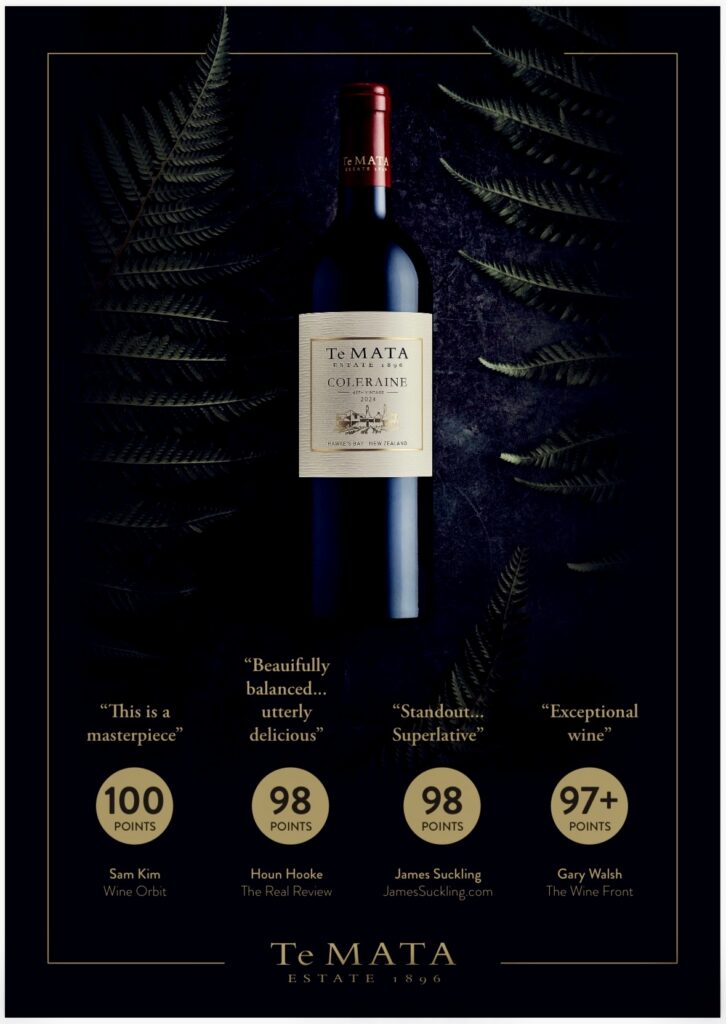
    We are immensely proud to have not one but two wines named among James Suckling’s Top 20 NZ Wines of the Year – a rare honour in the world of fine wine! Coleraine Cabernet Merlot 2023 and Elston Chardonnay 2024 sit alongside some of the most celebrated wines in the country, marking a moment of recognition that reflects decades of dedication, vision, and craftsmanship. For any winery, placement in this list is a remarkable achievement; for a single estate to appear twice in the Top 20 is very uncommon.

    James Suckling, one of the world’s most influential wine critics, is known for his rigorous, discerning approach, and his annual list has become an international benchmark for quality. That Te Mata Estate features twice underscores the exceptional standards upheld across the entire winery – from vineyard to cellar, from blending decisions to barrel work. It signals that these wines aren’t just strong examples within New Zealand; they are among the finest anywhere.

    What makes this recognition even more special is the breadth it represents. Coleraine, our flagship Cabernet Merlot from Hawke’s Bay, stands proudly as a benchmark for New Zealand reds, while Elston showcases the elegance and purity that Hawke’s Bay Chardonnay can achieve at its very best. For a winery to excel in both Bordeaux varieties and Chardonnay is exceptionally uncommon – especially in a New Zealand context.

    Together, these two accolades affirm something Te Mata Estate has long believed: that world-class winemaking is not defined by a single variety, but by the depth, consistency, and integrity of the entire estate. Having both Coleraine 2023 and Elston 2024 recognised among the Top 20 Wines of the year celebrates not just two outstanding releases, but the strength and versatility of our vineyards, our team, and our enduring commitment to excellence.

  • Everything Te Mata To Know

    Get to Know this New Zealand Estate


    Discover Te Mata, New Zealand’s oldest family-owned winery, nestled in the sunny, dry slopes of Hawke’s Bay.

    For over 130 years, this estate has crafted wines that balance ripe fruit, fresh acidity, and subtle savoury complexity, making them both approachable and age-worthy. From iconic reds like Coleraine to aromatic whites, Te Mata Estate aims to showcase the best of New Zealand terroir.


    Where Te Mata Estate Is and Why It Matters

    Te Mata Estate sits in Hawke’s Bay on New Zealand’s east coast, on the beach side of the town of Havelock North. From Napier Airport you can drive along the coast, through Marine Parade, about 20mins south. Hawke’s Bay is uniquely dry for New Zealand because the central ranges block most weather systems moving from the west, creating a natural rain shadow and some of the sunniest, driest conditions in the country. Those ‘classic Hawke’s Bay summers’ make for long warm growing seasons, tempered by sea breezes from the Pacific Ocean, that perfectly help grapes ripen fully while keeping vibrant acidity in the wines.


    A Winery With Deep Roots

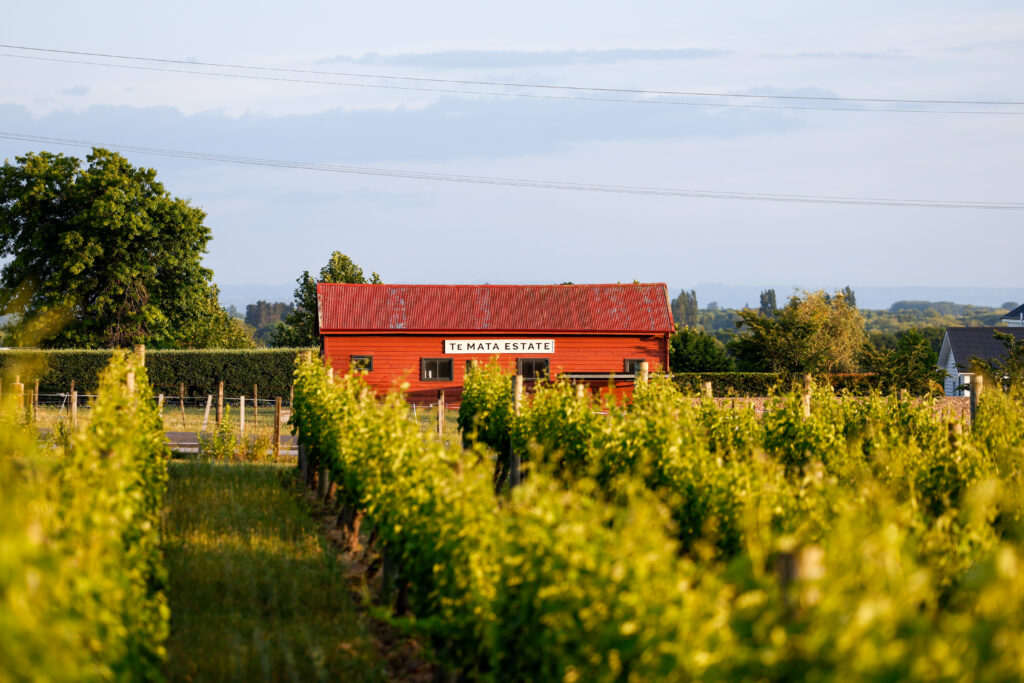
    Established in 1896, Te Mata Estate is New Zealand’s oldest continuously operating winery, and remains independent and family owned. All grapes are grown on the estate’s own vineyards, and every stage from pruning to winemaking and bottling happens on site. The “large boutique” scale of the operations is really an estate-only model that gives unmatched control over quality and expression of place. As well as growing grapes, Te Mata produces about 40,000 cases of wine a year, with strong demand both locally and in export markets across 45+ countries.


    The Land and Terroir

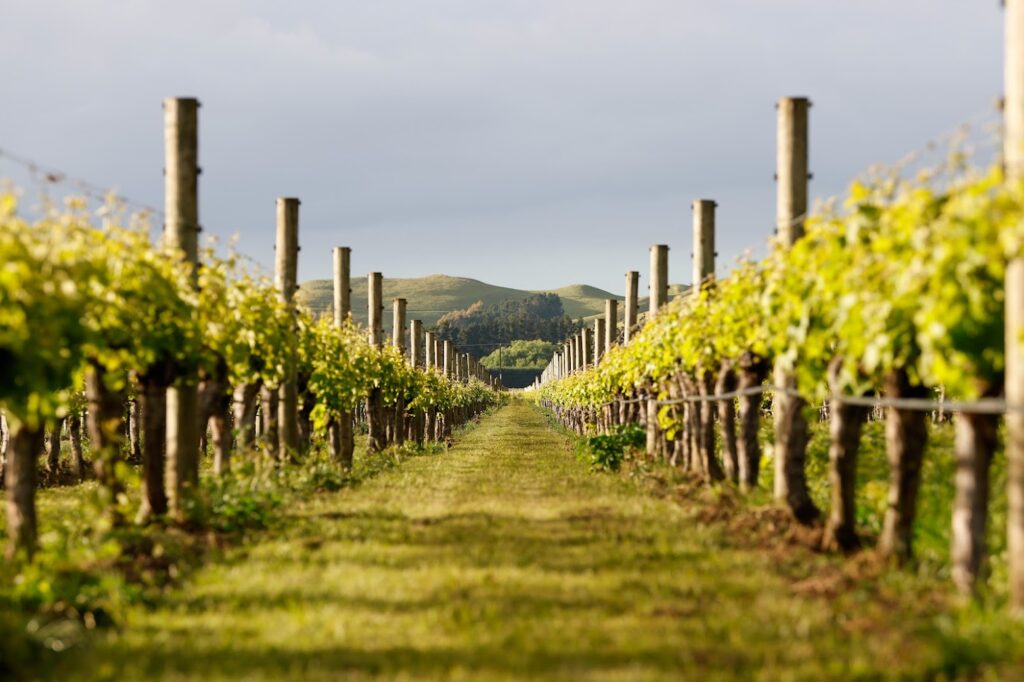
    The vineyards occupy north-facing slopes on ancient hills formed by tectonic uplift and river erosion. Soils vary from sandy loam over sandstone in the east to clay and mineral-rich gravel in other sites, giving a wide palette of soil types that influence vine growth and flavor. Te Mata Peak itself is raised seabed with windblown volcanic topsoils. Te Mata has predominantly Chardonnay, Cabernet and Merlot growing on these hills since the 1890s. Te Mata’s original vineyards were the first in New Zealand protected by law as the Te Mata Special Character Zone in 1996, recognising their heritage and uniqueness.

    What Te Mata Wines Taste Like

    Across the range, Te Mata wines balance intense fruit clarity with structure and freshness. Reds are often medium to full-bodied with ripe dark fruit, savoury complexity, and fine tannins that support aging. Whites show expressive aromatics with bright acidity and textural richness. This combination of fruit depth, moderate alcohol, and freshness makes their wines highly enjoyable on release and rewarding with age.

    Key Wines to Know

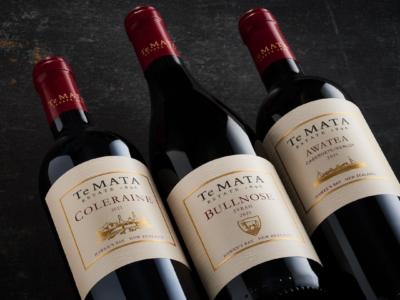
    • Coleraine is Te Mata’s flagship red and one of New Zealand’s most celebrated wines. First released in 1982, it’s a Cabernet/Merlot blend known for balance, structure, and age-worthiness, often scoring high points from international critics.

    • Bullnose Syrah shows Hawke’s Bay’s ideal conditions for Syrah, with vibrant dark fruit, spice, and a long, elegant finish.

    • Awatea is a classic Cabernet/Merlot blend that sits just below Coleraine in style but with expressive dark fruit and savouriness.

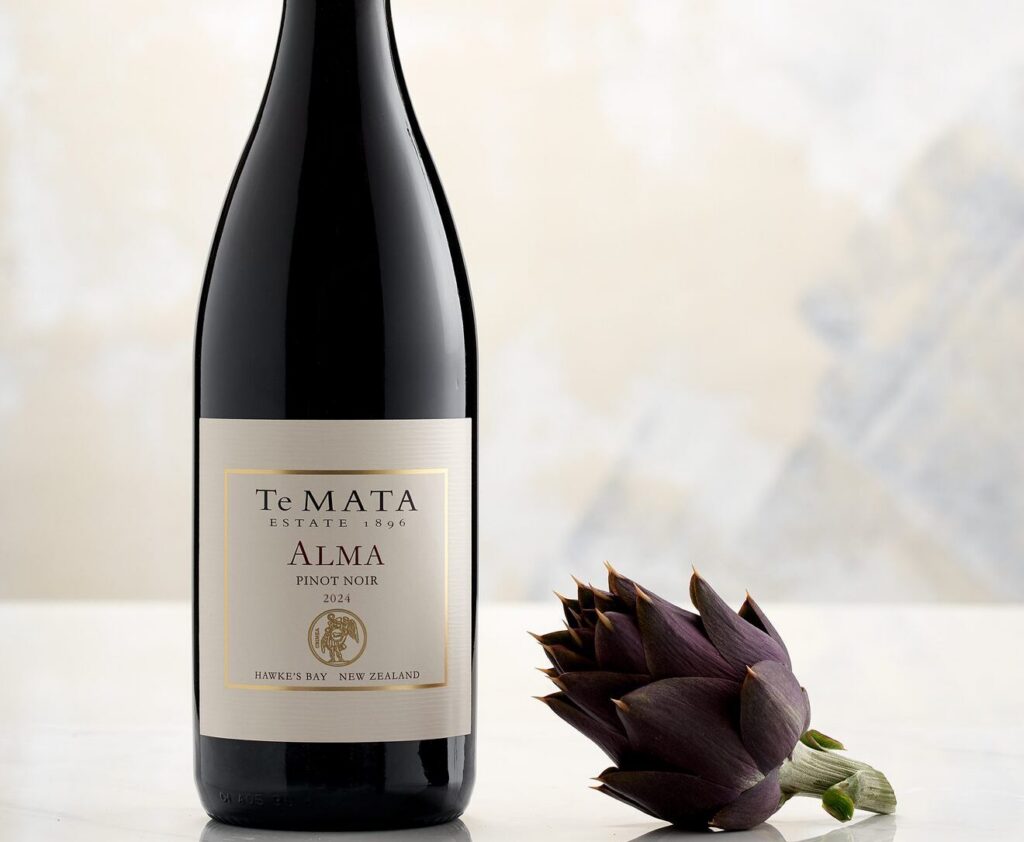
    • Alma Pinot Noir highlights Hawke’s Bay’s rising status for this variety, with red fruit, floral notes, and supple tannins drawn from cooler sites like Dartmoor Valley.

    • Cape Crest Sauvignon Blanc a barrel-fermented style known for its ripeness of acidity, soft texture and incredible length.

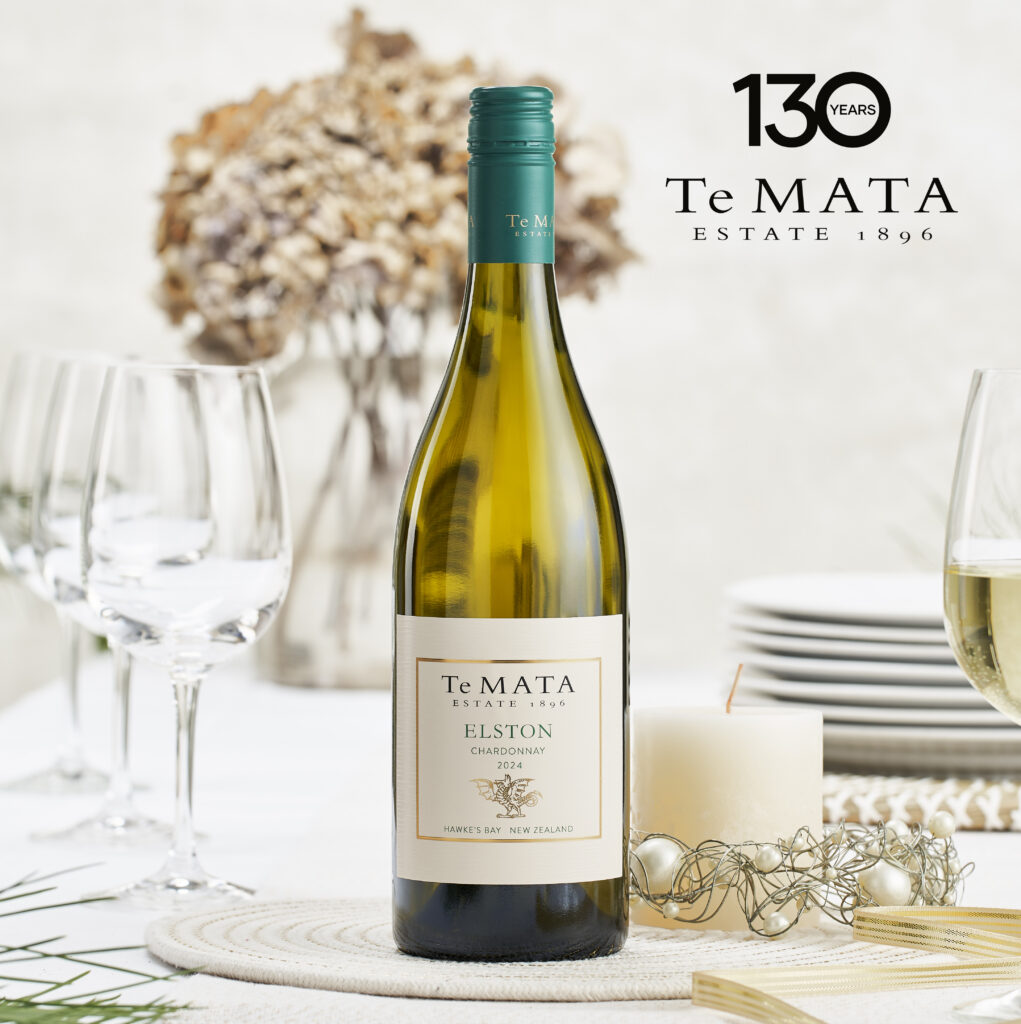
    • Elston Chardonnay rich, aromatic fruit with fresh acidity, soft oak and fine textural weight.

    • Estate Sauvignon Blanc is full of Hawke’s Bay, North Island, fruit: lively, tropical, and framed by balanced, mouthwatering acidity.


    How to Pair and Enjoy

    Te Mata wines are made to be food-friendly and versatile. Their bright acidity and structured profiles complement a wide range of cuisines. They work beautifully with both classic pairings like grilled meats and game and fresh seasonal produce. They also work well with spiced dishes including Indian, Southeast Asian, and Middle Eastern flavours. (Especially when fresher spices are used rather then powdered ones.) The wines own freshness and medium-body makes them particularly gastronomic. The lighter reds cans be chilled. The light whites are refreshing on their own or with seafood, and robust reds can stand up to richly flavoured dishes.


    Visiting the Estate

    The Te Mata cellar door welcomes visitors to explore their long history and premium wines. Options include walk-in tastings, guided Heritage Tours, and discovery experiences tailored for new enthusiasts and collectors. The winery is accessible from Napier Airport by car hire and private shuttle. There are lots of accomodation options, we have parking if your driving, and the surrounding Hawke’s Bay region features extensive cycle paths for vineyard touring.

  • 2024 The Holy Grail?


    Each vintage is a celebration of time and our terroir. Each one is distinct, each one is shaped by the land, people, and nature. In 2024, we had time to find poise. It was an remarkable harvest, producing beautifully balanced wines with elegance, power and restraint. Deeply thought-provoking wines. It was a vintage that rewarded precision. Each pick, each parcel, each ferment was handled with a jeweller’s attention to detail – a deliberate pursuit of purity.


    Vintage 2024

    Technical Report from Senior Winemaker Phil Brodie Vintage is, for us, a celebration of the reflection of time and our terroir—each one distinct, each one shaped by the land, people, and nature. In 2024, we had time to find poise. The 2024 was an incredible vintage, producing beautifully balanced wines with precision—powerful yet restrained, and deeply thought-provoking. Wines with a degree of umami, salinity, and acidity to focus the wine, give tension and energy, and sweeten the tannins on the finish. The wines have delivered an amazing sense of place.

    Winter – Spring
    Early winter was dry, then came some rain, which was needed to replenish our underground water table. Thankfully, we received a beneficial volume of rain in the early part of spring that gave us the ability to recharge our soils and grow a healthy, full canopy. From there on, we received very little in terms of significant rain events, and with a cool, dry, windy flowering period, smaller bunches formed, promoting reduced potential yields. We then began to see blocks experience levels of water stress. Given intimate knowledge and understanding of our soils across the various subregions, we started increasing irrigation to allow the vines to combat heat spikes in late December and January.

    Summer – Autumn
    December to early February saw rapid heat accumulation with above-average temperatures. There was very little rain over these months, giving clean canopies, clean fruit, controlled vine stress, and very small berries on both whites and reds. These factors, combined with exceptionally low cropping rates, produced an early harvest, starting with some hand-picked Chardonnay for Elston on 26 February with good sugars and balanced acids.

    Harvest
    Harvesting continued through into April with classical daytime temperatures in very dry conditions, combining with tiny berries to produce significantly lower yields, both in cropping rates and juice yields. As a result, the whites showed great intensity and tension, with wonderful natural acidity, and the reds are deeply coloured with plenty of extract, rich with purity, complexity, and length.

    Conclusions – Notes of Significance
    • A very dry preceding winter
    • Early onset of vine stress monitored by new advanced technology coupled with precision irrigation
    • Above-average heat summation (1590 GDD — Growing Degree Days)
    • A tapering of warm nights in early February led to retention of acids, contributing to
    the wines’ varietal expression, balance, and wonderful length
    • Beautiful clean fruit with no disease pressure
    • Exceptionally low crops with tiny berries and great concentration
    • White wines – acid retention, pure with intense complexity
    • Red wines – deeply coloured, complex, and structured

    Through the continuous improvements from the formalisation of our winery and vineyard R & D programme, including organic, biodynamic and regenerative practices, new pruning techniques, greater experience with an intimate knowledge of our blocks down to the individual vine, increasing vine age, and attention to detail, all this coupled with such an incredible vintage the wines from 2024 are absolutely stellar.
    Can we see The Holy Grail?


    Download as PDF here.


  • Spring Crimper in Action


    At Te Mata Estate, one of the more striking sights at this time of year is the crimper in action, moving steadily between the vineyard rows behind a tractor. Rather than cutting or mulching, this specialised piece of equipment gently bends the stems of grasses and companion plants like mustard seed, tick bean, and phacelia, pressing them down without breaking them. The result is a living mat of vegetation that remains rooted, intact, and actively contributing to the vineyard ecosystem.

    Unlike conventional mowing, crimping allows the plants sown between the vine rows to complete their natural life cycle. These companion species are chosen to support soil health, moisture retention, and biodiversity, and the crimper works with them rather than against them. By bending the stems instead of severing them, the plants slowly senesce in place, forming a protective layer over the soil. This cover helps reduce evaporation as the weather warms, moderates soil temperature, and creates habitat for beneficial insects and microorganisms.

    The retained plant material also plays a meaningful role in carbon capture. As the crimped vegetation breaks down, its biomass is returned directly to the soil, adding organic matter and improving structure over time. This process supports healthier root systems, better water infiltration, and more resilient soils — outcomes that align closely with Te Mata Estate’s long-term approach to vineyard stewardship. The vineyard floor becomes not just a managed surface, but a dynamic, living system.

    While crimping is more commonly seen in parts of Europe and North America, it remains a rare sight in New Zealand vineyards. Te Mata Estate has been quietly trialling and refining this approach for around seven years, adapting the system to local conditions and learning from each season. Seeing the crimper at work each spring is a reminder that thoughtful innovation doesn’t always look dramatic — sometimes it moves slowly between the rows, bending rather than cutting, and leaving the vineyard stronger for it.

  • On Multi-Generational Wine

    The Gift of Time: Wine as Legacy
    There is something quietly magical about a bottle of wine that does more than mark a moment. It becomes part of a story that can stretch across decades. At Te Mata Estate, this idea is not romantic fantasy. It is a living tradition built on craftsmanship, place, and time. Since 1896, Te Mata has tended vineyards on the Havelock Hills of Hawke’s Bay, hand harvesting and making wine entirely on the estate, in the same historic buildings and original cellars that generations of winemakers have worked in.

    Buying a bottle of Te Mata with the future in mind transforms it into a vessel of memory. A bottle put aside for twenty or thirty years becomes a gift for the next generation, a reminder of births, anniversaries, or milestones yet to come. In that way, wine becomes more than something to drink. It becomes legacy.

    Why Te Mata Wines Age: The Craft Behind the Cellar
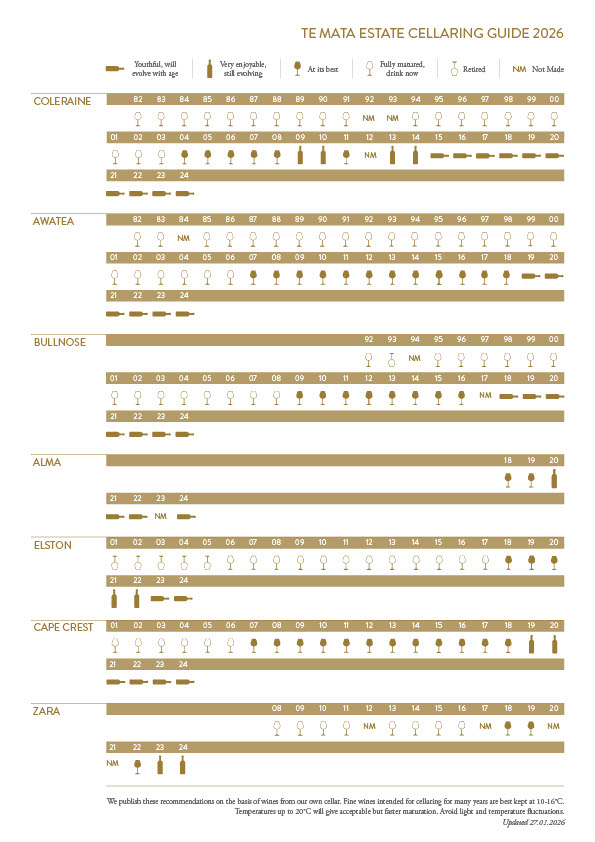
    Not all wines are made to last. To age gracefully, a wine needs balance and structure, along with the sort of quiet restraint that allows it to evolve rather than fade. At Te Mata, decades of experience and a deep connection to the land come together to create exactly that. Coleraine, the estate’s flagship red, first made in 1982, has become an icon of long aging potential. What began as a single vineyard bottling is now a blend of carefully selected parcels from some of the oldest vineyards on the Havelock Hills, first planted in the 1890s.

    Winemaking here is classical and respectful. Grapes are destemmed, gently fermented, and allowed an extended maceration before a long maturation in French oak barriques. Once bottled, the wine’s fine tannins and brilliant acidity carry it through decades of development. Coleraine often behaves like a fine Bordeaux in its structure and longevity, yet its soul is pure Hawke’s Bay, shaped by coastal breezes, mineral soils, and long, even growing seasons that give it both freshness and power.

    Proven Track Record: Wines That Evolve Beautifully
    Te Mata’s reputation for cellar worthy wines is not theoretical. Vintage after vintage has shown how well these wines can age. Bottles from the early eighties still offer freshness and personality. Landmark vintages, such as 1998, have been celebrated internationally as some of the greatest wines ever produced in New Zealand. More recent vintages continue that tradition, with notes of dark fruit, graphite, cedar, and floral perfume, all wrapped in the bright energy and polished tannins that signal a long life ahead.

    For collectors and wine lovers alike, this consistency is what makes Te Mata such a dependable choice for the cellar. These wines not only survive the years, they thrive in them, gaining depth, softness, and complexity while holding on to their natural freshness.

    Wine as a Multi-Generational Gift
    Imagine a new parent buying a bottle of Coleraine the year their child is born, tucking it away, and handing it over on a twenty-first birthday, wedding, or another important milestone. A wine like this matures slowly, its fruit deepening from bright berries to richer, darker tones, its tannins softening into silky structure, its layers of earth, spice, and minerality becoming more woven and complete. What you give is not simply a bottle. You give time, memory, and the story of a place cared for over generations.

    Because Te Mata wines come from historic vineyards and a family-led estate that has been working the same land since the nineteenth century, the gift carries provenance and meaning. It feels less like a commodity and more like an heirloom.

    Why Now Is a Great Time to Begin a Cellar
    Recent vintages at Te Mata have been especially promising. The wines are concentrated, pure, and structured, shaped by low yields and small berries that offer exceptional depth. Some of these vintages have already received outstanding recognition. For anyone considering a future gift or simply building a cellar, this is an ideal moment. Each bottle begins its life with great promise, backed by more than a century of heritage and care.

    More Than Wine: A Living Tradition
    At its heart, wine is about time. It is about patience, craft, and trust in what the future can bring. At Te Mata, that idea is present in every vine, every barrel, and every bottle. Whether you age a wine for decades or open it in a few years to celebrate something meaningful, you are tasting more than wine. You are tasting history, hard work, and hope.

    So when you are looking for a gift that lasts, a memory that deepens, or something that will grow more beautiful with time, consider a bottle from Te Mata Estate. It does not just age. It endures.

  • Te Mata x French Oak

    At Te Mata Estate, oak is far more than a vessel; it is a vital partner in crafting wines that evolve gracefully over time. Our winemaking philosophy embraces the classical tradition of using French oak barrels to shape structure, aromatic complexity, and elegance across a broad spectrum of styles. From the vibrant, fruit driven expression of estate Gamay to the depth of flagship reds like Coleraine and Awatea, oak integration is thoughtfully tailored by our winemaking team to suit each wine’s character and long term development.

    French oak is slow-growing and (somewhat paradoxically) known for its softness of flavour – how little flavour it gives. We source premium medium toast French oak from renowned forests across France and work in long standing relationships with trusted cooperages who understand our approach. This level of selection ensures each parcel of wine receives the right barrel for its varietal personality and doesn’t overwhelm the wines we make.

    Cabernet Sauvignon is paired with an oak program inspired by traditional Bordeaux structure. Syrah benefits from a Rhône influenced approach, while Pinot Noir and Chardonnay follow Burgundian tradition. Our Gamay Noir sometimes spends a month on older oak to add just a little tannin – that faintly ‘grippy’ mouthfeel wine can have, a bit like tea.

    Even our Cape Crest Sauvignon Blanc, a barrel fermented style, uses a proportion of ‘immersion’ oak – barrels shaped over steam to reduce smokiness and char. Whether a wine needs only a short period in barrel or many months of careful maturation, every decision reflects our pursuit of balance and refinement.

    Our oak program also includes the thoughtful use of new barrels where appropriate. Selection choices are made down to the staves and heads of each barrel we use. And each oak barrel will give almost 90% of its flavour in the first year. The gentle spice and toast characters, from cinnamon to nutmeg to subtle vanilla, contribute layers of texture and tannin that support longevity and expression. It’s important these influences enrich the wine without overpowering the purity of fruit and floral aromatics that define Te Mata Estate’s style. By calibrating oak use with precision and care, our winemakers ensure that each wine’s journey from fermenter to barrel to bottle enhances its ability to age beautifully.

    This commitment to oak has been part of Te Mata Estate from the beginning. More than 130 years ago, barrels arrived through Napier Port just as they do today, linking our wines to the maritime heritage shared by many of the world’s great wine regions. This continuity of history, combined with experience, ongoing research and technical innovation, is central to why Te Mata Estate remains one of New Zealand’s most respected producers and why our barrel program today is such an essential part of creating wines that develop gracefully.

Join the Club

Join the Te Mata Club