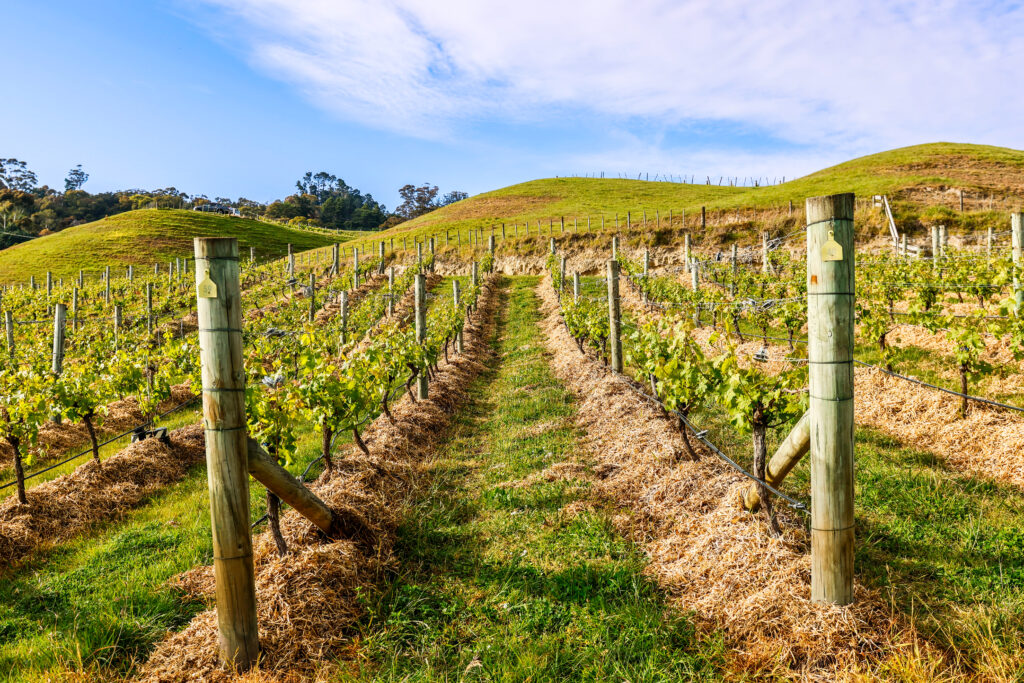




At Te Mata Estate, viticulture begins with careful attention to the soil beneath the vines. Across the estate, a combination of under vine mowing and the application of straw is used to manage moisture, encourage biodiversity, and support vine health. These practices reflect a belief that long term quality in wine is built slowly, through thoughtful, hands on decisions made in the vineyard.
Straw is typically applied during the colder months, when soils can still be worked and dried before winter sets in. It is also used on steeper vineyard slopes where under vine mowing is more difficult and less precise. Every bale is laid by hand, row by row, a physically demanding process that requires time and commitment. This manual approach allows Te Mata to place straw exactly where it is needed, responding to the specific contours and conditions of each block.
Once in place, the straw acts as a natural mulch, retaining soil moisture through the growing season and reducing evaporation during warmer months. This moisture retention supports more even vine growth and reduces stress during dry periods. Straw also provides effective weed suppression, limiting competition for water and nutrients, particularly around older vines with established but sensitive root systems. As a result, the need for under vine spraying is significantly reduced.
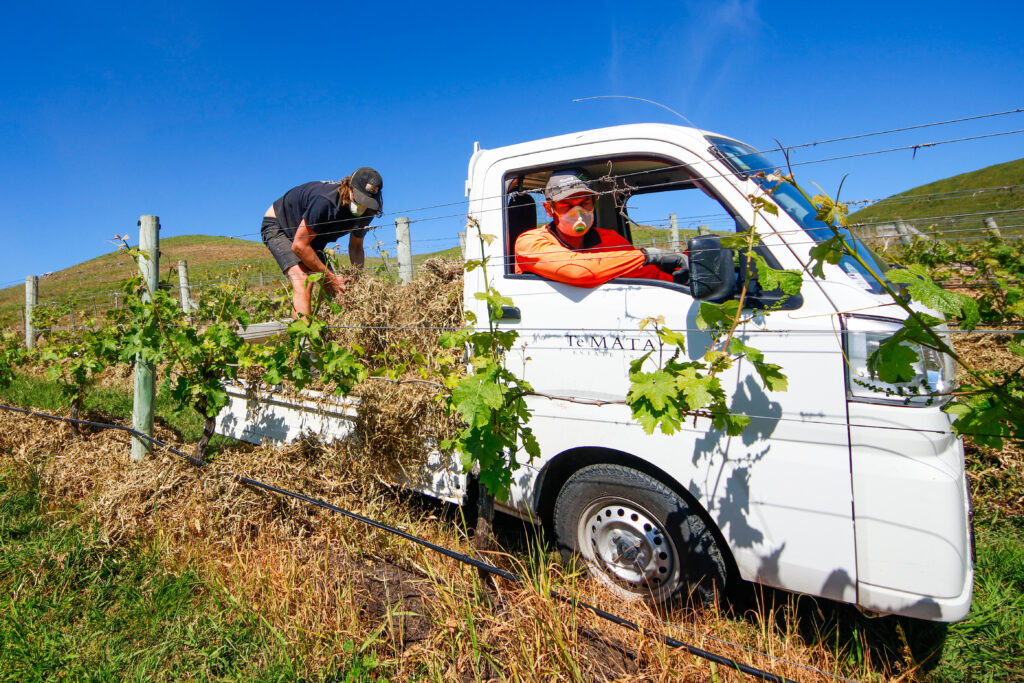
The benefits extend beyond weed control and water management. Straw creates habitat for beneficial organisms and contributes to healthier, more biologically active soils. This aligns with Te Mata’s broader interest in regenerative viticulture, where soil structure, microbial life, and natural balance are prioritised. Each vineyard block is treated individually, combining observation with targeted intervention, which is at the heart of precision viticulture.
Leadership in viticulture is not only about innovation, but about responsibility and intent. At Te Mata Estate, practices such as under vine mowing and straw application demonstrate a commitment to working with the land rather than against it. By investing in labour intensive, regenerative techniques, Te Mata continues to refine how its vineyards are farmed, ensuring resilience, quality, and a clear expression of place in every wine.