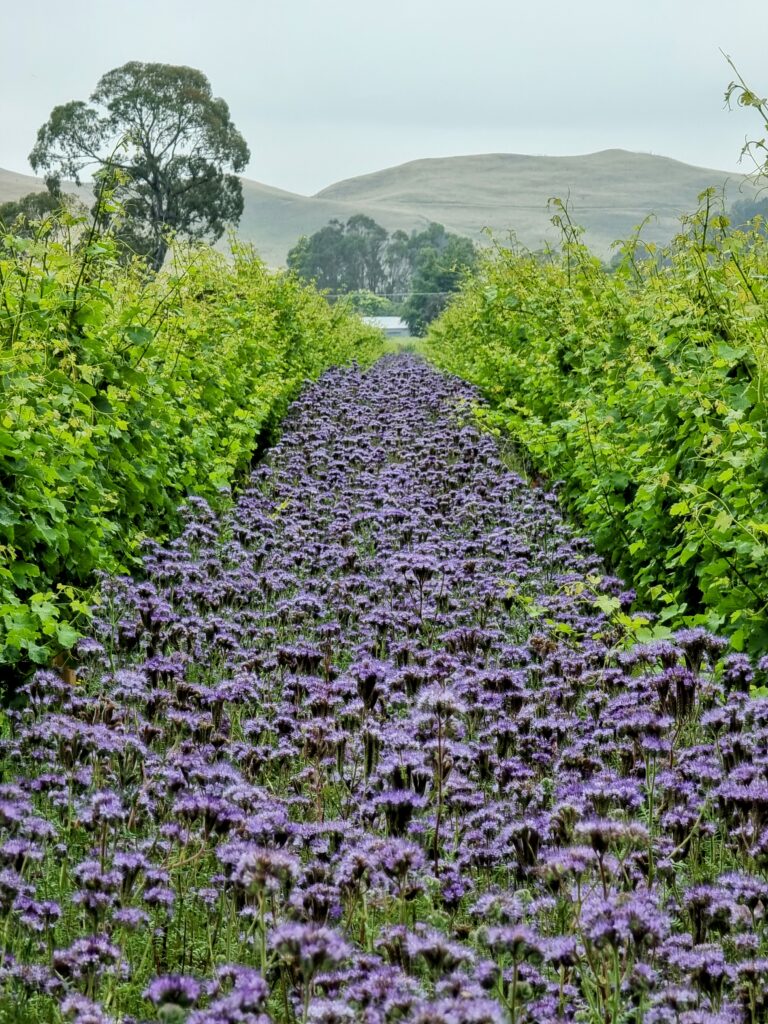


Spring has truly arrived in the Te Mata Estate character zone, and the vineyards are bursting with life. Between the vines, a carpet of mustard seed, tick bean, and phacelia is in full flower, bringing vibrant colour to the rows. These companion plantings aren’t just beautiful – they play a vital role in our organic and regenerative viticulture practices, supporting the vineyard ecosystem while setting the stage for another remarkable vintage.
Walking through the vines right now, you’ll see clouds of bees from local Arataki hives busy at work, moving from blossom to blossom. Their presence is a living sign of the biodiversity we encourage here. By planting species like phacelia, which bees love, we’re not only improving pollination but also strengthening the resilience of the vineyard as a whole. The hum of activity is a reminder that healthy vineyards are alive with more than just grapes.

These cover crops do more than attract beneficial insects. Tick beans, for example, naturally fix nitrogen into the soil, while mustard seed helps manage pests and disease pressure. Phacelia’s deep roots aerate the soil, improving structure and water retention. Together, they boost soil health in a natural, sustainable way, reducing the need for intervention and keeping the vineyard in balance.
At Te Mata Estate, we’ve always combined time-honoured techniques with innovative approaches, and our spring cover crops are a perfect expression of that philosophy. By weaving organics, regenerative viticulture, and biodiversity into the fabric of our vineyard, we’re not only caring for the land but also crafting wines that carry the character of a thriving, living environment. Right now, the vineyard is alive with colour, life, and promise – the perfect start to the season ahead.