
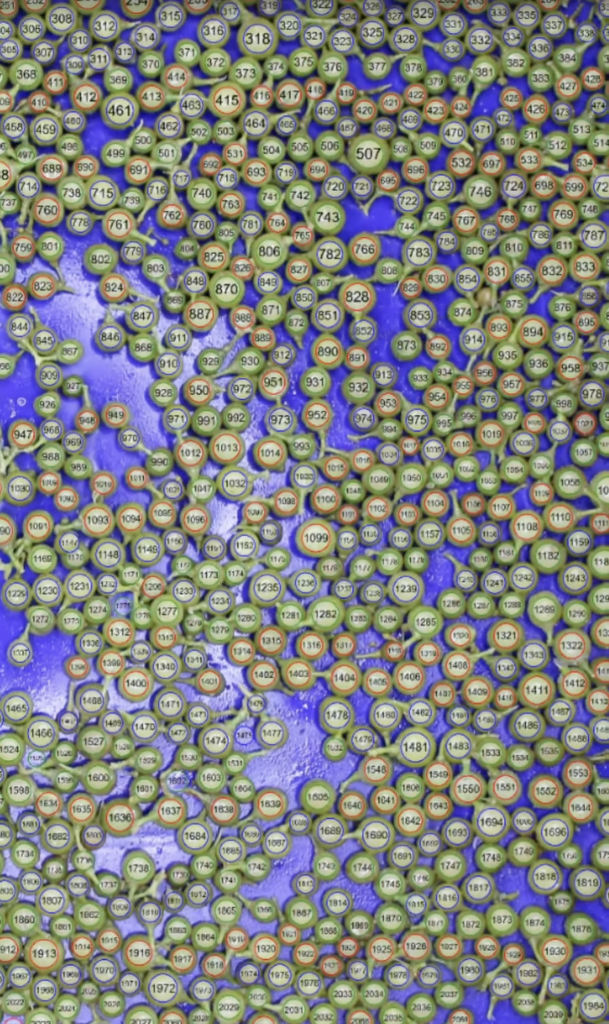
The way we understand a vineyard is changing, but not as dramatically as it might seem. Much of the work remains observational – walking rows, tasting fruit, watching the season unfold. What is changing is the level of precision available to support those observations. This season, we’ve been using AI-powered image analysis to refine our yield estimates, photographing grape clusters in the vineyard so that individual berries can be counted and translated into projected bunch weights.
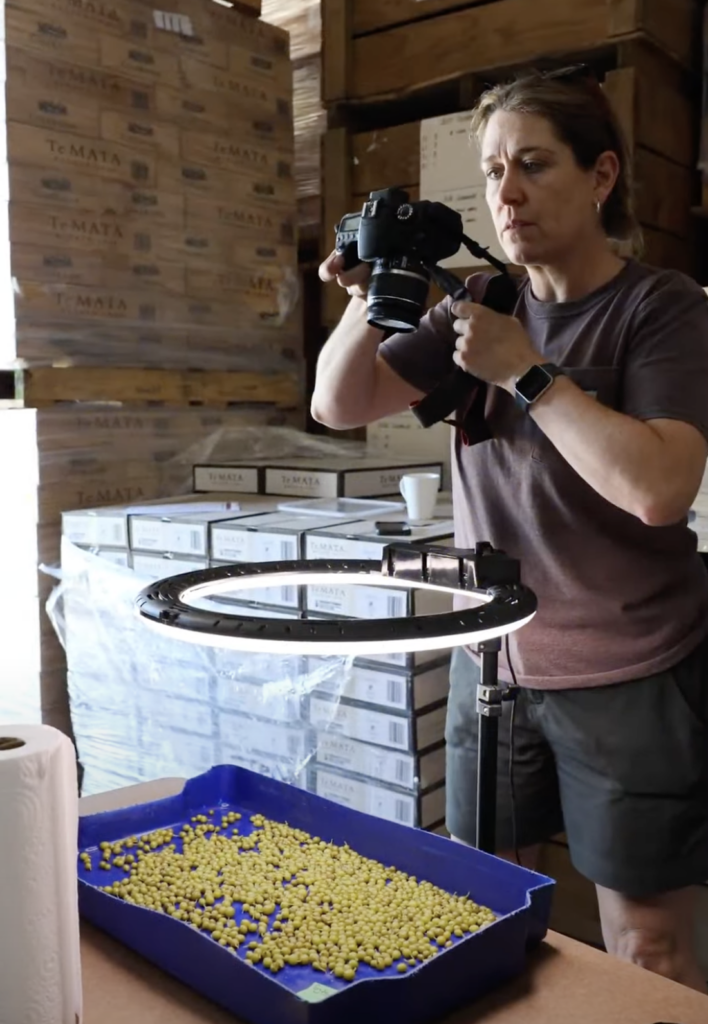
What this process reveals, and confirms, is that variation in yield is driven primarily by the number of berries per bunch rather than by berry size. Berry weight tends to remain relatively stable across seasons, while berry set can shift significantly depending on conditions at flowering. By focusing on berry counts, we gain a more consistent and reliable picture of the crop as it develops, well before harvest decisions are finalised.
This kind of technology is not new to horticulture. In many ways, it represents an early and natural adoption of machine vision – structured environments, repeatable patterns, and a long-standing need for accurate forecasting. What matters is not the presence of the tool, but how it is used. In a vineyard context, it works best as an extension of experience: something that sharpens judgement rather than replaces it.
The connection to wine quality is indirect, but important. More precise yield estimation allows for better-timed picking decisions, more confident parcel selection, and a clearer understanding of how each block should be handled in the winery. These are not dramatic interventions, but incremental ones – small adjustments that accumulate over the course of a season and, ultimately, through élevage.
This is often how quality is built in fine wine. Not through single defining moments, but through a series of marginal gains – decisions made with slightly greater clarity, repeated over time. The use of AI in this context sits comfortably within that tradition. It is simply another way of seeing more clearly, and acting accordingly, so that what arrives in the glass is more balanced, more precise, and more complete.